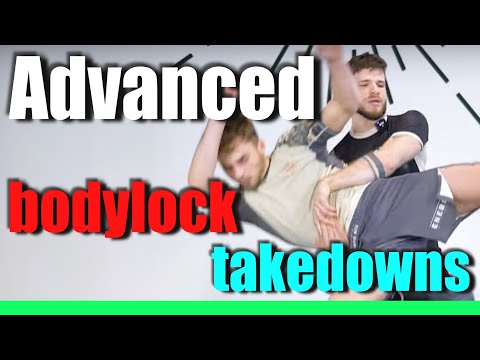
Rear body lock | Learn how to THROW and SLAM
0
Rear Body Lock Takedown·Energia Martial Arts
Tear body lock | Learn how to THROW and SLAM The second part of our rear bodylock takedowns. Time to mix it up with some…
Перевод: rear body lock takedown
The Rear Body Lock Takedown family encompasses all takedowns executed from behind the opponent with a locked grip around the torso. [1] Rear body lock position is one of the most dominant standing clinch configurations because the opponent cannot effectively attack and has limited defensive options — their primary recourse is grip fighting and hip positioning to prevent the lift or return. [1],[2] Techniques in this family include mat returns (lifting and replacing the opponent on the mat) and rear lifts (elevating the opponent before bringing them down). [2] Rear body lock takedowns are essential in wrestling and are frequently the result of successful back-take sequences, sprawl-to-back transitions, or cage wrestling scenarios. [2],[3]
Rear body lock techniques are foundational in all wrestling styles, with particular emphasis in Greco-Roman where the rear standing position is a common restart and par terre scenario. [1] The rear body lock became a critical MMA technique as cage wrestling evolved, with fighters using the fence to establish back clinch position. [2],[3]
In MMA, the rear body lock against the cage is one of the most common takedown setups, used extensively by wrestlers in UFC competition. [1]
Изображений для этой техники пока нет.
Войдите, чтобы предложить изображение.
Tear body lock | Learn how to THROW and SLAM The second part of our rear bodylock takedowns. Time to mix it up with some…
Учебных курсов по этой технике пока нет.
Войдите, чтобы предложить курс.
Риск травмы для человека, к которому применяется техника
Rear body lock allows mat return/slam; spinal compression risk
Уровень мастерства, необходимый для надёжного выполнения техники
Разрешена ли техника по основным соревновательным правилам
Japanese amateur wrestling terminology
Japanese amateur wrestling terminology
Mixed Japanese-Western terminology — combines traditional Japanese terms with katakana loanwords
Standard katakana transliteration used in Japanese wrestling (レスリング)
upper body squeeze strength, lifting power, hip drive
thick chest and arms for tight lock, strong lower back for lifts
pectorals, biceps, erector spinae, glutes
Каждое движение в любом боевом искусстве обладает рядом универсальных свойств. Комбинируйте параметры ниже, чтобы найти нужный инструмент или сравнить аналоги из разных стилей.
The Mat Return subfamily covers techniques where the attacker, having secured a rear body lock, returns the opponent to the mat from a standing or partially standing position. [1] Unlike lifts that elevate the opponent high before depositing them, mat returns focus on breaking the opponent's base and driving them directly to the mat with minimal lift. [1,2] The attacker typically uses a combination of hip pressure, weight distribution, and directional force — driving the opponent forward and to one side, or pulling them backward over the attacker's hip. [2] Mat returns are high-percentage techniques because they require less explosive strength than full lifts and can be executed incrementally. [2,3]
The Rear Lift subfamily covers takedowns where the attacker elevates the opponent from behind using a body lock, lifting them off the mat before bringing them down. [1] Rear lifts require significant explosive strength and hip drive, as the attacker must overcome the opponent's entire body weight plus their active resistance. [1,2] The lift creates a moment of helplessness where the opponent is airborne with no base, allowing the attacker to choose the landing angle and position. [2] Rear lifts are among the most spectacular takedowns in wrestling and MMA, often producing decisive changes in momentum and scoring. [2,3]
The rear body lock takedown lifts and slams the opponent from behind — suplexes, mat returns, and dump takedowns all start from rear body lock. The dominant Greco-Roman wrestling takedown position. (FILA/UWW Greco-Roman manuals; wrestling texts)
Step in with your hip lower than their hip and lift them up using your legs rather than trying to curl them up with your arms. This hip positioning allows you to generate lifting power even against heavier opponents.
Beginners often focus too much on going to the side and forget to lift first. You need to lift up before dipping to the side, similar to how you'd execute a good double leg takedown.
As soon as you land, place your head on your opponent's hip to prevent them from recovering guard or turning their hips. From there, you can circle out into a cradle or side control position.
The impact creates a few seconds of disorientation, which you can immediately exploit to take a dominant top position before your opponent recovers.
The Rear Body Lock Takedown family encompasses all takedowns executed from behind the opponent with a locked grip around the torso. Rear body lock position is one of the most dominant standing clinch configurations because the opponent cannot effectively attack and has limited defensive options — their primary recourse is grip fighting and hip positioning to prevent the lift or return.
Rear body lock techniques are foundational in all wrestling styles, with particular emphasis in Greco-Roman where the rear standing position is a common restart and par terre scenario. The rear body lock became a critical MMA technique as cage wrestling evolved, with fighters using the fence to establish back clinch position.
IJF: разрешён — Legal takedown technique; IBJJF: разрешён — Legal at all belt levels, scored as takedown (2 points); UWW: разрешён — Legal in both freestyle and Greco-Roman; Unified MMA: разрешён — Legal takedown technique; ADCC: разрешён — Legal, scored 2-4 points in second half of match; FIAS Sport Sambo: разрешён — Legal — all takedowns permitted; FIAS Combat Sambo: разрешён — Legal; NCAA Folkstyle: разрешён — Legal, scored as takedown (2 points)
Оценка опасности 6/10. High — rear body lock allows mat return/slam; spinal compression risk
Стандартная цепочка подготовки: Close Distance → Establish the Lock → Hip Pressure → Lift or Trip.
Стандартные контрприёмы: Sprawl — drop hips back and drive weight down to stuff the takedown attempt / Underhook Pummeling — fight for inside position to neutralize the lock / Hip Switch — rotate hips to break the grip angle and create separation / Knee Tap — redirect opponent's momentum with a quick leg attack.
Распространённые варианты: Front body lock (securing the lock face-to-face and driving laterally or b…); Rear body lock (securing from behind for mat returns or lifts); Side body lock (angled body lock for trips and throws); Body lock to trip (combining the lock with a foot trip for the finish).
In MMA, the rear body lock against the cage is one of the most common takedown setups, used extensively by wrestlers in UFC competition.
Основные ошибки, на которые стоит обратить внимание: Locking the grip too high on the chest, allowing them to peel your hands off or duck under / Standing straight up behind them without hip contact — no control / Trying to suplex when a simple mat return would be safer and higher-percentage / Letting the opponent turn to face you before securing the finish.
Rear Body Lock Takedown также известен как Ushiro Bodi Rokku Teikudaun, Rear Bear Hug, Back Body Lock, Rear Clinch Takedown.