How to NEVER Get Stuck in the Closed Guard Again! | Jiu Jitsu Tutorial
0
From Guard·Matt Arroyo Jiu Jitsu ·Added by Admin
Join My Online Academy to Improve Your Jiu Jitsu FAST!!! https://academy.mattarroyo.com/ -----------------------------…
Перевод: from guard
The ear pull from guard is a pain compliance technique where the attacker, while playing guard, grips the opponent's ear and pulls or twists to create pain and disrupt posture. [1],[2] From closed or open guard, the attacker reaches for the opponent's ear during close-range engagement and uses the pulling force to break the opponent's posture downward, creating openings for chokes, sweeps, or transitions. [1] The ear pull is primarily a disruptive technique rather than a finish — it forces the opponent to address the pain, momentarily stopping their passing attempts. [1],[2]
Guard submissions exploit the bottom position's hip mobility and leg control to attack with triangles, armlocks, and chokes. [1]
Guard-based submissions are a defining feature of BJJ, refined from judo's ne-waza and greatly expanded by Brazilian practitioners. [1]
Guard submissions are the most common finishing position in BJJ competition at all levels. [1]
Изображений для этой техники пока нет.
Войдите, чтобы предложить изображение.
Join My Online Academy to Improve Your Jiu Jitsu FAST!!! https://academy.mattarroyo.com/ -----------------------------…
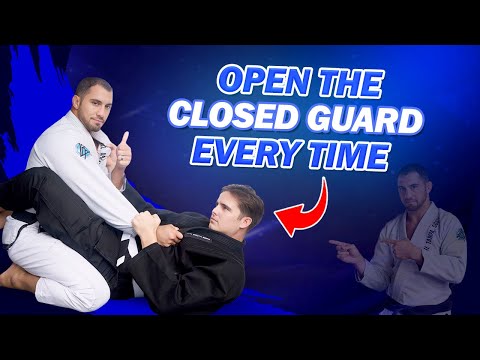
🔺 Welcome to IsakIvanovicjj - Your Gateway to BJJ Mastery! 🔺 📚 Today's Lesson: "Elevated Basics: The Ultimate No-Gi …
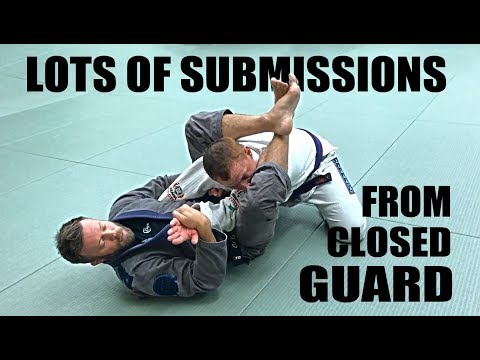
So much more at Patreon.com/KnightJiuJitsu Here are quite a lot of submissions from closed guard. These go from pretty …
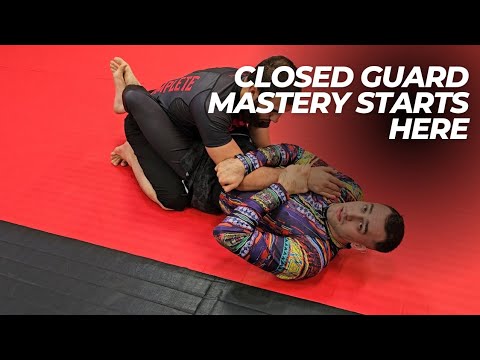
From guard, an ear pull represents a pressure-based control technique applied while the top player is positioned in the bottom player's closed guard. The instructors collectively emphasize that successful execution from this position requires establishing proper posture and grip control before attempting the technique. Matt Arroyo Jiu Jitsu stresses the foundational importance of postural integrity—keeping the head free and clear while maintaining an upright position—as a prerequisite for any closed guard opening or submission work. IsakIvanovicjj focuses on the systematic mechanics of maintaining closed guard structure, highlighting the use of legs and core strength to control the opponent's upper body and prevent posture recovery. Knight Jiu-Jitsu provides detailed submission sequences from closed guard, demonstrating how various collar and arm attacks progress linearly, with the ear pull emerging as one tactical option within a broader submission chain. While the transcripts do not explicitly isolate the ear pull as a standalone technique, they collectively indicate that its application depends on the defender abandoning proper posture or allowing the attacker to establish the grips necessary for applying pressure to the ear region. All three instructors agree that positional control and grip management precede any successful pressure technique from closed guard.
Сформировано на основе 3 инструкторов
Учебных курсов по этой технике пока нет.
Войдите, чтобы предложить курс.
Риск травмы для человека, к которому применяется техника
Ear pull variant — pain compliance with minimal structural risk
Уровень мастерства, необходимый для надёжного выполнения техники
Разрешена ли техника по основным соревновательным правилам
Japanese traditional martial arts terminology
Japanese traditional martial arts terminology
Standard katakana transliteration of Western martial arts terminology (外来語) — used in Japanese MMA, boxing, and BJJ communities
Japanese terminology sourced from Japanese traditional martial arts terminology
grip strength, joint isolation ability, positional control
strong forearms and stable base
forearm flexors, core stabilisers, hip muscles for base
Matt Arroyo explains that struggling to open the guard forces you to perform repetitive push-ups and exhausts your energy bar, leaving you depleted for guard passes and submissions. Learning an efficient guard opening technique preserves your energy for more important offensive work.
Matt Arroyo teaches four key steps: (1) Posture up with your head back and chest popped off, (2) Grab the wrist on the same side as the leg you'll lift and pin it to their body, (3) Turn your knee slightly into their hip—keeping your leg completely vertical, not bent, (4) Lock your elbow out completely and use your core to drive straight down like a bench press, which opens the guard regardless of their grip strength.
Matt Arroyo reveals a 'ninja hack': simply stand up, and your opponent will almost always open their guard on their own (about 90% of the time) because they want to attempt a sweep or leg lock. Just be ready to defend those two techniques and keep your head clear to avoid arm bars.
Isak Ivanovic explains that closed guard is a battle for inside position—you want your hands in the middle rather than on the floor so you can grab the head, use over hooks, and set up shoulder crunches. If your opponent gets their hands in your armpits, reach over and grab their four fingers to pull them back to the middle.
Isak Ivanovic describes pulling the opponent's elbow to your belly button (keeping it inside your hip), then swapping to a head grip so they can't posture as you open your legs. Put your foot in their hip, shift out slightly, and lock your legs above their shoulder in the top lock—this gives you safe offensive options like armbars and Kimuras.
The ear pull from guard is a pain compliance technique where the attacker, while playing guard, grips the opponent's ear and pulls or twists to create pain and disrupt posture. From closed or open guard, the attacker reaches for the opponent's ear during close-range engagement and uses the pulling force to break the opponent's posture downward, creating openings for chokes, sweeps, or transitions.
Guard-based ear manipulation developed as a practical technique in self-defense oriented martial arts and was integrated into some BJJ and MMA training as a dirty technique for close-range disruption. It is prohibited in virtually all sport grappling competitions.
IBJJF: ограничен — Varies — pressure-based controls may be legal but direct pain holds without s…; IJF: запрещён — Not a recognized submission category in judo; ADCC: разрешён — Legal; Unified MMA: разрешён — Legal; FIAS Sport Sambo: ограничен — Varies by application; FIAS Combat Sambo: разрешён — Legal
Оценка опасности 2/10. Ear pull variant — pain compliance with minimal structural risk
Стандартная цепочка подготовки: Achieve Controlling Position → Isolate the Neck → Set the Grip → Apply Pressure.
Стандартные контрприёмы: Tuck Chin — protect the neck by lowering the chin to prevent the choke from sinking / Two-on-One Grip Fight — use both hands to strip the choking grip before it locks / Turn Into — rotate toward the choking arm to relieve carotid pressure / Posture Up — straighten the spine and create distance to break the choking angle.
Распространённые варианты: Standard variation (primary grip configuration and finishing angle); Gi variation (using the gi material for grip assistance and control); No-gi variation (adapted grips for submission grappling without the gi); Transition variation (applied during a positional change or scramble).
Guard submissions are the most common finishing position in BJJ competition at all levels.
Основные ошибки, на которые стоит обратить внимание: Relying on guard pressure instead of technique — pressure enhances guard work but doesn't replace sweeps, submissions… / Squeezing with the legs at full power constantly — constant maximum squeeze exhausts your legs; pulse the pressure fo… / Using the cross-face without setting up a follow-up — the cross-face creates head movement; exploit it with a choke o… / Applying rib pressure without foot position — the feet must be hooked and positioned correctly for the leg squeeze to….
From Guard также известен как Gādo kara, Guard Ear Pull, Guard Pressure Hold.