Muscle tearing and pain compliance technique
0
Pain Compliance Hold Lock·Shihan Mike
DSI principles of martial science.
Перевод: Pain-Control Suppression Techniques
Pain compliance holds are submission techniques that generate sustained pain through pressure, pinching, or grinding — without directly threatening a joint, blood supply, or airway. [5] The goal is to make the opponent's position so uncomfortable that they either submit, abandon a defensive posture, or create an opening for a more decisive technique. [5] Common pain compliance holds include ear pulls, sternum pressure (from mount), rib pressure (knee-on-belly with directed force), fish-hooking-adjacent face pressure, and various grinding applications of the forearm, elbow, or knee against sensitive areas. Pain compliance occupies a gray area in competition rules: many techniques are technically legal (they don't violate specific prohibitions) but may be viewed as unsportsmanlike by referees. In law enforcement and military contexts, pain compliance holds are primary control tools — wrist locks, arm bars, and pressure point controls taught in defensive tactics programs are designed to gain compliance without causing permanent injury. [2] In grappling competition, pain compliance is more commonly used as a transitional tool — for example, applying cross-face pressure to turn an opponent's head and expose the neck — rather than as a finishing submission. [1]
Pain compliance techniques have been part of martial arts and law enforcement since antiquity. Japanese feudal arrest techniques (torite-jutsu and taiho-jutsu) employed pain compliance holds to subdue suspects without lethal force — these techniques were practiced by Edo period police (doshin) and evolved into modern Japanese police defensive tactics. [2] The Tokyo Metropolitan Police's taiho-jutsu curriculum, standardized in 1947, codifies pain compliance controls derived from jujutsu and aikido. [2] In Western law enforcement, pain compliance techniques were formalized in the 20th century as part of defensive tactics training, drawing from both Asian martial arts and indigenous wrestling traditions. In competition grappling, pain compliance has always existed as a secondary tactic — wrestlers have historically used cross-face pressure [1], and BJJ competitors use grinding techniques to create openings, though these are rarely the finishing technique. [6]
Pain compliance holds are used primarily in law enforcement and self-defence, applying joint pressure or nerve manipulation to gain compliance. [1]
Pain compliance techniques are primarily used in law enforcement rather than sport competition. [1]
Изображений для этой техники пока нет.
Войдите, чтобы предложить изображение.
DSI principles of martial science.
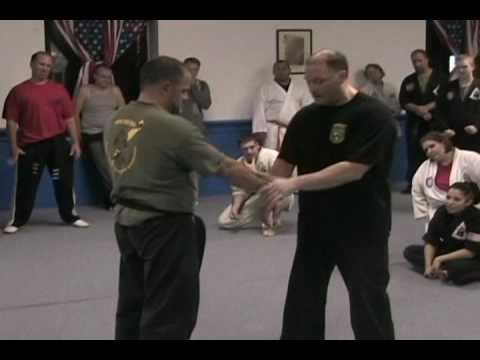
http://www.impactsolutionsglobal.com The instructor team from IMPACT Solutions Global host a Pain Compliance Seminar for…
Учебных курсов по этой технике пока нет.
Войдите, чтобы предложить курс.
Риск травмы для человека, к которому применяется техника
Pressure techniques cause discomfort and pain without significant structural injury risk
Уровень мастерства, необходимый для надёжного выполнения техники
Разрешена ли техника по основным соревновательным правилам
Mastering Jujitsu — Renzo Gracie, John Danaher (2003)
Jujutsu pain compliance and control technique heritage
Taiho-jutsu and law enforcement control techniques context
Official Kodokan ground technique classification system
Standard Japanese martial arts terminology (kanji/hiragana)
Established Japanese martial arts naming convention — native Japanese term (和語/漢語)
Jujutsu pain compliance and control technique heritage
Taiho-jutsu and law enforcement control techniques context
fine motor control, grip sensitivity, quick hand transitions
dexterous hands with strong fingers
forearm flexors and extensors, intrinsic hand muscles
Каждое движение в любом боевом искусстве обладает рядом универсальных свойств. Комбинируйте параметры ниже, чтобы найти нужный инструмент или сравнить аналоги из разных стилей.
Pain compliance techniques use controlled pain to gain cooperation without causing injury — used primarily by law enforcement and security. Pressure point techniques, wrist locks, and joint manipulations at sub-injury thresholds. Different from submissions in intent: compliance rather than incapacitation. (Law enforcement manuals; military combatives)
According to Impact Solutions Group, you want to use the hard part of your arm when striking nerves on the neck, head, or similar targets. Conversely, if you're striking the hard part of someone's head, you'd use something softer like your palm—this follows the 'hard to soft, soft to hard' principle.
Impact Solutions Group demonstrates turning your hand to open their closed hand, then slapping to further open it, which gives you access to the thumb and fingers. From there, you drag across and down to target the next nerve in the arm.
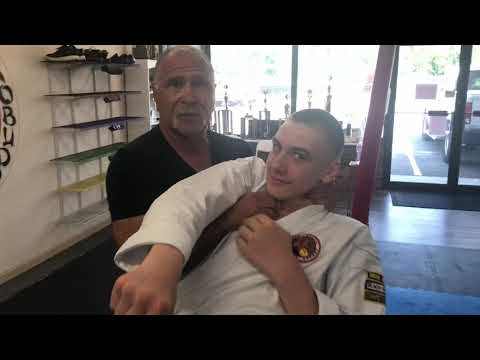
Shihan Mike shows that when a round punch comes, you can bob and weave underneath it, grab the armpit area, and immediately secure the pectoral muscles to control your opponent.
Take your thumb and jam it underneath the armpit in and up as hard as you can, then grab the pectoral muscles. Shihan Mike emphasizes that gripping strength is important for this technique.
Pain compliance holds are submission techniques that generate sustained pain through pressure, pinching, or grinding — without directly threatening a joint, blood supply, or airway. The goal is to make the opponent's position so uncomfortable that they either submit, abandon a defensive posture, or create an opening for a more decisive technique.
Pain compliance techniques have been part of martial arts and law enforcement since antiquity. Japanese feudal arrest techniques (torite-jutsu and taiho-jutsu) employed pain compliance holds to subdue suspects without lethal force — these techniques were practiced by Edo period police (doshin) and evolved into modern Japanese police defensive tactics.
IBJJF: ограничен — Varies — pressure-based controls may be legal but direct pain holds without s…; IJF: запрещён — Not a recognized submission category in judo; ADCC: разрешён — Legal; Unified MMA: разрешён — Legal; FIAS Sport Sambo: ограничен — Varies by application; FIAS Combat Sambo: разрешён — Legal
Оценка опасности 4/10. Pressure techniques cause discomfort and pain without significant structural injury risk
Стандартная цепочка подготовки: Control the Arm → Position the Hips → Pinch Knees → Extend for the Finish.
Стандартные контрприёмы: Clasp Hands — grip own wrist to prevent arm extension / Stack — drive forward to compress the attacker and relieve elbow pressure / Hitchhiker Escape — rotate the thumb toward the mat and roll to extract the arm.
Распространённые варианты: Standard wrist lock (kote gaeshi) (two-handed rotational lock on the wrist); Gooseneck wrist lock (flexion lock bending the wrist down toward the forearm); Standing wrist lock (applied during grip fighting or a standing exchange); Ground wrist lock (catching the opponent's posted hand from mount, side cont…).
Pain compliance techniques are primarily used in law enforcement rather than sport competition.
Основные ошибки, на которые стоит обратить внимание: Using pain compliance as a substitute for technique — pain holds should enhance technique and position, not replace p… / Applying excessive force — pain compliance should create discomfort, not injury; know the line between compliance and… / Relying on pain compliance against tough opponents — high-level competitors have high pain tolerance; positional tech… / Not combining pain compliance with transitions — use the opponent's reaction to the pain (turning, moving) as an oppo….
Pain Compliance Hold Lock также известен как Kutsuu Seiatsu Waza, Pain Compliance Hold, Pain Submission, Itami-waza.