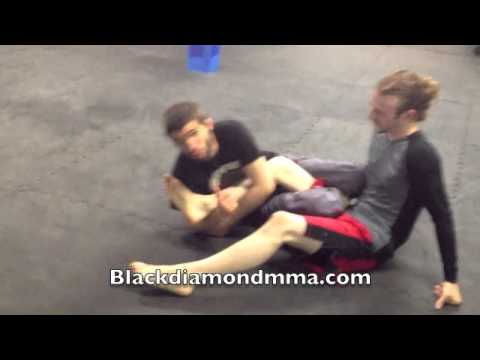
Toe hold from 50 50
0
Toe Hold·Ethan Pino
Dan Faggella teaches the details of a proper toe hold when in the 50/50 orientation of a leg lock.
Not yet documented
The Toe Hold is a foot lock submission that attacks the ankle and foot by gripping the opponent's toes/ball of foot and rotating the foot outward (or inward) using a figure-four grip — creating torsional stress on the ankle ligaments, the small joints of the foot, and the knee. [1] The toe hold is one of the four fundamental leg lock submissions (alongside the heel hook, kneebar, and straight ankle lock) and is applicable from various ashi garami positions, 50/50, and even from top positions during guard passing. [1],[2] While considered less devastating than the heel hook, the toe hold is still a powerful submission that can cause ankle ligament tears, metatarsal fractures, and knee damage — it was the technique used by Frank Mir to break Tim Sylvia's arm (forearm, actually, but the toe hold principle applies to its foot target) and has finished numerous high-level grappling matches. [2],[3] The toe hold is legal at brown and black belt in IBJJF (both gi and no-gi), making it the most accessible rotational foot lock in mainstream BJJ competition. [3]
Toe holds have existed in catch wrestling and sambo for over a century as part of these arts' comprehensive leg lock curricula. [1] In BJJ, toe holds were historically associated with 'old school' leg lock players before the modern leg lock revolution. [1],[2] The Estima lock (a toe hold variation discovered by Victor and Braulio Estima during guard passing) revitalised interest in the toe hold for IBJJF competition in the 2010s. [2],[3]
Изображений для этой техники пока нет.
Войдите, чтобы предложить изображение.
Dan Faggella teaches the details of a proper toe hold when in the 50/50 orientation of a leg lock.
Учебных курсов по этой технике пока нет.
Войдите, чтобы предложить курс.
Риск травмы для человека, к которому применяется техника
The toe hold can cause ankle ligament tears, metatarsal fractures, and knee damage; unlike straight ankle locks which have a gradual pain curve, the toe hold's rotational force can cause injury quickly; always apply slowly in training
Уровень мастерства, необходимый для надёжного выполнения техники
Разрешена ли техника по основным соревновательным правилам
Leg Lock Anthology (John Danaher, BJJ Fanatics)
Description sources — [1] Catch wrestling and sambo traditions [2] Estima brothers' innovation [3] IBJJF competition rules
Standard katakana transliteration of Western martial arts terminology (外来語) — used in Japanese MMA, boxing, and BJJ communities
Description sources — [1] Catch wrestling and sambo traditions [2] Estima brothers' innovation [3] IBJJF competition rules
grip strength (figure-four grip), rotational control (applying the twist smoothly), positional control (maintaining the position while applying)
strong forearms (grip), good wrist flexibility
forearms (figure-four grip), shoulders (rotation force), core (maintaining position during application)
Каждое движение в любом боевом искусстве обладает рядом универсальных свойств. Комбинируйте параметры ниже, чтобы найти нужный инструмент или сравнить аналоги из разных стилей.
The toe hold (ashi-dori-garami) appears in 185 passages across our book corpus. It attacks the ankle through rotational force on the foot. One of the few leg locks legal at all IBJJF belt levels (from brown belt in gi). In catch wrestling, the toe hold is a fundamental finishing technique. (Jiu-Jitsu University, Ribeiro; IBJJF Rules v6.0)
According to Ethan Pino, you should grab high up on the toes and flex the foot, then grab over your own wrist to lock the grip. Your pinky should align with your opponent's pinky toe, and Pino emphasizes positioning your grip as high as possible on your own wrist—ideally over your own hand if possible.
Ethan Pino stresses that you should load pressure onto the foot before cranking—don't get your grips and then start applying pressure with no bend or foot position. Your grips should do 90% of the work, with proper foot positioning and clamping of the bicep doing most of the submission, so you're not relying on muscle alone.
According to Ethan Pino, the bend is crucial because if your opponent's leg is straight and you rotate their foot, the torque can travel all the way through to the knee. With proper foot bend, the stress stops at the ankle or knee, making the submission safer and more effective.
The Toe Hold is a foot lock submission that attacks the ankle and foot by gripping the opponent's toes/ball of foot and rotating the foot outward (or inward) using a figure-four grip — creating torsional stress on the ankle ligaments, the small joints of the foot, and the knee. The toe hold is one of the four fundamental leg lock submissions (alongside the heel hook, kneebar, and straight ankle lock) and is applicable from various ashi garami positions, 50/50, and even from top positions during guard passing.
Toe holds have existed in catch wrestling and sambo for over a century as part of these arts' comprehensive leg lock curricula. In BJJ, toe holds were historically associated with 'old school' leg lock players before the modern leg lock revolution.
IBJJF: ограничен — Brown and black belt only; IJF: запрещён — Only elbow joint locks (kansetsu-waza) permitted in judo — all other joint lo…; ADCC: разрешён — Legal — all submissions legal in ADCC; Unified MMA: разрешён — Legal submission technique; FIAS Sport Sambo: разрешён — Legal; FIAS Combat Sambo: разрешён — Legal
Оценка опасности 7/10. High — the toe hold can cause ankle ligament tears, metatarsal fractures, and knee damage; unlike straight ankle locks which have a gradual pain curve, the toe hold's rotational force can cause injury quickly; always apply slowly in training
Стандартная цепочка подготовки: Establish Leg Control → Identify the Foot → Grip the Ball of Foot → Figure-Four Grip → Rotate → Finish.
Стандартные контрприёмы: Boot (point toes) — straightening the ankle makes the rotational grip harder to maintain / Roll with the rotation — rolling in the direction of the twist relieves pressure / Pull the foot free — extracting the foot before the figure-four is secured / Straighten the leg — full leg extension reduces the angle needed for the toe hold.
Распространённые варианты: Standard toe hold (external rotation) (rotating the foot outward; the most common variation [1]); Inverted toe hold (internal rotation) (rotating the foot inward; less common but effective); Estima lock (straight toe hold) (a toe hold variation discovered by the Estima brothers, a…); Toe hold from 50/50 (applied from the 50/50 entanglement); Toe hold from top position (applied during guard passes or from side control); Calf slicer to toe hold (combining a calf slicer with a toe hold for a two-submiss…).
The toe hold is the primary rotational foot lock in IBJJF gi competition (where heel hooks are banned). The Estima lock has produced numerous competition submissions at black belt level.
Основные ошибки, на которые стоит обратить внимание: Gripping only the toes — individual toe grips are weak and risk toe injuries; grip the ball of the foot with the whol… / No figure-four grip — without the figure-four, the rotation lacks sufficient leverage / Applying too fast — the toe hold can damage the ankle before the opponent registers enough pain to tap; apply gradually / Ignoring the knee connection — the toe hold's rotational force transmits to the knee; be aware of the secondary joint….
Toe Hold также известен как Toe Hold Lock, Ashi Dori Garami, Figure-Four Toe Lock.