How I Ankle Lock EVERYONE (almost)
0
Ankle Lock·Ebsayz
For one on one Jiu jitsu coaching and guaranteed results, join my Skool!! https://www.skool.com/ebsayz-online-4305/about…
Перевод: ankle lock
Ankle locks are submissions that attack the ankle joint — primarily by hyperextending the talocrural joint (straight ankle lock) or rotating the subtalar joint (toe hold). [1],[3] The straight ankle lock (ashi-garami / achilles lock) uses a figure-four grip around the opponent's foot to lever the ankle into hyperextension, stressing the anterior talofibular ligament. [4] The toe hold applies rotational force to the foot, stressing the ankle and knee simultaneously. Ankle locks are entry-level leg attacks — the straight ankle lock is the first leg lock permitted under IBJJF rules (legal at all belt levels in no-gi). [1] They serve as foundational techniques in leg lock systems, often used to create reactions that expose the heel for more advanced attacks. [5]
Ankle locks have been part of multiple grappling traditions. In judo, ashi-garami (足絡み, leg entanglement) is classified in the broader kansetsu-waza framework, though leg locks are not permitted in standard judo competition. [2],[3] Sambo has historically featured ankle locks as standard competition techniques, with the straight ankle lock being one of the most common submissions in sport sambo. In Brazilian Jiu-Jitsu, the ankle lock was long considered a lower-level technique until the leg lock revolution of the 2010s elevated all leg attacks — including ankle locks as gateway entries to heel hook and calf slicer systems. [4],[5]
The straight ankle lock (ashi-hishigi) hyperextends the ankle by wrapping the forearm blade against the Achilles tendon and arching the hips. [1] It is the most fundamental and widely legal leg lock, permitted at all belt levels in IBJJF. [2] While often escaped at higher levels, it remains effective as both a finish and as a gateway to other leg attacks. [3]
Изображений для этой техники пока нет.
Войдите, чтобы предложить изображение.
For one on one Jiu jitsu coaching and guaranteed results, join my Skool!! https://www.skool.com/ebsayz-online-4305/about…
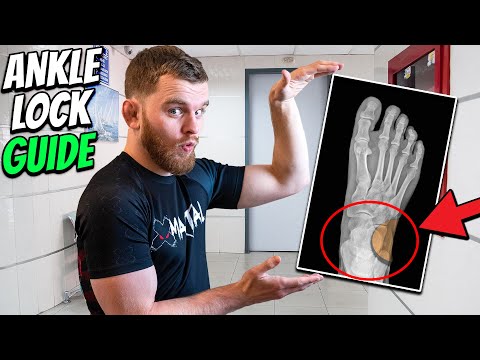
This is the ultimate guide to doing an ankle lock in Jiu Jitsu. Join my Patreon for more instructionals ► Patreon: http…
Учебных курсов по этой технике пока нет.
Войдите, чтобы предложить курс.
Риск травмы для человека, к которому применяется техника
Straight ankle locks attack the Achilles tendon and ankle joint; lower injury risk than heel hooks
Уровень мастерства, необходимый для надёжного выполнения техники
Разрешена ли техника по основным соревновательным правилам
Kodokan Judo — broader Kansetsu-waza classification
Japanese terminology sourced from Kodokan Judo — broader Kansetsu-waza classification
Official Kodokan ground technique classification system
Standard Japanese martial arts terminology (kanji/hiragana)
Established Japanese martial arts naming convention — native Japanese term (和語/漢語)
Japanese terminology sourced from Kodokan Judo — broader Kansetsu-waza classification
forearm blade pressure, hip extension power, body arching
strong forearms and back extensors
forearm extensors, erector spinae, glutes, hip extensors
Каждое движение в любом боевом искусстве обладает рядом универсальных свойств. Комбинируйте параметры ниже, чтобы найти нужный инструмент или сравнить аналоги из разных стилей.
Ankle locks from prone control (ashi-garami position) are applied when the attacker controls the opponent's leg while both fighters are on the ground, typically with the attacker lying on their back and the opponent's foot trapped against the chest. [1,2] The standard straight ankle lock entry involves falling to the hip while hugging the opponent's foot, then bridging to hyperextend the ankle. [3,4]
The Toe Hold is a foot lock submission that attacks the ankle and foot by gripping the opponent's toes/ball of foot and rotating the foot outward (or inward) using a figure-four grip — creating torsional stress on the ankle ligaments, the small joints of the foot, and the knee. [1] The toe hold is one of the four fundamental leg lock submissions (alongside the heel hook, kneebar, and straight ankle lock) and is applicable from various ashi garami positions, 50/50, and even from top positions during guard passing. [1,2] While considered less devastating than the heel hook, the toe hold is still a powerful submission that can cause ankle ligament tears, metatarsal fractures, and knee damage — it was the technique used by Frank Mir to break Tim Sylvia's arm (forearm, actually, but the toe hold principle applies to its foot target) and has finished numerous high-level grappling matches. [2,3] The toe hold is legal at brown and black belt in IBJJF (both gi and no-gi), making it the most accessible rotational foot lock in mainstream BJJ competition. [3]
The straight ankle lock (ashi-garami) is the only leg lock legal at all belt levels in IBJJF competition. It targets the Achilles tendon and ankle joint through hyperextension. (IBJJF Rules v6.0; Ribeiro, Jiu-Jitsu University)
Tyler Spangler emphasizes that you should grip as far over the toes as possible with your lat, not over the calf, as hooking the calf gives you no leverage.
Tyler Spangler identifies Single Leg X as entry number two and probably the easiest to learn, as it's an extremely common position that can be used when people are standing above you or even when they're low to the ground.
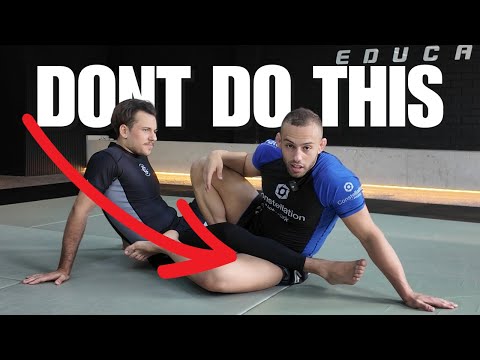
According to Ebsayz, you need to put weight through your opponent's hips and keep weight out of their leg by holding it nice and high.
Ebsayz recommends keeping your elbow wide with space between your elbow and ribs; if you lock it too tight, you'll need much more force to finish the submission.
Ankle locks are submissions that attack the ankle joint — primarily by hyperextending the talocrural joint (straight ankle lock) or rotating the subtalar joint (toe hold). The straight ankle lock (ashi-garami / achilles lock) uses a figure-four grip around the opponent's foot to lever the ankle into hyperextension, stressing the anterior talofibular ligament.
Ankle locks have been part of multiple grappling traditions. In judo, ashi-garami (足絡み, leg entanglement) is classified in the broader kansetsu-waza framework, though leg locks are not permitted in standard judo competition.
IBJJF: разрешён — Legal at all belt levels (straight ankle lock); IJF: запрещён — Only elbow joint locks (kansetsu-waza) permitted in judo — all other joint lo…; ADCC: разрешён — Legal — all submissions legal in ADCC; Unified MMA: разрешён — Legal submission technique; FIAS Sport Sambo: разрешён — Legal; FIAS Combat Sambo: разрешён — Legal
Оценка опасности 6/10. Straight ankle locks attack the Achilles tendon and ankle joint; lower injury risk than heel hooks
Стандартная цепочка подготовки: Establish Position → Create the Threat → Secure the Hold → Finish.
Стандартные контрприёмы: Early Recognition — identify the submission attempt early and begin defence immediately / Posture and Base — maintain strong posture and base to prevent submission setups / Grip Fight — deny the attacker their preferred gripping configuration.
Распространённые варианты: Standard straight ankle lock (forearm blade on the Achilles tendon, arching backward); Bellator-style ankle lock (tighter knee pinch with shoulder on the shin for added co…); Standing ankle lock (applied during a scramble from the feet); Ankle lock from top (applied after a guard pass when the foot is exposed).
The straight ankle lock is the most commonly attempted leg lock in IBJJF competition due to its legality at all belt levels. In sambo, ankle locks are among the most frequent submission finishes at world championship level.
Основные ошибки, на которые стоит обратить внимание: Squeezing with the arms only — the ankle lock finishes with a full-body arch (hips forward, shoulders back), not arm … / Not controlling the opponent's knee line — if the knee is free, the opponent can rotate and escape; lock the knee in … / Placing the wrist bone in the wrong position — the blade of the wrist must sit on the Achilles tendon, not on the ank… / Crossing the feet in ashi garami — crossed feet can be used against you; triangle your legs or keep them properly pos….
Ankle Lock также известен как Ashikubi-gatame, Ashi-kansetsu, Ankle Joint Lock, Foot Lock.