BJJ for Law Enforcement - Handcuffing From The Mount
0
From Prone Control·Gracie NEPA
During an arrest, there is no referee to start or to stop the fight, there are no weight classes, no time limits, and no…
Перевод: from prone control
Ankle locks from prone control (ashi-garami position) are applied when the attacker controls the opponent's leg while both fighters are on the ground, typically with the attacker lying on their back and the opponent's foot trapped against the chest. [1],[2] The standard straight ankle lock entry involves falling to the hip while hugging the opponent's foot, then bridging to hyperextend the ankle. [3],[4]
Prone control submissions attack a face-down opponent with chokes, cranks, and arm locks, exploiting a position where the bottom player has limited defensive options. [1]
Prone control attacks were developed in catch wrestling (the 'chain wrestling' system) and adopted into modern BJJ. [1]
Prone position chokes and cranks are used in both MMA (ground-and-pound to submission sequences) and advanced BJJ competition. [1]
Изображений для этой техники пока нет.
Войдите, чтобы предложить изображение.
During an arrest, there is no referee to start or to stop the fight, there are no weight classes, no time limits, and no…
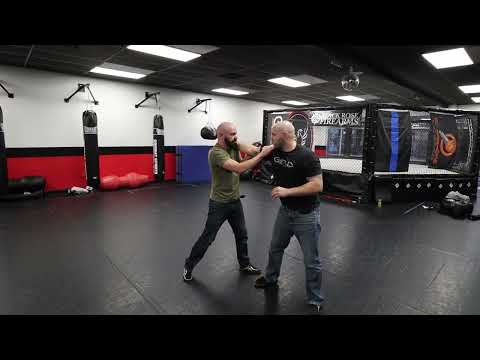
Kevin and Justin show a limb control option to defend, takedown, and handcuff. Using a simple block and drag, controllin…
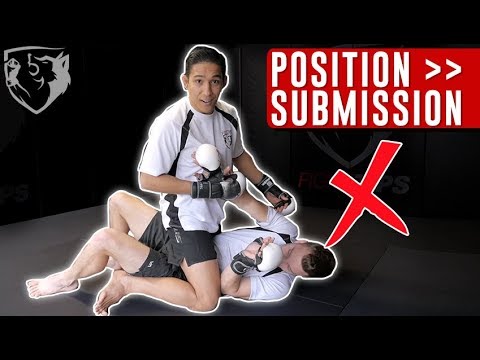
You've probably heard the expression in BJJ "position before submission," which stresses the importance of not rushing a…
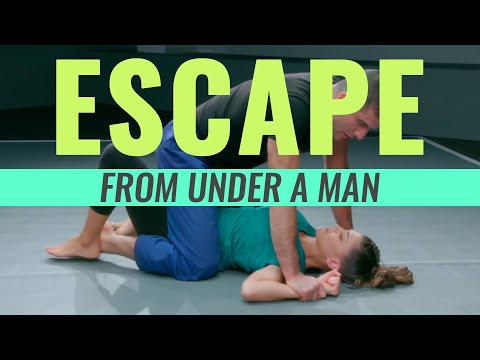
This is an 8-minute "Slice" or variation from Lesson 4 of our new women's self-defense program, Women Empowered 2.0. The…
From prone control, ankle lock submissions require careful positional establishment before application, a principle emphasized across instructional sources. FightTIPS highlights the foundational concept that position precedes submission across multiple techniques, stressing that practitioners must secure their opponent's base and control before attempting joint manipulations. GracieBreakdown demonstrates escape mechanics from mounted pin positions through bridge-and-throw principles, where hip elevation and controlled hand movement create space and force the opponent to release their grip. Gard Defense Solutions and Gracie NEPA both address control from mounted positions in law enforcement contexts, where controlling the opponent's limbs through skeletal framework and proper grip placement (particularly on the tricep and wrist) establishes dominance before transitioning to restraint or submission. Common themes across instructors include the importance of angle manipulation—cutting perpendicular angles to maximize leverage—consolidating control through body pressure and limb positioning, and preventing the opponent's escape through methodical, step-by-step progressions rather than rushing to the submission finish. All sources agree that premature submission attempts without established positional control result in escaped defenses and loss of dominant position.
Сформировано на основе 4 инструкторов
Учебных курсов по этой технике пока нет.
Войдите, чтобы предложить курс.
Риск травмы для человека, к которому применяется техника
Ankle locks from prone position allow strong leverage
Уровень мастерства, необходимый для надёжного выполнения техники
Разрешена ли техника по основным соревновательным правилам
Wikipedia ja; JBJJF rules; Japanese BJJ community
Japanese Wikipedia — martial arts technique articles
Official Japanese BJJ federation — competition rules and terminology
Standard Japanese martial arts terminology (kanji/hiragana)
Established Japanese martial arts naming convention — native Japanese term (和語/漢語)
Japanese terminology sourced from Wikipedia ja; JBJJF rules; Japanese BJJ community
forearm blade pressure, hip extension power, body arching
strong forearms and back extensors
forearm extensors, erector spinae, glutes, hip extensors
According to GracieBreakdown, you must hug your opponent's torso immediately after posting and catching yourself, because once your hands are no longer controlling the opponent, they can use them to punch you in the face or regain wrist control.
Instead of bridging, GracieBreakdown recommends raising your arms to 90 degrees first to get closer to the opponent's shoulders, which makes it easier to hug the torso and climb out, then wrapping the arm to escape.
GracieBreakdown notes that face plants into the ground are the most common unfortunate training situations that occur from this escape, emphasizing the importance of proper hand placement to avoid them.
According to Gracie NEPA's law enforcement instruction, you must control the subject's arm on the gun's side because they can reach for the weapon, making this arm control essential for officer safety.
Ankle locks from prone control (ashi-garami position) are applied when the attacker controls the opponent's leg while both fighters are on the ground, typically with the attacker lying on their back and the opponent's foot trapped against the chest. The standard straight ankle lock entry involves falling to the hip while hugging the opponent's foot, then bridging to hyperextend the ankle.
Prone-control ankle locks are fundamental in sambo and catch wrestling leg attack systems. In BJJ, they serve as the entry-level leg lock, permitted at all belt levels in IBJJF no-gi competition.
IBJJF: разрешён — Legal at all belt levels; IJF: запрещён — Only elbow joint locks (kansetsu-waza) permitted in judo — all other joint lo…; ADCC: разрешён — Legal — all submissions legal in ADCC; Unified MMA: разрешён — Legal submission technique; FIAS Sport Sambo: разрешён — Legal; FIAS Combat Sambo: разрешён — Legal
Оценка опасности 6/10. High — ankle locks from prone position allow strong leverage
Стандартная цепочка подготовки: Establish Position → Create the Threat → Secure the Hold → Finish.
Стандартные контрприёмы: Early Recognition — identify the submission attempt early and begin defence immediately / Posture and Base — maintain strong posture and base to prevent submission setups / Grip Fight — deny the attacker their preferred gripping configuration.
Распространённые варианты: Standard straight ankle lock (forearm blade on the Achilles tendon, arching backward); Bellator-style ankle lock (tighter knee pinch with shoulder on the shin for added co…); Standing ankle lock (applied during a scramble from the feet); Ankle lock from top (applied after a guard pass when the foot is exposed).
Prone position chokes and cranks are used in both MMA (ground-and-pound to submission sequences) and advanced BJJ competition.
Основные ошибки, на которые стоит обратить внимание: Not maintaining control while attacking — the prone opponent will scramble to escape; maintain chest-to-back contact … / Attempting submissions before establishing control — secure the riding position first, then identify which limbs are … / Not using body weight — from prone control, body weight is your primary tool; lifting off to apply a technique allows… / Ignoring the back-take — from prone control, the back take is often the highest-percentage option; don't skip it for ….
From Prone Control также известен как Fuse Seigyo kara, Prone Position Lock, Ground Control Submission.