Перевод: Shoulder Hold / Arm-and-Head Lock — From Guard – Wrist Control, No-Gi
Дистанция и классификация
Категория
Удар и защитаЗамкиБлижний бойБой против нескольких
Дистанция
БлижняяСредняяДальняя
Целевая зона
Верхняя частьСредняя частьНижняя часть
Обзор
A no-gi guard variation of the arm triangle where the attacker first immobilizes the opponent’s arm via wrist control (pinning the wrist to the mat or across the chest). With the wrist anchored, the attacker threads the arm under the head, drives the shoulder across the neck, and angles the hips to compress the carotids. Wrist control prevents the trapped arm from framing or retracting, creating a tighter, more secure finish.
Также известна как
Wrist-Control Arm Triangle from Guard[1]Guard Kata Gatame with Wrist ControlJP[2]Head-and-Arm Choke with Wrist Pin — No-Gi[3]
Evolved from standard guard kata gatame and kimura-trap systems; adopted widely in no-gi where collar grips are absent and wrist pins provide reliable control
Страна происхождения· показано в случайном порядке
Wrist control provides a reliable grip substitute in no-gi for isolating the arm across the neck, though the choke's effectiveness depends heavily on maintaining that control throughout the finish. [1]
Родословная
The wrist-control arm triangle from guard was adapted for no-gi grappling where gi grips are unavailable. [1]
Соревновательные результаты
This variation appears in no-gi submission grappling competition at ADCC and no-gi IBJJF events. [1]
Изображения
Изображений для этой техники пока нет.
Войдите, чтобы предложить изображение.
Биомеханический механизм
Action — Lateral compression of neck and arm via shoulder pressure and head control
Constraint — Wrist pin/2-on-1 prevents defensive frame and arm retrieval
Joints Affected — Neck (carotids), shoulder, upper arm
Torque Direction — Side pressure from hip pivot and shoulder/chest drive
Позиция и вход
From closed or open guard — Secure same-side or cross-wrist control (pin/staple), Thread arm under head, Trap far arm with head-and-arm connection, Angle hips off to choke side, Drive shoulder and squeeze to finish.
Варианты
Wrist pin to the mat | Cross-wrist staple across opponent’s chest | 2-on-1 wrist ride before threading | Transition to mount/side control to finish tighter
Official Kodokan ground technique classification system
3ДругоеJapanese Martial Arts Standard Terminology (武道用語)
Established Japanese martial arts naming convention — native Japanese term (和語/漢語)
4ЦитатаKodokan Judo — Official Katame-waza Classification (肩固め Kata-gatame)
Japanese terminology sourced from Kodokan Judo — Official Katame-waza Classification (肩固め Kata-gatame)
Сообщество
Атлетизм
Requires
hip flexibility, long legs relative to torso
Favours
longer limbs for easier figure-four lock around head and arm
Key muscles
hip adductors, hamstrings, quadriceps
Заметки
Great follow-up when opponent posts a hand to stand or after failed guillotine/arm drag; if opponent pulls wrist free, flow to kimura or triangle immediately
Часто задаваемые вопросы
Why should I keep my palm down when applying the arm triangle choke?
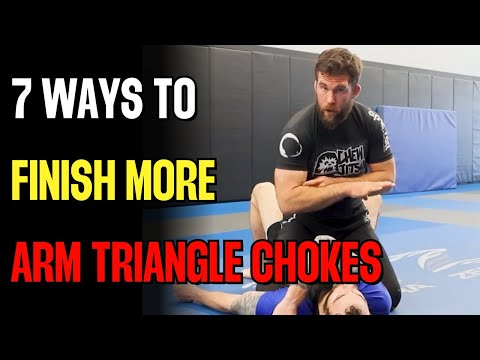
Keeping your choking arm palm down eliminates natural gaps in space that appear when your palm is up, making the choke much tighter and more effective. Chewjitsu emphasizes this positioning is critical for finishing the submission cleanly.
How do I maintain proper angle and pressure when finishing the arm triangle?
You need to maintain an angle with your body to drive force against your opponent—avoid sitting flat to the side. Bring your head close to your opponent's head to increase shoulder pressure on the neck and eliminate escape opportunities, as Chewjitsu teaches.
Why shouldn't I hold my breath while applying the arm triangle?
Holding your breath causes you to gas out quickly and lose strength throughout the finish, potentially giving your opponent an escape window. Continuing to breathe steadily ensures you maintain pressure and don't burn out your arms before the choke is complete.
How tight should I make my grip before finishing the arm triangle?
Before dismounting or driving the finish, lift your opponent to the side and push the choking arm slightly deeper through the space to maximize tightness, ensuring there's minimal slack in the position.
Как работает Arm Triangle Choke — From Guard – Wrist Control, No-Gi?
A no-gi guard variation of the arm triangle where the attacker first immobilizes the opponent’s arm via wrist control (pinning the wrist to the mat or across the chest). With the wrist anchored, the attacker threads the arm under the head, drives the shoulder across the neck, and angles the hips to compress the carotids.
Откуда происходит Arm Triangle Choke — From Guard – Wrist Control, No-Gi?
Evolved from standard guard kata gatame and kimura-trap systems; adopted widely in no-gi where collar grips are absent and wrist pins provide reliable control
Насколько опасен Arm Triangle Choke — From Guard – Wrist Control, No-Gi?
Danger: 9/10 | Rapid unconsciousness possible when wrist is immobilized and shoulder pressure is established
Как подготовить Arm Triangle Choke — From Guard – Wrist Control, No-Gi?
Стандартная цепочка подготовки: closed or open guard → Secure same-side or cross-wrist control (pin/staple) → Thread arm under head → Trap far arm with head-and-arm connection → Angle hips off to choke side.
Как защититься от Arm Triangle Choke — From Guard – Wrist Control, No-Gi?
Стандартные контрприёмы: Straighten the Arm — extend the arm to break the figure-four grip angle / Roll Toward — roll in the direction of the lock to relieve rotational pressure / Grip the Belt/Shorts — anchor the hand to prevent the arm from being isolated.
Какие есть варианты Arm Triangle Choke — From Guard – Wrist Control, No-Gi?
Распространённые варианты: Wrist pin to the mat; Cross-wrist staple across opponent’s chest; 2-on-1 wrist ride before threading; Transition to mount/side control to finish tighter.
Насколько эффективен Arm Triangle Choke — From Guard – Wrist Control, No-Gi на соревнованиях?
This variation appears in no-gi submission grappling competition at ADCC and no-gi IBJJF events.
Какие типичные ошибки при выполнении Arm Triangle Choke — From Guard – Wrist Control, No-Gi?
Основные ошибки, на которые стоит обратить внимание: Letting go of wrist too early / Shallow head-and-arm connection / Squeezing without proper hip angle / Allowing opponent to posture up or reinsert a frame.
Какие ещё названия есть у Arm Triangle Choke — From Guard – Wrist Control, No-Gi?
Arm Triangle Choke — From Guard – Wrist Control, No-Gi также известен как Kata Gatame — From Guard – Wrist Control, No-Gi, Wrist-Control Arm Triangle from Guard, Guard Kata Gatame with Wrist Control, Head-and-Arm Choke with Wrist Pin — No-Gi.