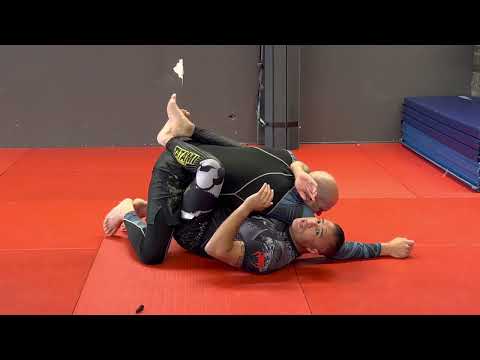
Arm Triangle From Closed Guard
0
Arm Triangle Choke — From Closed Guard – No-Gi·Chosen Few BJJ
Arm triangle form closed guard Having a strong closed guard is important to make sure you can move your opponents body.…
Перевод: Shoulder Hold / Arm-and-Head Lock — From Closed Guard – No-Gi
A no-gi variation of the arm triangle choke applied from the closed guard. Without the collar grip, the attacker uses arm positioning and shoulder pressure to trap the opponent’s head and arm. Proper hip angle and shoulder drive close the carotid arteries, making the choke highly effective in no-gi grappling.
Developed in no-gi contexts where traditional collar grips are unavailable. Popular in MMA and no-gi BJJ for maintaining control from closed guard.
Effective in no-gi when the opponent's posture is broken and the arm is trapped; the absence of gi grips makes arm isolation more difficult but the choke itself is tighter without collar friction. [1]
The arm triangle from closed guard in no-gi was adapted from the traditional head-and-arm choke for submission grappling without the gi. [1]
No-gi arm triangles from guard appear in ADCC and no-gi IBJJF competition. [1]
Изображений для этой техники пока нет.
Войдите, чтобы предложить изображение.
Arm triangle form closed guard Having a strong closed guard is important to make sure you can move your opponents body.…
Учебных курсов по этой технике пока нет.
Войдите, чтобы предложить курс.
Риск травмы для человека, к которому применяется техника
Can render opponent unconscious quickly if held properly
Уровень мастерства, необходимый для надёжного выполнения техники
Разрешена ли техника по основным соревновательным правилам
Kodokan Judo — Official Katame-waza Classification (肩固め Kata-gatame)
Japanese terminology sourced from Kodokan Judo — Official Katame-waza Classification (肩固め Kata-gatame)
Official Kodokan ground technique classification system
Established Japanese martial arts naming convention — native Japanese term (和語/漢語)
Japanese terminology sourced from Kodokan Judo — Official Katame-waza Classification (肩固め Kata-gatame)
hip flexibility, long legs relative to torso
longer limbs for easier figure-four lock around head and arm
hip adductors, hamstrings, quadriceps
Can follow failed guillotine or collar choke attempts. Useful when opponent defends neck or posture escapes.
According to Chosen Few BJJ, you need to keep your knees squeezed on his ribs and your heels down towards his butt to maintain control. This foundation works even if your opponent has good posture.
Chosen Few BJJ recommends getting a two-on-one grip (your two hands against one of his arms) in a baseball bat position, then squeezing with your elbows both inward and downward to hit both carotids.
Chosen Few BJJ emphasizes that many people extend away from their opponent in this position, which gives good opponents an escape. Instead, you need to get tighter and bring your head closer to his to finish the choke without pulling his head out.
A no-gi variation of the arm triangle choke applied from the closed guard. Without the collar grip, the attacker uses arm positioning and shoulder pressure to trap the opponent’s head and arm.
Developed in no-gi contexts where traditional collar grips are unavailable. Popular in MMA and no-gi BJJ for maintaining control from closed guard.
Danger: 9/10 | Can render opponent unconscious quickly if held properly
Стандартная цепочка подготовки: closed guard → Slide arm under opponent’s head, trap far arm, lock head-and-arm with shoulders and arm positioning, angle hips to the side, apply choke. → Achieve Controlling Position → Isolate the Neck → Set the Grip.
Стандартные контрприёмы: Tuck Chin — protect the neck by lowering the chin to prevent the choke from sinking / Two-on-One Grip Fight — use both hands to strip the choking grip before it locks / Turn Into — rotate toward the choking arm to relieve carotid pressure / Posture Up — straighten the spine and create distance to break the choking angle.
Распространённые варианты: Emphasize arm placement and shoulder pressure. Can be combined with hip pivot and angle changes to tighten. Avoid leaving gaps around the head or arm..
No-gi arm triangles from guard appear in ADCC and no-gi IBJJF competition.
Основные ошибки, на которые стоит обратить внимание: Shallow arm placement / Weak shoulder pressure / Poor hip angle / Relying solely on arm squeeze.
Arm Triangle Choke — From Closed Guard – No-Gi также известен как Kata Gatame — From Closed Guard – No-Gi, No-Gi Arm Triangle from Closed Guard, Closed Guard No-Gi Kata Gatame, No-Gi Head-and-Arm Choke from Guard.