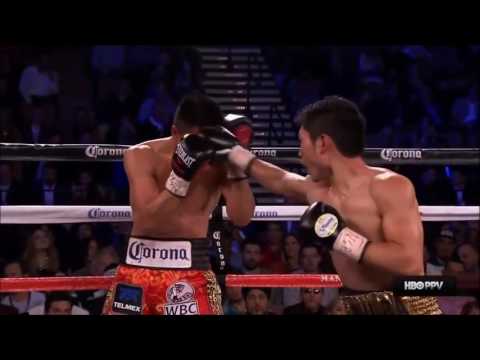
The 1 2, Jab and Cross Knockouts
0
Cross·Jack O'Connell
A collection of some sweet 1-2, jab cross knockouts and knock downs in boxing. The 1-2 is the original boxing combinati…
Перевод: cross
The cross is the straight rear-hand power punch, one of the four fundamental punches in boxing. [1] The term 'cross' derives from the punch crossing over the opponent's lead hand, a concept documented in early boxing manuals. [2] The cross developed as gloved boxing matured under the Queensberry Rules, with bare-knuckle fighters having previously favoured hooks and looping punches to protect their hands. [2] Dempsey described the cross as the primary 'power line' punch, where the body's kinetic chain aligns to deliver maximum force along a straight trajectory from the rear hand. [1] Bob Fitzsimmons (1863-1917) is credited with pioneering the use of full body rotation to power the rear straight hand. [3]
The cross (also called the straight right for orthodox fighters) is one of the four fundamental boxing punches. [1]
The cross is one of the highest-power punches in boxing and a primary knockout tool. [1]
Изображений для этой техники пока нет.
Войдите, чтобы предложить изображение.
A collection of some sweet 1-2, jab cross knockouts and knock downs in boxing. The 1-2 is the original boxing combinati…
Учебных курсов по этой технике пока нет.
Войдите, чтобы предложить курс.
Риск травмы для человека, к которому применяется техника
Jab/cross; fundamental striking tool, cumulative brain trauma risk
Уровень мастерства, необходимый для надёжного выполнения техники
Разрешена ли техника по основным соревновательным правилам
Karate-Do Kyohan: The Master Text (Gichin Funakoshi, 1935)
Alias sources — [1] Championship Fighting (Dempsey, 1950) [2] Karate-Do Kyohan (Funakoshi, 1935) [3] Boxing (Fleischer, 1958)
History sources — [1] Championship Fighting (Dempsey, 1950) [2] The Art of Boxing and Manual of Training (Price, 1867) [3] Boxing's Greatest Fighters (Sugar, 2006)
Standard katakana transliteration of Western martial arts terminology (外来語) — used in Japanese MMA, boxing, and BJJ communities
Alias sources — [1] Championship Fighting (Dempsey, 1950) [2] Karate-Do Kyohan (Funakoshi, 1935) [3] Boxing (Fleischer, 1958)
History sources — [1] Championship Fighting (Dempsey, 1950) [2] The Art of Boxing and Manual of Training (Price, 1867) [3] Boxing's Greatest Fighters (Sugar, 2006)
hip rotation power, rear foot pivot, full kinetic chain coordination
reach advantage, strong hips for power transfer
glutes, obliques, pectorals, triceps, deltoids
Каждое движение в любом боевом искусстве обладает рядом универсальных свойств. Комбинируйте параметры ниже, чтобы найти нужный инструмент или сравнить аналоги из разных стилей.
A rear-hand straight punch timed to land simultaneously or immediately after slipping or parrying an incoming attack, using the opponent's forward momentum against them.
A looping rear-hand punch thrown over the opponent's guard in a slight arc, dropping the body weight forward and downward on impact.
The fundamental rear-hand straight punch thrown with full hip and shoulder rotation, transferring weight from the back foot through the kinetic chain.
A powerful straight punch thrown with the rear hand, rotating the hips and shoulders fully to generate maximum force along a direct line to the target.
The cross is the straight rear-hand power punch, one of the four fundamental punches in boxing. The term 'cross' derives from the punch crossing over the opponent's lead hand, a concept documented in early boxing manuals.
Unified MMA: разрешён — Legal striking technique; WBC/Boxing: разрешён — Legal — punches are the core technique of boxing; WKF: разрешён — Legal, jodan/chudan punch scores 1 point (yuko) — controlled contact required; Kyokushin: ограничен — Body punches legal at full power, head punches banned; WT: ограничен — Punches to trunk only (1 point), punches to head banned; ITF: разрешён — Legal — hand techniques to head and body both permitted; WAKO: разрешён — Legal in Full Contact and Low Kick formats; K: разрешён — 1/GLORY — Legal — full power punches to head and body; IFMA: разрешён — Legal
Оценка опасности 5/10. High — jab/cross; fundamental striking tool, cumulative brain trauma risk
Стандартная цепочка подготовки: Fighting Stance → Weight Transfer → Extend → Snap Back.
Стандартные контрприёмы: Slip — move the head off the centre line to evade the punch / Parry — deflect the incoming punch with a quick hand redirection / Counter Cross — time a straight punch over the incoming attack.
Распространённые варианты: Standard cross (rear-hand straight punch with full hip rotation); Counter cross (pull counter) (leaning back to avoid the jab, firing the cross as a counter); Step-in cross (stepping forward with the punch for added reach and power); Body cross (targeting the solar plexus or liver with the straight rea…).
The cross is one of the highest-power punches in boxing and a primary knockout tool.
Основные ошибки, на которые стоит обратить внимание: Squaring the shoulders to generate more power, which removes your bladed stance and exposes the chin / Pushing the punch rather than rotating into it — the fist should accelerate to the target, not coast / Lifting the rear heel too early, which disconnects the kinetic chain from the floor / Not returning to guard after the cross, leaving the lead side of the face open to hooks.
Cross также известен как Kurosu, Rear Straight, Gyaku Tsuki, Right Cross.