Ridge-hand strikes
0
Standard Ridge Hand·Angelo Oliveira
Learn finer points of throwing a ridge hand.
Перевод: standard ridge hand
The standard ridge hand is the basic execution of the radial-edge hand strike, delivered in a horizontal or upward arc. [1] In karate competition, the ridge hand became a popular scoring technique in the 1960s-1970s as point-based kumite rules developed, because its circular trajectory made it difficult to block. [2] Nakayama documented the standard ridge hand as a technique requiring precise conditioning of the radial edge of the hand and careful thumb positioning to avoid injury. [2]
Standard ridge hand. [1]
From karate. [1]
Used in competition. [1]
Изображений для этой техники пока нет.
Войдите, чтобы предложить изображение.
Learn finer points of throwing a ridge hand.
How to properly use the Ridge Hand without injury. A traditional technique not covered often, and not really practical …
Учебных курсов по этой технике пока нет.
Войдите, чтобы предложить курс.
Риск травмы для человека, к которому применяется техника
Reverse knife hand; targets temple/jaw
Уровень мастерства, необходимый для надёжного выполнения техники
Разрешена ли техника по основным соревновательным правилам
Karate-Do Kyohan: The Master Text (Gichin Funakoshi, 1935)
Alias sources — [1] Karate-Do Kyohan (Funakoshi, 1935) [2] Kukkiwon Taekwondo Textbook (Kukkiwon, 2006) [3] Dynamic Karate (Nakayama, 1966)
History sources — [1] The Art of Striking (Blauer, 2004) [2] Best Karate Vol. 3 (Nakayama, 1978)
Mixed Japanese-Western terminology — combines traditional Japanese terms with katakana loanwords
Alias sources — [1] Karate-Do Kyohan (Funakoshi, 1935) [2] Kukkiwon Taekwondo Textbook (Kukkiwon, 2006) [3] Dynamic Karate (Nakayama, 1966)
History sources — [1] The Art of Striking (Blauer, 2004) [2] Best Karate Vol. 3 (Nakayama, 1978)
speed, power generation through kinetic chain, striking surface conditioning
athletic build with fast-twitch muscle fibres
varies by strike — hip rotators, shoulders, core
Каждое движение в любом боевом искусстве обладает рядом универсальных свойств. Комбинируйте параметры ниже, чтобы найти нужный инструмент или сравнить аналоги из разных стилей.
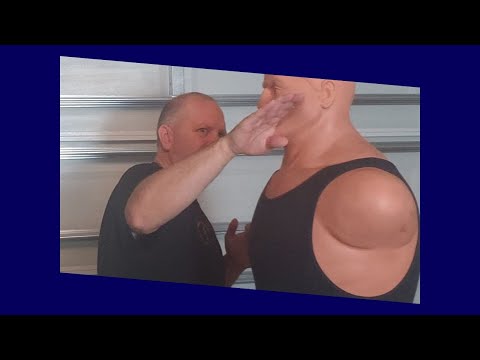
According to Angelo Oliveira, tuck your thumb underneath the palm away from your fingers, and separate your fingers by angling them away from the striking surface. You should strike with the area where the crook of the wrist meets the base of the thumb, not with all fingers bunched together, as this can cause damage to the phalanges.
Kevin W. Putala recommends throwing the ridge hand more like a hook with a bent elbow rather than with a straight, locked arm, keeping your elbows close to your body to protect your shoulders and joints. This approach is especially effective when fighting in close range and reduces the risk of injury to your elbow and shoulder.
Angelo Oliveira emphasizes that injuries most commonly occur to the thumb when the hand position is incorrect. Kevin W. Putala also warns that throwing the ridge hand with a straight, locked arm can cause elbow joint injuries, which is why keeping the elbow bent and close to the body is important.
According to Angelo Oliveira, the rule for ridge hand strikes is 'bone on flesh or flesh on bone'—since you're using a bony part of the hand, you must strike appropriate targets. Kevin W. Putala notes that the ridge hand can be used to strike below the sight line when in close, and can also be used to strike the groin from underneath.
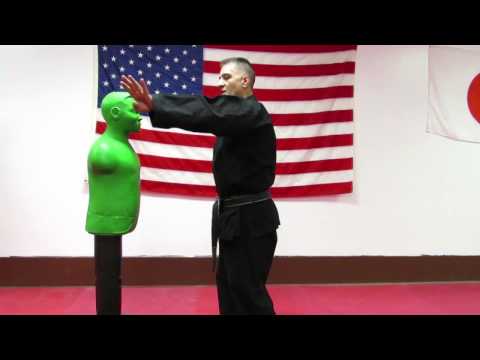
The fundamental ridge hand strike swinging the inner edge of the open hand in a wide horizontal arc, targeting the temple or side of the head with centrifugal force.
The standard ridge hand is the basic execution of the radial-edge hand strike, delivered in a horizontal or upward arc. In karate competition, the ridge hand became a popular scoring technique in the 1960s-1970s as point-based kumite rules developed, because its circular trajectory made it difficult to block.
Unified MMA: разрешён — Legal (palm strikes, slaps permitted); WBC/Boxing: запрещён — Only closed-fist punches permitted; WKF: ограничен — Varies by technique — some open-hand strikes legal in kata, generally restric…; Kyokushin: запрещён — Only closed-fist strikes to body permitted; WT: запрещён — Prohibited; ITF: ограничен — Some knife hand techniques legal; WAKO: запрещён — Closed fist only; K: запрещён — 1/GLORY — Closed fist only; IFMA: разрешён — Legal — palm strikes permitted in Muay Thai
Оценка опасности 5/10. High — reverse knife hand; targets temple/jaw
Стандартная цепочка подготовки: Assume Fighting Stance → Generate Power → Execute Strike → Recover to Guard.
Стандартные контрприёмы: Block — absorb the strike with a protective guard position / Evasion — move the target out of the strike's path / Counter-Attack — time an offensive response during the recovery phase of the strike.
Распространённые варианты: Standard variation (primary execution of the strike from the most common stance); Power variation (modified mechanics for maximum force generation); Speed variation (minimised telegraph for a faster, harder-to-read attack); Counter variation (timed to exploit the opponent's offensive commitment).
Used in competition.
Основные ошибки, на которые стоит обратить внимание: Thumb not tucked, risking hyperextension on contact / Using the palm flat instead of presenting the bony ridge / Swinging from the arm only without body rotation / Over-extending and pulling the body off-balance.
Standard Ridge Hand также известен как Sutandādo Haitō-uchi, Haito Uchi, Sonnal Deung Chigi, Inside Knife Hand.