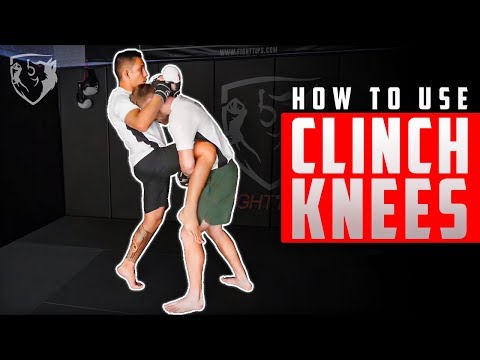
How to Use Clinch Knees in MMA like Henry Cejudo
0
Clinch Knee·fightTIPS
Last weekend, the "Triple C," Henry Cejudo proved his grit and champion mindset by adjusting and overcoming against Marl…
Перевод: clinch knee
The clinch knee is a straight knee strike delivered while controlling the opponent in a clinch, most commonly from the Thai plum (double collar tie) position. [1] Clinch knees are the signature offensive technique of Muay Thai clinch fighting, which developed as a distinct tactical phase of the art during the 20th century formalisation of stadium Muay Thai. [2] Kraitus and Rennehan document the clinch knee as inseparable from the Thai clinch tradition, where control of the head and neck directly enables powerful upward knee strikes. [1] The clinch knee was made famous internationally by fighters like Dieselnoi Chor Thanasukarn, whose clinch-and-knee style dominated the Lumpinee Stadium in the 1980s. [2]
The clinch knee is the signature Muay Thai technique, central to the art's clinch-fighting system. [1]
Clinch knees are the primary scoring technique in Muay Thai clinch exchanges. [1]
Изображений для этой техники пока нет.
Войдите, чтобы предложить изображение.
Last weekend, the "Triple C," Henry Cejudo proved his grit and champion mindset by adjusting and overcoming against Marl…
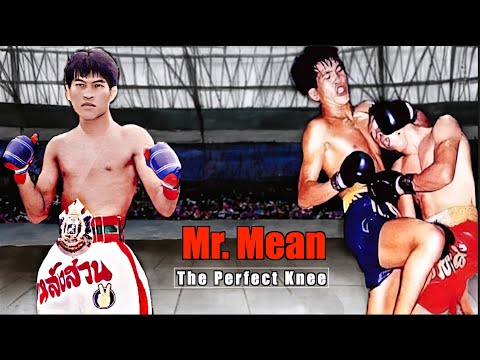
The Muay Thai Library: https://www.patreon.com/posts/muay-thai-uncut-7058199 In the golden age of Muay Thai, Langsuan Ph…
Clinch knees represent a family of knee-strike techniques unified by their execution from close-range clinch positions, but their application varies significantly based on sport context and opponent capabilities. The Modern Martial Artist emphasizes the classical Muay Thai approach through Langsuan's methodology: once clinch control is established via a double-collar plum or opportunistic grip, the striker creates offensive angles through deliberate footwork—stepping back, then hopping to load the strike while the opponent bears the clincher's weight, creating a pronounced kinetic chamber for maximum power generation. Langsuan's signature involved midair knee flexion (heel to thigh) producing a violent pendulum effect, accompanied by push-pull clinch dynamics to continuously unbalance the target. In contrast, fightTIPS demonstrates MMA-specific adaptation through Henry Cejudo's performance: the fundamental clinch geometry remains similar, but hip positioning inverts—the striker deliberately keeps hips retracted rather than driving through, sacrificing approximately 10-15% power for critical advantages: reduced takedown vulnerability (preventing opponents from running through extended weight), faster knee delivery, and improved defensive positioning for sprawling should the opponent shoot. Both instructors stress that clinch knees function within a broader framework of clinch control and hand-fighting; entry mechanics (via straight right hands, hooks, or uppercuts in MMA) and grip management determine striking opportunity. The subfamily's unifying principle is that clinch knees require established positional dominance and continuous grip management, with variants optimized for maximum power destruction (Muay Thai) or balanced power-speed-safety equilibrium (MMA).
Сформировано на основе 2 инструкторов
Учебных курсов по этой технике пока нет.
Войдите, чтобы предложить курс.
Риск травмы для человека, к которому применяется техника
Muay Thai khao trong; direct upward thrust to body/head
Уровень мастерства, необходимый для надёжного выполнения техники
Разрешена ли техника по основным соревновательным правилам
Muay Thai: The Art of Fighting (Yod Ruerngsa, Khun Kao Charuad & James Cartmell, 2002)
Alias sources — [1] Muay Thai: The Art of Fighting (Kraitus & Kraitus, 1988) [2] Muay Thai Unleashed (Delp, 2006) [3] WBC Muay Thai Rules (2014)
History sources — [1] Muay Thai: The Art of Fighting (Kraitus & Rennehan, 2002) [2] Muay Thai Unleashed (Delp, 2006)
Official karate technique names (和語/漢語)
Established Japanese martial arts naming convention — native Japanese term (和語/漢語)
Alias sources — [1] Muay Thai: The Art of Fighting (Kraitus & Kraitus, 1988) [2] Muay Thai Unleashed (Delp, 2006) [3] WBC Muay Thai Rules (2014)
History sources — [1] Muay Thai: The Art of Fighting (Kraitus & Rennehan, 2002) [2] Muay Thai Unleashed (Delp, 2006)
hip flexion power, clinch control ability, close-range comfort
long thigh for greater leverage, strong hip flexors
hip flexors, quadriceps, core, grip (for clinch)
Каждое движение в любом боевом искусстве обладает рядом универсальных свойств. Комбинируйте параметры ниже, чтобы найти нужный инструмент или сравнить аналоги из разных стилей.
The Modern Martial Artist emphasizes that an iron grip on your opponent's neck is the crucial component for controlling the clinch and setting up committed knee strikes, while keeping your hips in and knees up rather than shooting through your hips helps maintain leverage in MMA.
The Modern Martial Artist explains that locking your opponent in place with a dominant clinch grip leaves them unable to defend their ribs on that side, making it very practical to dominate a specific area when you don't give your opponent the opportunity to compete.
You can work back in with your hands and re-establish the clinch, or disengage and stay in the mid-range to keep pressure on your opponent while setting up your next clinch entry.
A straight knee strike delivered from within the clinch, using collar ties and head control to pull the opponent into the rising knee.
The clinch knee is a straight knee strike delivered while controlling the opponent in a clinch, most commonly from the Thai plum (double collar tie) position. Clinch knees are the signature offensive technique of Muay Thai clinch fighting, which developed as a distinct tactical phase of the art during the 20th century formalisation of stadium Muay Thai.
Unified MMA: ограничен — Knees to standing opponent legal, knees to head of grounded opponent banned; WBC/Boxing: запрещён — All knee strikes prohibited; WKF: запрещён — Prohibited in sport karate; Kyokushin: разрешён — Legal to body; WT: запрещён — Prohibited; ITF: запрещён — Prohibited; WAKO: запрещён — Prohibited in most formats; K: ограничен — 1/GLORY — One clinch knee allowed before referee break; IFMA: разрешён — Legal — knees are a core Muay Thai weapon, clinch knees highly scored
Оценка опасности 7/10. Very High — Muay Thai khao trong; direct upward thrust to body/head
Стандартная цепочка подготовки: Clinch or Frame → Pull Opponent In → Drive the Knee.
Стандартные контрприёмы: Hip Check — push the opponent's hips away to create distance and kill the knee angle / Clinch Control — control the opponent's head and posture to prevent knee generation / Step Back — create distance to escape the knee's effective range.
Распространённые варианты: Straight knee (driving the knee straight upward into the body or head); Curved knee (round knee) (swinging the knee from the side in a circular path); Flying knee (leaping forward and driving the knee at the apex of the jump); Clinch knee (pulling the opponent into the knee from Muay Thai plum po…).
Clinch knees are the primary scoring technique in Muay Thai clinch exchanges.
Основные ошибки, на которые стоит обратить внимание: Clinching the neck without inside position on the biceps — the opponent simply swims their arms inside and escapes / Throwing knees without pulling the opponent into them — the pull is half the power / Standing flat-footed during clinch knees — rise onto the ball of the support foot for height and extension / Knee bumping without hip extension — each knee must drive through the target.
Clinch Knee также известен как Kubi-zumo Hiza-geri, Khao Trong, Plum Knee, Clinch-Range Knee.