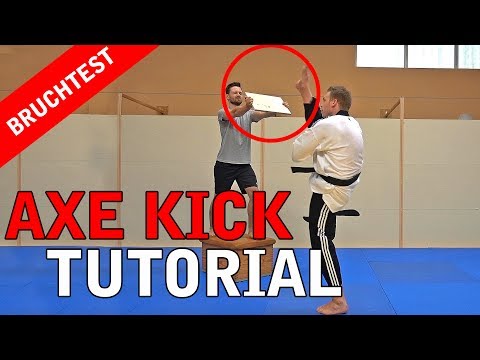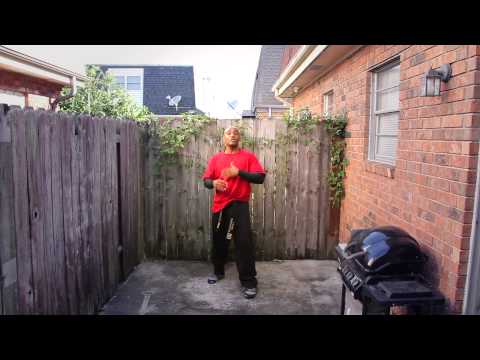
HOW TO: Outside Swing Kick
0
Outside Axe Kick·Ryan Robertson
A step by step explanation on how to Outside Swing Kick
Перевод: outside axe kick
The Outside Axe Kick subfamily covers axe kicks where the leg is raised by swinging it upward from the outside (lateral side) of the body in a wide arc before being brought straight down onto the target. [1] The outside trajectory gives the kick a wider, more visible path than the inside variant, but it can generate more momentum due to the larger arc and is effective at clearing the opponent's guard from the outside before striking downward. [1],[2] The outside axe kick targets the same areas — collarbone, shoulder, face, and top of head — but approaches from a different angle. [2],[3]
The outside axe kick developed alongside the inside variant in Korean martial arts, providing an alternative trajectory when the inside path was blocked. [1] Both variants have been standard techniques in taekwondo and karate competition since the formalisation of competitive rules in the 1970s. [2],[3]
The outside axe kick raises the leg to the outside and brings it down on the opponent. [1]
A taekwondo and karate technique. [1]
Used in TKD and MMA. [1]
Изображений для этой техники пока нет.
Войдите, чтобы предложить изображение.
A step by step explanation on how to Outside Swing Kick
► TURBO GLOCKE AKTIVIEREN NICHT VERGESSEN !!!!!! ⚡️🔔⚡️ *Trainingspartner für zuhause: https://amzn.to/2YErIFX MEIN INS…
Учебных курсов по этой технике пока нет.
Войдите, чтобы предложить курс.
Риск травмы для человека, к которому применяется техника
Downward heel strike; collarbone/head impact risk
Уровень мастерства, необходимый для надёжного выполнения техники
Разрешена ли техника по основным соревновательным правилам
Karate-Do Kyohan: The Master Text (Gichin Funakoshi, 1935)
Alias sources — [1] Kukkiwon Taekwondo Textbook (Kukkiwon, 2006) [2] Taekwondo: The State of the Art (Park, 1989) [3] Karate-Do Kyohan (Funakoshi, 1935)
Effectiveness sources — [1] Comprehensive Asian Fighting Arts (Draeger & Smith, 1969)
Official karate technique names (和語/漢語)
Established Japanese martial arts naming convention — native Japanese term (和語/漢語)
Alias sources — [1] Kukkiwon Taekwondo Textbook (Kukkiwon, 2006) [2] Taekwondo: The State of the Art (Park, 1989) [3] Karate-Do Kyohan (Funakoshi, 1935)
Effectiveness sources — [1] Comprehensive Asian Fighting Arts (Draeger & Smith, 1969)
exceptional hip flexibility, hamstring length, leg raising speed
extremely flexible hips for raising the leg above head height
hip flexors, hamstrings (eccentric), quadriceps, core
Каждое движение в любом боевом искусстве обладает рядом универсальных свойств. Комбинируйте параметры ниже, чтобы найти нужный инструмент или сравнить аналоги из разных стилей.
The outside axe kick is designed to get over your opponent's shoulders and strike across the head using your outside blade, either coming down or smacking across horizontally.
You want to trace your whole body and get over your own shoulders to generate power and proper height for the kick to clear your opponent's guard.
Start with your hands up, put your leg back, and then rotate to the outside at a higher trajectory to execute the kick.
The Outside Axe Kick subfamily covers axe kicks where the leg is raised by swinging it upward from the outside (lateral side) of the body in a wide arc before being brought straight down onto the target. The outside trajectory gives the kick a wider, more visible path than the inside variant, but it can generate more momentum due to the larger arc and is effective at clearing the opponent's guard from the outside before striking downward.
The outside axe kick developed alongside the inside variant in Korean martial arts, providing an alternative trajectory when the inside path was blocked. Both variants have been standard techniques in taekwondo and karate competition since the formalisation of competitive rules in the 1970s.
Unified MMA: разрешён — Legal striking technique; WBC/Boxing: запрещён — All kicks prohibited in boxing; WKF: разрешён — Legal, chudan (body) kick scores 2 points, jodan (head) kick scores 3 points; Kyokushin: разрешён — Legal at full power to body and head; WT: разрешён — Legal, body kick 2 points, head kick 3 points, spinning body 4 points, spinni…; WAKO: разрешён — Legal in Full Contact and Low Kick formats; K: разрешён — 1/GLORY — Legal; IFMA: разрешён — Legal — kicks are a core Muay Thai technique
Оценка опасности 6/10. High — downward heel strike; collarbone/head impact risk
Стандартная цепочка подготовки: Stance and Range → Chamber the Leg → Execute the Kick → Recover.
Стандартные контрприёмы: Check (Shin Block) — raise the shin to intercept the kick before it lands / Catch and Sweep — catch the kicking leg and sweep the standing leg / Step Inside — close distance inside the kick's effective range to smother it.
Распространённые варианты: Outside axe kick (raising the leg outside and bringing the heel straight down); Inside axe kick (raising the leg inside in a crescent arc before chopping …); Spinning axe kick (adding a spin before the downward chop).
Used in TKD and MMA.
Основные ошибки, на которые стоит обратить внимание: Arcing too wide and losing the downward angle — the kick must come over the top, not swing around the side / Not raising the leg high enough, resulting in a kick that hits the shoulder at a horizontal angle instead of chopping… / Losing balance because the wide arc pulls the body sideways off the support leg / Telegraphing by leaning away from the kicking side before the leg rises.
Outside Axe Kick также известен как Soto Kakato Otoshi, Bakkat Naeryeo Chagi, Outside Downward Kick, Kakato Geri Soto.