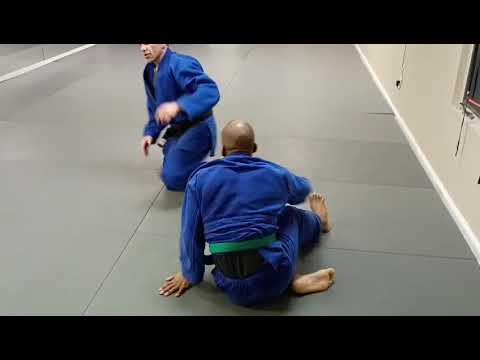
Tight Turtle

Подсемейство

Перевод: tight turtle

Дистанция и классификация

Категория
Удар и защитаЗамкиБлижний бойБой против нескольких
Дистанция
БлижняяСредняяДальняя

Обзор

The Tight Turtle subfamily covers the defensive turtle variation where the fighter compresses the body as much as possible, tucking the elbows to the knees, chin to chest, and hips low, creating the smallest possible target and maximum protection. [1] The tight turtle sacrifices escape mobility for maximum protection, used when the opponent has a strong attacking position and the defender needs to survive before creating an escape opportunity. [1],[2] The tight turtle makes it extremely difficult for the attacker to insert hooks, slide in chokes, or flatten the defender. [2],[3]

Также известна как
Tight Turtle Defence[1]Compact Turtle[2]Balled-Up Turtle[3]
Используется в

История и происхождение

The tight turtle developed as a survival-focused defensive variation, used when the standard turtle is being attacked and the defender needs maximum protection while waiting for an escape opportunity. [1] It is taught as the last-resort defensive turtle position. [2],[3]

Страна происхождения· показано в случайном порядке

  • БразилияБразильское джиу-джитсу, ММА, Сабмишн-грэпплинг
  • Японияタイト亀(Taito Kame)Бразильское джиу-джитсу, Дзюдо, Сабмишн-грэпплинг
  • СШАММА, Сабмишн-грэпплинг

Эффективность

The tight turtle maximally tucks the elbows and chin, protecting against hooks and choke entries. [1]

Родословная

The tight turtle is a refined defensive position in judo and BJJ. [1]

Соревновательные результаты

The tight turtle is used in judo and BJJ competition for defence. [1]

Изображения

Изображений для этой техники пока нет.

Войдите, чтобы предложить изображение.

Биомеханический механизм

Primary ActionEstablishing and maintaining a controlling position relative to the opponent
Joints InvolvedBody positioning determines which joints and limbs are available for control and attack
Force VectorVaries by position — gravity, frames, hooks, and pressure dictate control dynamics
Positional MechanicHierarchy of positions — each position offers different offensive and defensive capabilities

Позиция и вход

From guard pass defenceWhen the guard is about to be passed, turn to hands and knees (turtle) to prevent giving up side control
From takedown defenceAfter a partial takedown, land on hands and knees in turtle to prevent being put flat on the back
From scrambleDuring a scramble, transition to turtle as an intermediate defensive position

Видео

Dealing with a tight turtle in judo

0
Tight Turtle·Sakura Judo
1 video

Изучить технику

Учебных курсов по этой технике пока нет.

Войдите, чтобы предложить курс.

Оценки

Уровень опасности

Риск травмы для человека, к которому применяется техника

3
Умеренный3/10

Turtle is a defensive shell position; vulnerable to back takes and chokes

Сложность

Уровень мастерства, необходимый для надёжного выполнения техники

Начинающий
Допустимость на соревнованиях

Разрешена ли техника по основным соревновательным правилам

Ограничено
Разрешено
IBJJF — Legal — common transitional position
IBJJF Rules Book v6.0, June 2024PDF
Unified MMA — Legal
Unified Rules of MMA, August 2025PDF
UWW — Legal — bottom position, opponent works to turn/pin
UWW International Wrestling Rules, January 2026PDF
FIAS Sport Sambo — Legal
FIAS International Sambo Competition RulesPDF

Заметки по тренировке

Tight turtle is a maximally compact turtle variation where every gap is eliminated — elbows pressed to the thighs, hands protecting the neck, and the body curled as small as possible (Marcelo Garcia, Advanced Brazilian Jiu-Jitsu, 2011)
Tight turtle is used when the opponent has already established contact from behind — the compact structure denies them hooks, seatbelt, and choke entries
The tighter the turtle, the fewer entries the opponent has: every centimetre of space closed is a technique denied
Tight turtle requires: knees close to the elbows, forearms protecting the neck, and the head tucked as close to the knees as possible
Tight turtle is a temporary defensive measure: it buys time to plan and execute an escape
In judo competition, tight turtle is commonly seen: fighters turtle tightly to deny the opponent a score while planning their own escape
The key principle of tight turtle: make yourself as small as possible so the opponent has nothing to grip or hook

Типичные ошибки

!Turtling tight but not planning an escape — tight turtle buys time; use that time to plan
!Leaving any gap between the elbows and thighs — every gap is an entry point for the opponent
!Not tucking the chin deeply — the chin tuck must be maximal in tight turtle
!Breathing shallowly due to the compact position — maintain controlled breathing despite the compression
!Staying in tight turtle for too long — the opponent will eventually find entries; escape before they do
!Not practising tight turtle under pressure — the ability to maintain tightness under attack requires drilling
!Transitioning to tight turtle from too far — close the gaps immediately when the opponent engages

Связанные техники

Контрприёмы

Цепочка подготовки

1Achieve Positiontransition into this position through passing, sweeping, or scrambling
2Stabilizeestablish controlling grips and weight distribution
3Maintainadjust to the opponent's escape attempts to hold position
4Attacklaunch offensive techniques from the stabilized position

Источники и ссылки

Основной источник

Jiu-Jitsu University (Saulo Ribeiro, 2008)

1КнигаKodokan Judo (Kano, 1986)

Alias sources — [1] IBJJF Rules (2024) [2] Jiu-Jitsu University (Ribeiro, 2008) [3] Mastering Jujitsu (Gracie & Danaher, 2003)

2КнигаJiu-Jitsu University (Ribeiro, 2008)

Effectiveness sources — [1] Jiu-Jitsu University (Ribeiro, 2008)

Official Kodokan ground technique classification system

4ДругоеJapanese Martial Arts Hybrid Terminology

Mixed Japanese-Western terminology — combines traditional Japanese terms with katakana loanwords

5ЦитатаKodokan Judo (Kano, 1986)

Alias sources — [1] IBJJF Rules (2024) [2] Jiu-Jitsu University (Ribeiro, 2008) [3] Mastering Jujitsu (Gracie & Danaher, 2003)

6ЦитатаJiu-Jitsu University (Ribeiro, 2008)

Effectiveness sources — [1] Jiu-Jitsu University (Ribeiro, 2008)

Сообщество

Атлетизм

Requires

core strength, tight elbow position, neck protection

Favours

compact build with strong core for stability

Key muscles

core stabilisers, shoulders, neck, hip flexors

Подтехники

Ищите по тому, что делает техника, — а не по её названию

Каждое движение в любом боевом искусстве обладает рядом универсальных свойств. Комбинируйте параметры ниже, чтобы найти нужный инструмент или сравнить аналоги из разных стилей.

Категория
Дистанция

Часто задаваемые вопросы

What should I do if my opponent tightens up their turtle and I can't get anything inside?

A tight turtle is difficult to penetrate, but you can use the fact that it naturally wants to roll like a ball. Instead of trying to force your way in, encourage the roll by placing your thigh on top of their head and pulling them toward it, which will limit their mobility (Sakura Judo).

How do I prevent someone from rolling out of a tight turtle position?

If you can get your knee inside the opponent's hip area, they won't be able to roll out effectively, even from a tight turtle (Sakura Judo).

What's the safest way to pressure someone in a tight turtle without injuring their neck?

Place your thigh on top of their head and gently push their head inside rather than letting them stick their head out at an unsafe angle. Pull them toward your thigh to encourage a controlled roll (Sakura Judo).

Как работает Tight Turtle?

The Tight Turtle subfamily covers the defensive turtle variation where the fighter compresses the body as much as possible, tucking the elbows to the knees, chin to chest, and hips low, creating the smallest possible target and maximum protection. The tight turtle sacrifices escape mobility for maximum protection, used when the opponent has a strong attacking position and the defender needs to survive before creating an escape opportunity.

Откуда происходит Tight Turtle?

The tight turtle developed as a survival-focused defensive variation, used when the standard turtle is being attacked and the defender needs maximum protection while waiting for an escape opportunity. It is taught as the last-resort defensive turtle position.

Разрешён ли Tight Turtle на соревнованиях?

IBJJF: разрешён — Legal — common transitional position; IJF: ограничен — Legal position but extended turtle without attacking penalized for non-combat…; ADCC: разрешён — Legal; Unified MMA: разрешён — Legal; UWW: разрешён — Legal — bottom position, opponent works to turn/pin; FIAS Sport Sambo: разрешён — Legal

Насколько опасен Tight Turtle?

Оценка опасности 3/10. Moderate — turtle is a defensive shell position; vulnerable to back takes and chokes

Как подготовить Tight Turtle?

Стандартная цепочка подготовки: Achieve Position → Stabilize → Maintain → Attack.

Как защититься от Tight Turtle?

Стандартные контрприёмы: Posture Control — maintain strong posture to limit the opponent's offensive options / Escape to Neutral — work back to standing or a neutral position.

Какие есть варианты Tight Turtle?

Распространённые варианты: Standard turtle (hands and knees with elbows tight, head protected); Flattened turtle (driven to the mat from turtle, attempting to re-turtle); Active turtle (using sit-outs or rolls from the turtle position).

Насколько эффективен Tight Turtle на соревнованиях?

The tight turtle is used in judo and BJJ competition for defence.

Какие типичные ошибки при выполнении Tight Turtle?

Основные ошибки, на которые стоит обратить внимание: Turtling tight but not planning an escape — tight turtle buys time; use that time to plan / Leaving any gap between the elbows and thighs — every gap is an entry point for the opponent / Not tucking the chin deeply — the chin tuck must be maximal in tight turtle / Breathing shallowly due to the compact position — maintain controlled breathing despite the compression.

Какие ещё названия есть у Tight Turtle?

Tight Turtle также известен как Taito Kame, Tight Turtle Defence, Compact Turtle, Balled-Up Turtle.