Side Control - Dealing with Frames and Establishing a Chest to Chest Pin
0
Chest-To-Chest Side Control·Fox Den Martial Arts
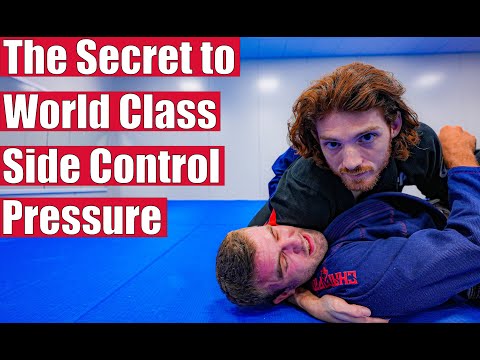
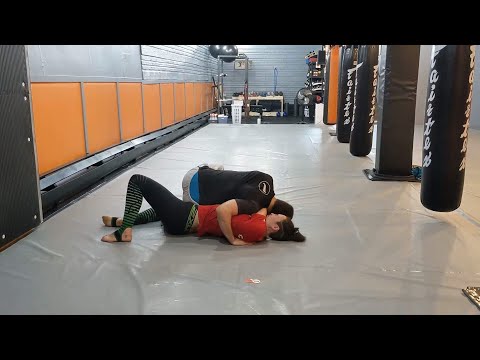
Coach Landen and Coach Celia show how to break an opponent's frames and move into a tight chest-to-chest pin from side c…
Перевод: chest-to-chest side control
The Chest-To-Chest Side Control emphasises maximum chest pressure against the bottom fighter's chest, using bodyweight compression as the primary control mechanism while the arms control the head and far hip. [1] The chest-to-chest configuration provides the strongest pinning pressure and is the most difficult side control to escape because the top fighter's weight is directly on the bottom fighter's breathing. [1],[2] It is the default side control control position taught in most BJJ academies. [2],[3]
Chest-to-chest side control maximises pressure by distributing the attacker's weight directly onto the opponent's chest. [1]
Chest-to-chest is the fundamental side control in BJJ and judo. [1]
The most common side control variant in competition. [1]
Изображений для этой техники пока нет.
Войдите, чтобы предложить изображение.
Coach Landen and Coach Celia show how to break an opponent's frames and move into a tight chest-to-chest pin from side c…
This video I overview the key aspects of a strong side control. I focus primarily on the key principle of using your che…
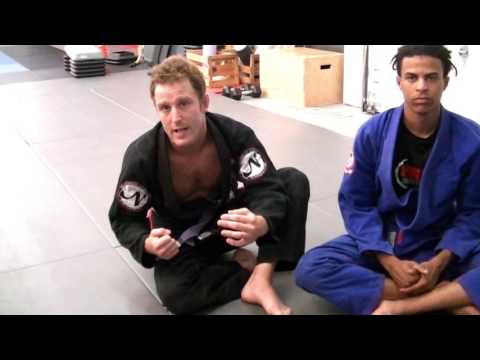
This Securing Side Control video covers basic fundimental details for chest to chest side control. This is one way to sl…
Chest-to-chest side control is a pinning position in which the top player uses direct torso pressure to flatten and immobilize the opponent's shoulder blades against the mat. JonThomasBJJ emphasizes that shoulder-blade immobilization is the foundational principle underlying all effective side control, achieved primarily through extending the thoracic spine and distributing body weight across the chest rather than relying solely on crossface or hip-to-hip pressure. Fox Den Martial Arts provides tactical solutions for defeating common frame defenses: when the opponent frames on the hip, the top player can switch hips and move toward a scissor or shin-pin position; when both hip and crossface frames appear, the instructor prioritizes breaking the crossface first via an inside bicep tie and hand pressure before addressing the hip frame. BJJCANADA.CA synthesizes critical positional details: the top player's chin should not extend past the opponent's opposite shoulder blade, the crossface should be deep with cloth grip and low shoulder placement, the underhook on the opposite side is essential for preventing hip escape, and the knee closest to the opponent's hips must remain tight against the hip bone. All three instructors agree that chest pressure is non-negotiable; Fox Den and BJJCANADA.CA add that a tight head-to-shoulder connection and proper crossface mechanics amplify control. JonThomasBJJ distinguishes between merely holding a position and maintaining pressure as a guiding principle for transitioning between positions (mount, north-south, mal) while retaining control.
Сформировано на основе 3 инструкторов
Учебных курсов по этой технике пока нет.
Войдите, чтобы предложить курс.
Риск травмы для человека, к которому применяется техника
Top positions enable pressure and striking; rib compression risk under heavy pressure
Уровень мастерства, необходимый для надёжного выполнения техники
Разрешена ли техника по основным соревновательным правилам
Brazilian Jiu-Jitsu: Theory and Technique (Renzo Gracie & Royler Gracie, 2001)
Alias sources — [1] Jiu-Jitsu University (Ribeiro, 2008) [2] Mastering Jujitsu (Gracie & Danaher, 2003) [3] Mastering Jujitsu (Gracie & Danaher, 2003)
Effectiveness sources — [1] Jiu-Jitsu University (Ribeiro, 2008)
Standard Japanese martial arts terminology (kanji/hiragana)
Established Japanese martial arts naming convention — native Japanese term (和語/漢語)
Alias sources — [1] Jiu-Jitsu University (Ribeiro, 2008) [2] Mastering Jujitsu (Gracie & Danaher, 2003) [3] Mastering Jujitsu (Gracie & Danaher, 2003)
Effectiveness sources — [1] Jiu-Jitsu University (Ribeiro, 2008)
chest-to-chest pressure, hip positioning, crossface control
broad chest and shoulders for heavy top pressure
pectorals, deltoids, core, hip extensors
Keep your chin at or above your opponent's shoulder blade—the further past it you go, the easier they can rock and roll you. Sit your hips back and distribute your weight heavily through your chest, almost balancing your entire body weight on it to pin their shoulder blades to the mat (Jon Thomas BJJ emphasizes chest pressure as the foundation of control).
The underhook is even more important than the cross face because it prevents your opponent from scooting away and keeps them pinned tight. Without it, even with a good cross face, they can create space and escape to half guard (BJJCANADA.CA).
Keep your knee tight against your opponent's hip, ideally on the hip bone itself. This makes it much harder for them to turn into you and prevents them from getting their knee in to create space or escape to half guard (BJJCANADA.CA).
Go over top of the framing arm while keeping your chest pressure heavy as the number one priority. This allows you to dissipate their escape attempt and maintain control (Jon Thomas BJJ).
The Chest-To-Chest Side Control emphasises maximum chest pressure against the bottom fighter's chest, using bodyweight compression as the primary control mechanism while the arms control the head and far hip. The chest-to-chest configuration provides the strongest pinning pressure and is the most difficult side control to escape because the top fighter's weight is directly on the bottom fighter's breathing.
Chest-to-chest side control is the fundamental side control configuration, emphasising the pinning principles inherited from judo's yoko-shiho-gatame. It is the standard side control taught at all levels of BJJ instruction.
IBJJF: разрешён — Legal, mount scores 4 points — highest-scoring position; IJF: разрешён — Legal, osaekomi (pin) — 10-19 seconds scores waza-ari, 20 seconds scores ippon; ADCC: разрешён — Legal, mount scores 2 points; Unified MMA: разрешён — Legal dominant position; UWW: разрешён — Legal, back exposure scores points, pin ends match by fall; FIAS Sport Sambo: разрешён — Legal, pin scores points
Оценка опасности 3/10. Moderate — top positions enable pressure and striking; rib compression risk under heavy pressure
Стандартная цепочка подготовки: Pass the Guard → Settle Weight → Control Arms → Threaten Submissions.
Стандартные контрприёмы: Bridge (Upa) — explosive hip elevation to off-balance the top player / Elbow-Knee Escape (Shrimp) — create space by driving elbow to knee and hip-escaping / Frame — establish forearm frames to prevent the top player from settling weight.
Распространённые варианты: Standard side control (crossface and underhook, chest on chest); Kesa gatame (head control with arm trapped, hip facing the opponent); Reverse kesa gatame (facing the opponent's legs with arm control); Modified side control (arm under the head, leg-side arm controlling the hip).
The most common side control variant in competition.
Основные ошибки, на которые стоит обратить внимание: Not driving the chest into the opponent — the chest must be actively pressing down, not hovering / Keeping the hips high — drop the hips to the mat for maximum weight transfer / Crossfacing weakly — the forearm must actively drive the chin away; this is not a passive hold / Not blocking the far hip — the far hip block prevents the shrimp escape.
Chest-To-Chest Side Control также известен как Mune-awase Yoko-shiho, Chest-to-Chest, Tight Side Control, Heavy Side Control.