Standard S-Mount

Род

Перевод: standard S-mount

Дистанция и классификация

Категория
Удар и защитаЗамкиБлижний бойБой против нескольких
Дистанция
БлижняяСредняяДальняя

Обзор

The Standard S-Mount positions one leg swung up with the foot alongside the opponent's head, the other knee remaining by the hip, with the top fighter's hips angled to create the S-shape. [1] The standard S-mount provides immediate armbar access — the top fighter can fall back for the armbar with the head-side leg already in position to clamp over the face. [1],[2] The S-mount also provides submissions options including the mounted triangle and wrist locks. [2],[3]

Также известна как
Classic S-Mount[1]Basic S-Mount[2]Foot-Under-Head Mount[3]
Используется в

История и происхождение

The standard S-mount is the fundamental S-mount configuration, developed as the optimal mount position for armbar finishes in BJJ. [1] It represents a key position in the mount-to-armbar transition sequence. [2],[3]

Страна происхождения· показано в случайном порядке

  • БразилияБразильское джиу-джитсу, Сабмишн-грэпплинг
  • ЯпонияБразильское джиу-джитсу, Сабмишн-грэпплинг
  • СШАСабмишн-грэпплинг

Эффективность

The standard S-mount is the baseline version of this advanced mount variant. [1]

Родословная

Developed in advanced BJJ competition. [1]

Соревновательные результаты

Used in high-level BJJ competition. [1]

Изображения

Изображений для этой техники пока нет.

Войдите, чтобы предложить изображение.

Биомеханический механизм

Primary ActionGravity-assisted top control — body weight pins the opponent's torso to the ground
Joints InvolvedAttacker's hips (heavy base), knees (clamped for ride control), opponent's spine (pinned)
Force VectorDownward — gravity plus active hip pressure maximises control and submission opportunities
Positional MechanicHigh mount raises the centre of gravity above the opponent's shoulder line, isolating their arms for attacks

Позиция и вход

From guard pass completionAfter passing the guard, establish mount by placing knees on either side of the opponent's torso
From sweepComplete a sweep from guard and land directly in mount position on top
From side control (knee slide)From side control, slide the knee across the opponent's belly and settle into mount

Варианты

Low mounthips heavy on the opponent's belly, grapevines in for stability
High mountknees under the armpits, arms isolated for submissions
S-mountone knee high under the armpit, other leg across for arm attacks
Technical mountone leg hooked, one knee posted, modified for back-take transitions

Видео

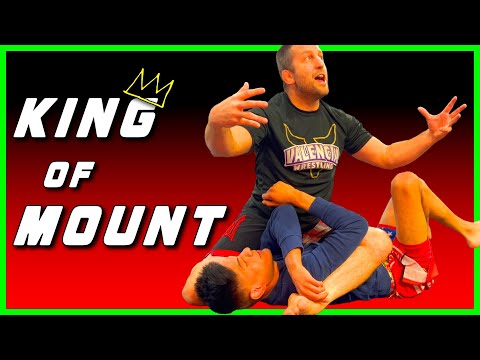
Technical Mount VS S-Mount Differences??? (For Beginners)

0
Standard S-Mount·TeachMeGrappling Coach Brian·Added by Admin

This video I teach the simple difference of when I use the technical mount and s-mount. Check out the details and you a

1 video

Изучить технику

Учебных курсов по этой технике пока нет.

Войдите, чтобы предложить курс.

Оценки

Уровень опасности

Риск травмы для человека, к которому применяется техника

3
Умеренный3/10

Top positions enable pressure and striking; rib compression risk under heavy pressure

Сложность

Уровень мастерства, необходимый для надёжного выполнения техники

Средний
Допустимость на соревнованиях

Разрешена ли техника по основным соревновательным правилам

IBJJF — Legal, mount scores 4 points — highest-scoring po...
IBJJF Rules Book v6.0, June 2024PDF
ADCC — Legal, mount scores 2 points
ADCC Rules Update, April 2025PDF
Unified MMA — Legal dominant position
Unified Rules of MMA, August 2025PDF
UWW — Legal, back exposure scores points, pin ends match ...
UWW International Wrestling Rules, January 2026PDF
FIAS Sport Sambo — Legal, pin scores points
FIAS International Sambo Competition RulesPDF

Заметки по тренировке

Standard S-mount execution: from high mount, walk one knee past the opponent's shoulder until it reaches beside their head, post the opposite foot near their hip, angle the body into the 'S' curve, and control the near arm (Danaher, Mount Attacks, 2020)
Step 1: from high mount, choose which arm to attack — climb the corresponding knee past the shoulder
Step 2: the attacking-side knee advances until it presses against the opponent's head/ear
Step 3: the opposite foot posts on the mat near the opponent's hip for base
Step 4: angle the body to form the 'S' shape — the torso curves from head to hip
Step 5: control the near arm: grip the wrist or bicep of the arm you intend to armbar
Step 6: from here, fall back for the armbar: swing the far leg over the head and extend the hips for the finish
The S-mount is the last position before the armbar: it should feel like the finish is inevitable from here
Drill: from mount, climb to S-mount and finish the armbar — 5 reps per side

Типичные ошибки

!Not advancing the knee far enough past the shoulder — the knee must reach the head for proper S-mount
!Posting the foot too far from the opponent — keep the base foot close for stability
!Not controlling the arm before falling back for the armbar — the arm must be gripped before committing
!Falling back for the armbar without pinching the knees — the knees must squeeze the arm during the armbar
!Rushing through S-mount without establishing control — take a moment to secure the position
!Not angling the body into the 'S' shape — the curve is what creates the control dynamic
!Only training S-mount on one side — develop the position on both sides

Связанные техники

Контрприёмы

Цепочка подготовки

1Pass the Guardclear the opponent's legs to advance to this dominant position
2Settle Weightdistribute body weight to maintain heavy pressure
3Control Armsmanage the opponent's arms to prevent frames and escapes
4Threaten Submissionsattack to force defensive reactions and maintain dominance

Источники и ссылки

Основной источник

Mastering Jujitsu (Renzo Gracie & John Danaher, 2003)

1КнигаJiu-Jitsu University (Ribeiro, 2008)

Alias sources — [1] Jiu-Jitsu University (Ribeiro, 2008) [2] Mastering Jujitsu (Gracie & Danaher, 2003) [3] Mastering Jujitsu (Gracie & Danaher, 2003)

2КнигаBrazilian Jiu-Jitsu: Theory and Technique (Gracie & Gracie, 2001)

Effectiveness sources — [1] Jiu-Jitsu University (Ribeiro, 2008)

3ДругоеJapanese Combat Sports Katakana Convention

Standard katakana transliteration of Western martial arts terminology (外来語) — used in Japanese MMA, boxing, and BJJ communities

4ЦитатаJiu-Jitsu University (Ribeiro, 2008)

Alias sources — [1] Jiu-Jitsu University (Ribeiro, 2008) [2] Mastering Jujitsu (Gracie & Danaher, 2003) [3] Mastering Jujitsu (Gracie & Danaher, 2003)

5ЦитатаBrazilian Jiu-Jitsu: Theory and Technique (Gracie & Gracie, 2001)

Effectiveness sources — [1] Jiu-Jitsu University (Ribeiro, 2008)

Сообщество

Атлетизм

Requires

base stability, heavy hips, ride ability

Favours

heavier build with strong hips for pressure

Key muscles

hip adductors, core, glutes, quadriceps

Часто задаваемые вопросы

When should I use S-mount versus technical mount?

Coach Brian emphasizes that S-mount works best when your opponent is flat on their back—tuck your leg in tight. Use technical mount when your opponent is on their side, as S-mount positioning on a turned opponent compromises your balance and makes you vulnerable to escape.

How do I prevent my opponent from capturing my leg in S-mount?

Keep your foot positioned to prevent your opponent's frame escape—if your leg hangs down, they can capture it. By positioning your foot correctly, you make it much harder for them to shrimp or escape, even though some movement is still possible.

What's the key to securing S-mount position?

Coach Brian stresses that in S-mount, you want to be tucked under your opponent's elbow with good control, using your toe in the back for stability. This tight positioning gives you really good control and sets up submissions like the armbar.

Как работает Standard S-Mount?

The Standard S-Mount positions one leg swung up with the foot alongside the opponent's head, the other knee remaining by the hip, with the top fighter's hips angled to create the S-shape. The standard S-mount provides immediate armbar access — the top fighter can fall back for the armbar with the head-side leg already in position to clamp over the face.

Откуда происходит Standard S-Mount?

The standard S-mount is the fundamental S-mount configuration, developed as the optimal mount position for armbar finishes in BJJ. It represents a key position in the mount-to-armbar transition sequence.

Разрешён ли Standard S-Mount на соревнованиях?

IBJJF: разрешён — Legal, mount scores 4 points — highest-scoring position; IJF: разрешён — Legal, osaekomi (pin) — 10-19 seconds scores waza-ari, 20 seconds scores ippon; ADCC: разрешён — Legal, mount scores 2 points; Unified MMA: разрешён — Legal dominant position; UWW: разрешён — Legal, back exposure scores points, pin ends match by fall; FIAS Sport Sambo: разрешён — Legal, pin scores points

Насколько опасен Standard S-Mount?

Оценка опасности 3/10. Moderate — top positions enable pressure and striking; rib compression risk under heavy pressure

Как подготовить Standard S-Mount?

Стандартная цепочка подготовки: Pass the Guard → Settle Weight → Control Arms → Threaten Submissions.

Как защититься от Standard S-Mount?

Стандартные контрприёмы: Bridge (Upa) — explosive hip elevation to off-balance the top player / Elbow-Knee Escape (Shrimp) — create space by driving elbow to knee and hip-escaping / Frame — establish forearm frames to prevent the top player from settling weight.

Какие есть варианты Standard S-Mount?

Распространённые варианты: Low mount (hips heavy on the opponent's belly, grapevines in for sta…); High mount (knees under the armpits, arms isolated for submissions); S-mount (one knee high under the armpit, other leg across for arm …); Technical mount (one leg hooked, one knee posted, modified for back-take t…).

Насколько эффективен Standard S-Mount на соревнованиях?

Used in high-level BJJ competition.

Какие типичные ошибки при выполнении Standard S-Mount?

Основные ошибки, на которые стоит обратить внимание: Not advancing the knee far enough past the shoulder — the knee must reach the head for proper S-mount / Posting the foot too far from the opponent — keep the base foot close for stability / Not controlling the arm before falling back for the armbar — the arm must be gripped before committing / Falling back for the armbar without pinching the knees — the knees must squeeze the arm during the armbar.

Какие ещё названия есть у Standard S-Mount?

Standard S-Mount также известен как Sutandādo S Maunto, Classic S-Mount, Basic S-Mount, Foot-Under-Head Mount.