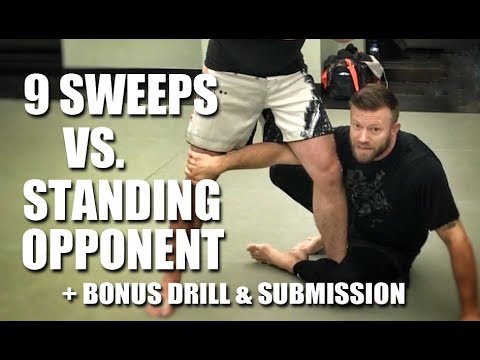
Standard Standing Guard Position

Род

Перевод: standard standing guard position

Дистанция и классификация

Категория
Удар и защитаЗамкиБлижний бойБой против нескольких
Дистанция
БлижняяСредняяДальняя

Обзор

The Standard Standing Guard Position establishes the fundamental standing-versus-seated dynamic with one fighter standing and the other seated or on their back, using feet on hips, hooks, or grip-and-foot combinations to maintain guard. [1] From this configuration, the standing fighter attempts to pass by going around, over, or through the guard player's legs, while the seated fighter works to sweep, submit, or maintain guard control. [1],[2] This positional dynamic is the defining interaction of modern BJJ competition. [2],[3]

Также известна как
Fighting Guard[1]Ready Position[2]Standard On-Guard Stance[3]
Используется в

История и происхождение

The standard standing guard position is the most commonly occurring positional dynamic in modern BJJ competition, representing the fundamental guard-passing-versus-guard-playing interaction. [1] It has been the centrepiece of competitive BJJ strategy for decades. [2],[3]

Страна происхождения· показано в случайном порядке

  • БразилияБразильское джиу-джитсу, ММА, Сабмишн-грэпплинг
  • Японияスタンダード立ちガードポジション(Sutandādo Tachi Gādo Pojishon)Бразильское джиу-джитсу, Сабмишн-грэпплинг, Дзюдо
  • СШАММА, Сабмишн-грэпплинг

Эффективность

The standard standing guard is the baseline fighting stance. [1]

Родословная

Derived from boxing and martial arts stance traditions. [1]

Соревновательные результаты

Fundamental to all combat sports competition. [1]

Изображения

Изображений для этой техники пока нет.

Войдите, чтобы предложить изображение.

Биомеханический механизм

Primary ActionUsing the legs and hips to control the opponent from the bottom — maintaining distance management and attack angles
Joints InvolvedHips (primary engine for sweeps and attacks), knees (framing and hooking), ankles (secondary hooks)
Force VectorPulling, framing, and hip-escaping — creating angles for attacks while preventing passing
Positional MechanicThe guard is an active offensive position — leg control compensates for bottom positioning by threatening sweeps and submissions

Позиция и вход

From pulling guard or being taken downEstablish the guard position using legs and hips to control the opponent from the bottom
From transitionMove between guard variations to maintain bottom control and create attack opportunities

Варианты

Standard guardprimary leg and grip configuration for control and attacks from bottom
Offensive guardconfigured for sweeps and submissions
Defensive guardprioritising distance management and preventing passes
Transition guardmoving between guard types to adjust to the opponent's passing style

Видео

Jiu-Jitsu Techniques | 10 Answers for Ground Vs Standing

0
Standard Standing Guard Position·Knight Jiu-Jitsu·Added by Admin

So much more at Patreon.com/KnightJiuJitsu This video has some solid answers for dealing with a standing opponent when

1 video

Изучить технику

Учебных курсов по этой технике пока нет.

Войдите, чтобы предложить курс.

Оценки

Уровень опасности

Риск травмы для человека, к которому применяется техника

2
Низкий2/10

Standing positions are pre-engagement stances; minimal direct risk

Сложность

Уровень мастерства, необходимый для надёжного выполнения техники

Начинающий
Допустимость на соревнованиях

Разрешена ли техника по основным соревновательным правилам

Ограничено
IJF — Guard pulling penalized as non-combativity — ground...
IJF Sport and Organisation Rules 2025, Article 27PDF
Разрешено
IBJJF — Legal — guard is fundamental to BJJ, sweeps from ...
IBJJF Rules Book v6.0, June 2024PDF
ADCC — Legal, guard pull penalized -1 point in points por...
ADCC Rules Update, April 2025PDF
Unified MMA — Legal — no penalty for playing guard
Unified Rules of MMA, August 2025PDF
FIAS Sport Sambo — Legal
FIAS International Sambo Competition RulesPDF

Заметки по тренировке

Standard standing guard position execution: stand with feet shoulder-width apart, knees slightly bent, back straight with slight forward lean, and hands controlling the opponent's pants at the knees or ankles (Danaher, Guard Passing, 2020)
Step 1: stand up in the opponent's guard by posting hands on their hips and standing with good posture
Step 2: grip the opponent's pants at the knees (gi) or control their ankles (no-gi)
Step 3: keep the elbows tight and the back straight — this prevents the guard player from pulling you down
Step 4: use quick footwork to strip hooks: backstep when they insert a DLR hook, lateral step when they go for shin-on-shin
Step 5: from this position, initiate a pass: push the legs to one side (toreando), pull one leg across (leg drag), or step around (long step)
The hand position on the knees gives the standing passer control of the guard player's primary weapons — their legs
Drill: stand in partner's guard, maintain position for 30 seconds while stripping all grip and hook attempts

Типичные ошибки

!Bending at the waist instead of the knees — bend the knees with a straight back for proper base
!Gripping too high on the legs — control at the knees or ankles for maximum manipulation
!Letting the opponent grab both sleeves or collar — strip grips before they establish their guard system
!Standing with feet too close together — shoulder-width stance provides balance and mobility
!Not using the grip to redirect the legs — the hands should actively push, pull, and redirect the opponent's legs
!Standing static after establishing the position — immediately begin the passing sequence
!Ignoring the opponent's sit-up guard entries — when they sit up, address the grip fight immediately

Связанные техники

Контрприёмы

Цепочка подготовки

1Achieve Guard Contactestablish leg control around or against the opponent
2Control Gripssecure sleeve, collar, or wrist control for manipulation
3Manage Distanceuse legs and grips to control the range and prevent passing
4Threaten Submissions/Sweepscreate offensive threats to keep the opponent reactive

Источники и ссылки

Основной источник

Jiu-Jitsu University (Saulo Ribeiro, 2008)

1КнигаThe Guard (Moreira & Beneville, 2008)

Alias sources — [1] Mastering Jujitsu (Gracie & Danaher, 2003) [2] Championship Fighting (Dempsey, 1950) [3] Championship Fighting (Dempsey, 1950)

2КнигаJiu-Jitsu University (Ribeiro, 2008)

Effectiveness sources — [1] Boxing: The Complete Guide to Training and Fitness (Hatmaker, 2004)

3ДругоеJapanese Martial Arts Hybrid Terminology

Mixed Japanese-Western terminology — combines traditional Japanese terms with katakana loanwords

4ЦитатаThe Guard (Moreira & Beneville, 2008)

Alias sources — [1] Mastering Jujitsu (Gracie & Danaher, 2003) [2] Championship Fighting (Dempsey, 1950) [3] Championship Fighting (Dempsey, 1950)

5ЦитатаJiu-Jitsu University (Ribeiro, 2008)

Effectiveness sources — [1] Boxing: The Complete Guide to Training and Fitness (Hatmaker, 2004)

Сообщество

Атлетизм

Requires

hip flexibility, active legs, grip management

Favours

long legs for distance control and guard retention

Key muscles

hip flexors, adductors, quadriceps, core, grip

Часто задаваемые вопросы

When I'm on my back and my opponent is standing, how do I get back to my feet safely?

Rock up and aim for your opponent's knees as you get to your feet, placing both your feet behind their ankles and pushing and pulling to drive back up. Knight Jiu-Jitsu emphasizes this approach is simple and very effective.

What should I do if my opponent pushes my foot out of their hip during a sweep attempt?

If both your feet end up on the same side after your opponent pushes out, you've lost leverage for the sweep. Instead, switch your foot placement and reposition to regain control and execute the sweep from a different angle.

How do I transition from defending on my back to controlling my opponent on top?

Grab your opponent's elbows (rather than wrists), drop your feet into their hips, pull over your hand, and wind up in mount position. Knight Jiu-Jitsu notes this approach works better when your opponent is anchored to you and resisting a push.

Как работает Standard Standing Guard Position?

The Standard Standing Guard Position establishes the fundamental standing-versus-seated dynamic with one fighter standing and the other seated or on their back, using feet on hips, hooks, or grip-and-foot combinations to maintain guard. From this configuration, the standing fighter attempts to pass by going around, over, or through the guard player's legs, while the seated fighter works to sweep, submit, or maintain guard control.

Откуда происходит Standard Standing Guard Position?

The standard standing guard position is the most commonly occurring positional dynamic in modern BJJ competition, representing the fundamental guard-passing-versus-guard-playing interaction. It has been the centrepiece of competitive BJJ strategy for decades.

Разрешён ли Standard Standing Guard Position на соревнованиях?

IBJJF: разрешён — Legal — guard is fundamental to BJJ, sweeps from guard score 2 points; IJF: ограничен — Guard pulling penalized as non-combativity — groundwork from guard permitted …; ADCC: разрешён — Legal, guard pull penalized -1 point in points portion; Unified MMA: разрешён — Legal — no penalty for playing guard; FIAS Sport Sambo: разрешён — Legal

Насколько опасен Standard Standing Guard Position?

Оценка опасности 2/10. Low — standing positions are pre-engagement stances; minimal direct risk

Как подготовить Standard Standing Guard Position?

Стандартная цепочка подготовки: Achieve Guard Contact → Control Grips → Manage Distance → Threaten Submissions/Sweeps.

Как защититься от Standard Standing Guard Position?

Стандартные контрприёмы: Guard Pass — systematically work to clear the legs and establish a dominant position / Leg Pin — control one or both legs to neutralize guard retention / Pressure Passing — use heavy chest pressure to flatten and immobilize the guard player.

Какие есть варианты Standard Standing Guard Position?

Распространённые варианты: Standard guard (primary leg and grip configuration for control and attack…); Offensive guard (configured for sweeps and submissions); Defensive guard (prioritising distance management and preventing passes); Transition guard (moving between guard types to adjust to the opponent's pa…).

Насколько эффективен Standard Standing Guard Position на соревнованиях?

Fundamental to all combat sports competition.

Какие типичные ошибки при выполнении Standard Standing Guard Position?

Основные ошибки, на которые стоит обратить внимание: Bending at the waist instead of the knees — bend the knees with a straight back for proper base / Gripping too high on the legs — control at the knees or ankles for maximum manipulation / Letting the opponent grab both sleeves or collar — strip grips before they establish their guard system / Standing with feet too close together — shoulder-width stance provides balance and mobility.

Какие ещё названия есть у Standard Standing Guard Position?

Standard Standing Guard Position также известен как Sutandādo Tachi Gādo Pojishon, Fighting Guard, Ready Position, Standard On-Guard Stance.