Standard Long Range

Род

Перевод: standard long range

Дистанция и классификация

Категория
Удар и защитаЗамкиБлижний бойБой против нескольких
Дистанция
БлижняяСредняяДальняя

Обзор

The Standard Long Range position places fighters at a distance where kicks and fully extended punches are the only techniques that can reach. [1] At standard long range, the primary tools are front kicks, roundhouse kicks, side kicks, and the jab delivered with full extension and forward step. [1],[2] Fighters at long range focus on footwork and angle changes to create entries to mid range or to maintain distance if they prefer to fight at range. [2],[3]

Также известна как
Basic Out-Fighting Distance[1]Standard Kicking Range[2]
Используется в

История и происхождение

Standard long range is a fundamental fighting distance studied across all striking martial arts, representing the outermost zone where offensive engagement is possible. [1] It is the preferred fighting distance for counter-strikers and fighters with reach advantages. [2],[3]

Страна происхождения· показано в случайном порядке

  • Японияスタンダード遠距離(Sutandādo Enkyori)Карате, Кикбоксинг
  • КореяТхэквондо
  • СШАКикбоксинг, ММА
  • БразилияММА
  • ТаиландМуай-тай
  • ФранцияФехтование, Сават
  • ИталияФехтование
  • КитайСаньда

Эффективность

Standard long range is the baseline kicking and long punching distance. [1]

Родословная

Defined in striking arts range theory. [1]

Соревновательные результаты

A fundamental distance in combat sports. [1]

Изображения

Изображений для этой техники пока нет.

Войдите, чтобы предложить изображение.

Биомеханический механизм

Primary ActionPerpendicular chest-to-chest control — pinning the opponent's upper body while maintaining mobility
Joints InvolvedAttacker's chest (primary contact), hips (sprawled or driving), opponent's near shoulder and hip (controlled)
Force VectorDownward and lateral — chest pressure pins the opponent while hip positioning prevents escape
Positional MechanicCrossface and underhook combination controls the opponent's head and near arm, preventing bridging or turning

Позиция и вход

From neutral positionAssume the fighting stance by placing feet at shoulder width, bending knees slightly, and establishing guard position
Before engagementEstablish the proper stance as the starting position before initiating or receiving attacks

Варианты

Standard variationprimary positioning for control and attack
Offensive variationconfigured for submission or striking opportunities
Transitional variationpositioned for quick movement to the next position
Defensive variationprioritising stability and control over attack

Видео

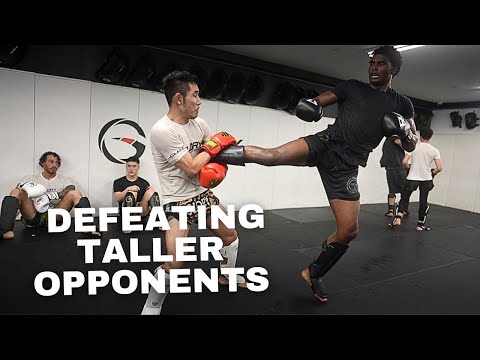
The BEST Video You'll Watch on How to Fight Taller Opponents

0
Standard Long Range·Jeff Chan MMAShredded ·Added by Admin

0:00 - Start 0:20 - Tactic 1: Catch kicks to get inside 1:42 - Tactic 2: Use head movement to get inside 3:37 - Tactic 3

1 video

Изучить технику

Учебных курсов по этой технике пока нет.

Войдите, чтобы предложить курс.

Оценки

Уровень опасности

Риск травмы для человека, к которому применяется техника

2
Низкий2/10

Standing positions are pre-engagement stances; minimal direct risk

Сложность

Уровень мастерства, необходимый для надёжного выполнения техники

Начинающий
Допустимость на соревнованиях

Разрешена ли техника по основным соревновательным правилам

Unified MMA — Legal
Unified Rules of MMA, August 2025PDF
WBC/Boxing — Legal — stance and footwork are fundamental {srcWBC Rules of Boxing}

Заметки по тренировке

Standard long range positioning: the fighters are at full arm's extension plus one step — only the jab, front kick, and longest kicks can reach from this distance (Haislet, Boxing, 1940)
Step 1: maintain a distance where a full step is needed to land a power punch — this gives maximum reaction time
Step 2: use the jab to probe and measure distance — the jab is both a weapon and a ranging tool
Step 3: use footwork to circle, angle, and maintain the gap — never stand still at long range
Step 4: use the teep or front kick to push the opponent back when they attempt to close
Step 5: from long range, offensive options are: jab, front kick, long cross, and entry feints to set up closer attacks
The ideal long-range stance is slightly more sideways than close range — presenting a smaller target
Drill: partner work at long range — jab and move for 3 minutes, focusing on maintaining distance

Типичные ошибки

!Standing at long range without working — long range requires constant probing with jabs and feints
!Maintaining distance by only moving backward — circle and angle to maintain range while repositioning
!Throwing power punches from long range — the cross and hooks fall short; use the jab and front kick
!Not adjusting the stance for long range — a slightly more bladed stance presents a smaller target
!Staying at long range when the opponent is a better long-range fighter — close the distance instead
!Not using feints to gather information — feints at long range reveal the opponent's reactions
!Fighting at long range against the cage — the cage limits backward movement; circle off before reaching it

Связанные техники

Контрприёмы

Цепочка подготовки

1Achieve Positiontransition into this position through passing, sweeping, or scrambling
2Stabilizeestablish controlling grips and weight distribution
3Maintainadjust to the opponent's escape attempts to hold position
4Attacklaunch offensive techniques from the stabilized position

Источники и ссылки

Основной источник

Brazilian Jiu-Jitsu: Theory and Technique (Renzo Gracie & Royler Gracie, 2001)

1КнигаBoxing (Dempsey, 1950)

Alias sources — [1] Mastering Jujitsu (Gracie & Danaher, 2003) [2] Championship Fighting (Dempsey, 1950)

2КнигаMuay Thai: The Art of Fighting (Kraitus, 2002)

Effectiveness sources — [1] Mastering Jujitsu (Gracie & Danaher, 2003)

3ДругоеJapanese Martial Arts Hybrid Terminology

Mixed Japanese-Western terminology — combines traditional Japanese terms with katakana loanwords

4ЦитатаBoxing (Dempsey, 1950)

Alias sources — [1] Mastering Jujitsu (Gracie & Danaher, 2003) [2] Championship Fighting (Dempsey, 1950)

5ЦитатаMuay Thai: The Art of Fighting (Kraitus, 2002)

Effectiveness sources — [1] Mastering Jujitsu (Gracie & Danaher, 2003)

Сообщество

Атлетизм

Requires

balance, lower body stability, quick directional change

Favours

well-proportioned build with strong base

Key muscles

calves, quadriceps, core, hip stabilisers

Часто задаваемые вопросы

Why shouldn't I fight a taller opponent at middle range?

At middle range, your taller opponent can reach you with their longer limbs while you cannot reach them effectively. Jeff Chan MMAShredded emphasizes you want to be either all the way on the outside or all the way on the inside—never in the middle.

How should I counter kicks from a taller opponent?

Jeff Chan MMAShredded recommends catching or brushing kicks to close the distance, then throw the leg off to the side and move into body-to-head combinations. For straight kicks, scoop underneath the heel with your lead arm into a punch-kick combination while using head movement to close the distance.

Why target the body first against a taller opponent?

Jeff Chan MMAShredded explains that hitting the body first causes your taller opponent to shell up and lower their head, which opens them up for head strikes. This creates opportunities for combinations like body shots followed by hooks or overhands.

Should I stay in the pocket after getting inside against a taller opponent in MMA?

No—while staying in the pocket works in boxing, in MMA or Muay Thai your taller opponent can clinch you and throw knees, so you should exit after striking rather than continuing to work short range.

Как работает Standard Long Range?

The Standard Long Range position places fighters at a distance where kicks and fully extended punches are the only techniques that can reach. At standard long range, the primary tools are front kicks, roundhouse kicks, side kicks, and the jab delivered with full extension and forward step.

Откуда происходит Standard Long Range?

Standard long range is a fundamental fighting distance studied across all striking martial arts, representing the outermost zone where offensive engagement is possible. It is the preferred fighting distance for counter-strikers and fighters with reach advantages.

Разрешён ли Standard Long Range на соревнованиях?

Unified MMA: разрешён — Legal; IBJJF: разрешён — Legal; IJF: разрешён — Legal; WBC/Boxing: разрешён — Legal — stance and footwork are fundamental; WKF: разрешён — Legal; UWW: разрешён — Legal

Насколько опасен Standard Long Range?

Оценка опасности 2/10. Low — standing positions are pre-engagement stances; minimal direct risk

Как подготовить Standard Long Range?

Стандартная цепочка подготовки: Achieve Position → Stabilize → Maintain → Attack.

Как защититься от Standard Long Range?

Стандартные контрприёмы: Posture Control — maintain strong posture to limit the opponent's offensive options / Escape to Neutral — work back to standing or a neutral position.

Какие есть варианты Standard Long Range?

Распространённые варианты: Standard variation (primary positioning for control and attack); Offensive variation (configured for submission or striking opportunities); Transitional variation (positioned for quick movement to the next position); Defensive variation (prioritising stability and control over attack).

Насколько эффективен Standard Long Range на соревнованиях?

A fundamental distance in combat sports.

Какие типичные ошибки при выполнении Standard Long Range?

Основные ошибки, на которые стоит обратить внимание: Standing at long range without working — long range requires constant probing with jabs and feints / Maintaining distance by only moving backward — circle and angle to maintain range while repositioning / Throwing power punches from long range — the cross and hooks fall short; use the jab and front kick / Not adjusting the stance for long range — a slightly more bladed stance presents a smaller target.

Какие ещё названия есть у Standard Long Range?

Standard Long Range также известен как Sutandādo Enkyori, Basic Out-Fighting Distance, Standard Kicking Range.