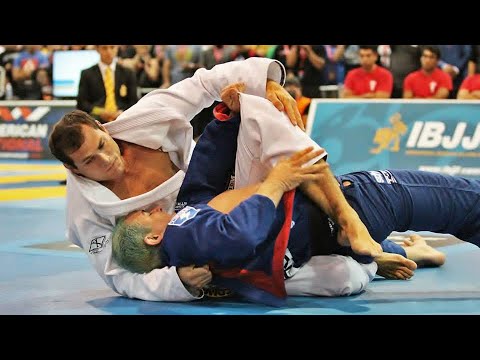
John Danaher Explains Closed Guard Fundamentals
0
Attacking Closed Guard·Bernardo Faria BJJ Fanatics
Closed Guard Fundamentals by John Danaher - John Danaher explains closed guard basics in this bjj training video. - Clic…
Перевод: attacking closed guard
The Attacking Closed Guard subfamily covers closed guard configurations specifically set up for offensive attacks — sweeps, submissions, and transitions — rather than passive control. [1] Attacking closed guard positions use specific grip configurations (cross-grip, overhook) that create immediate sweep and submission threats. [1],[2] These positions represent the proactive, offensive use of the closed guard, where the guard player is actively working to finish or advance rather than simply holding the position. [2],[3]
The attacking closed guard concept evolved as BJJ developed a more systematic approach to the closed guard, distinguishing between defensive holding and offensive attacking configurations. [1] Modern closed guard instruction emphasises the attacking configurations as the primary way to use the position. [2],[3]
Attacking guard concepts were developed in BJJ competition to maximise offensive output from bottom position. [1]
Attacking closed guard is fundamental in BJJ competition strategy. [1]
Изображений для этой техники пока нет.
Войдите, чтобы предложить изображение.
Closed Guard Fundamentals by John Danaher - John Danaher explains closed guard basics in this bjj training video. - Clic…
Really glad I made this study on the Jiu Jitsu legend Roger Gracie. Hope you gain from watching it as much as I did whil…
Учебных курсов по этой технике пока нет.
Войдите, чтобы предложить курс.
Риск травмы для человека, к которому применяется техника
Guard positions are defensive; injury risk comes from transitions, not the position itself
Уровень мастерства, необходимый для надёжного выполнения техники
Разрешена ли техника по основным соревновательным правилам
Jiu-Jitsu University (Saulo Ribeiro, 2008)
Alias sources — [1] Jiu-Jitsu University (Ribeiro, 2008) [2] The Guard (Moreira & Beneville, 2003)
Effectiveness sources — [1] Mastering Jujitsu (Gracie & Danaher, 2003) [2] Jiu-Jitsu University (Ribeiro, 2008)
Mixed Japanese-Western terminology — combines traditional Japanese terms with katakana loanwords
Alias sources — [1] Jiu-Jitsu University (Ribeiro, 2008) [2] The Guard (Moreira & Beneville, 2003)
Effectiveness sources — [1] Mastering Jujitsu (Gracie & Danaher, 2003) [2] Jiu-Jitsu University (Ribeiro, 2008)
hip flexibility, active legs, grip management
long legs for distance control and guard retention
hip flexors, adductors, quadriceps, core, grip
Каждое движение в любом боевом искусстве обладает рядом универсальных свойств. Комбинируйте параметры ниже, чтобы найти нужный инструмент или сравнить аналоги из разных стилей.
The clamp guard is a closed guard sub-position where the guard player controls the inside space between the opponent's arms with their legs, lying on their hip (not flat) with the inside knee blocking the opponent from smashing down and the outside knee pushing the opponent's shoulder toward their head. [1] Part of John Danaher's New Wave Jiu-Jitsu closed guard system, the clamp creates a 'closed circuit of reinforced wedges' providing maximum control for offensive attacks. [2] Giancarlo Bodoni (2x ADCC champion) released 'Forging the Guard: Mastering Foundations of the Clamp' and Adam Wardzinski released 'Clamp Guard Engineering,' both through BJJ Fanatics.
The Cross-Grip Closed Guard establishes the closed guard with a cross-body collar grip — the guard player grips the opponent's opposite-side collar, pulling across the centre line to break posture and create sweep and submission angles. [1] The cross-grip is one of the most effective offensive grips from closed guard because it breaks the opponent's posture asymmetrically, creating angles for sweeps, arm drags, and choke attacks. [1,2] From cross-grip closed guard, the guard player can attack with cross-choke variations, pendulum sweeps, and collar drag techniques. [2,3]
The Overhook Closed Guard establishes the closed guard with an overhook (whizzer) control on one of the opponent's arms, pulling the arm across the body and trapping it. [1] The overhook grip creates a powerful arm control that enables triangle choke set-ups, omoplata entries, and sweep attacks. [1,2] The overhook closes the distance on one side and creates an angle by pulling the opponent's arm across, opening attacking opportunities on the opposite side. [2,3]
The rat guard is a closed guard system where the guard player breaks the opponent's posture, secures a necktie and tricep grip, then swings an arm to threaten a guillotine, causing the opponent to press tighter — at which point the guard player grabs the inside of their own hamstring, creating a locked frame that traps the opponent's head under the armpit with legs locked. [1] Created by Rene Dreifuss of Radical MMA NYC, originally designed for MMA and Combat Jiu-Jitsu based on an old judo position Dreifuss learned while training in Japan. [2] Specifically designed to nullify ground-and-pound while maintaining offensive options.
John Danaher emphasizes that every battle from closed guard is essentially a battle over posture—controlling your opponent's posture is the fundamental key to the position.
The opponent's primary objective when inside closed guard is to open it, which makes controlling grip battles critical for the passer to maintain posture.
When attempting a sweep from closed guard, make sure your legs are positioned over your opponent's hips; if they're lower, you risk having your guard passed.
The Attacking Closed Guard subfamily covers closed guard configurations specifically set up for offensive attacks — sweeps, submissions, and transitions — rather than passive control. Attacking closed guard positions use specific grip configurations (cross-grip, overhook) that create immediate sweep and submission threats.
The attacking closed guard concept evolved as BJJ developed a more systematic approach to the closed guard, distinguishing between defensive holding and offensive attacking configurations. Modern closed guard instruction emphasises the attacking configurations as the primary way to use the position.
IBJJF: разрешён — Legal — guard is fundamental to BJJ, sweeps from guard score 2 points; IJF: ограничен — Guard pulling penalized as non-combativity — groundwork from guard permitted …; ADCC: разрешён — Legal, guard pull penalized -1 point in points portion; Unified MMA: разрешён — Legal — no penalty for playing guard; FIAS Sport Sambo: разрешён — Legal
Оценка опасности 2/10. Low — guard positions are defensive; injury risk comes from transitions, not the position itself
Стандартная цепочка подготовки: Achieve Guard Contact → Control Grips → Manage Distance → Threaten Submissions/Sweeps.
Стандартные контрприёмы: Guard Pass — systematically work to clear the legs and establish a dominant position / Leg Pin — control one or both legs to neutralize guard retention / Pressure Passing — use heavy chest pressure to flatten and immobilize the guard player.
Распространённые варианты: High closed guard (legs high on the back for tighter control and more submis…); Low closed guard (ankles locked at the waist, controlling posture with grips); Body-lock closed guard (wrapping with both overhooks for tight breaking mechanics).
Attacking closed guard is fundamental in BJJ competition strategy.
Основные ошибки, на которые стоит обратить внимание: Attacking without breaking posture first — the opponent must be broken down before submissions work / Committing to one attack without chaining — the first attack rarely finishes; it sets up the second / Releasing the legs to attack — maintain the closed guard lock until the submission is deep enough to open / Attacking the same submission repeatedly — vary attacks to keep the opponent guessing.
Attacking Closed Guard также известен как Kōgekiteki Kurōzudo Gādo, Offensive Closed Guard, Active Closed Guard.