Удар и защитаЗамкиБлижний бойБой против нескольких
Дистанция
БлижняяСредняяДальняя
Обзор
The Cross-Grip Closed Guard establishes the closed guard with a cross-body collar grip — the guard player grips the opponent's opposite-side collar, pulling across the centre line to break posture and create sweep and submission angles. [1] The cross-grip is one of the most effective offensive grips from closed guard because it breaks the opponent's posture asymmetrically, creating angles for sweeps, arm drags, and choke attacks. [1],[2] From cross-grip closed guard, the guard player can attack with cross-choke variations, pendulum sweeps, and collar drag techniques. [2],[3]
The cross-grip closed guard is a classic gi-based attacking configuration used throughout BJJ's competitive history, with the cross-collar grip being one of the most fundamental gi grips in the art. [1] It has been a staple of closed guard offense since the earliest organised BJJ competition. [2],[3]
Страна происхождения· показано в случайном порядке
Cross-Grip Closed Guard·The Grapple Lab·Added by Admin
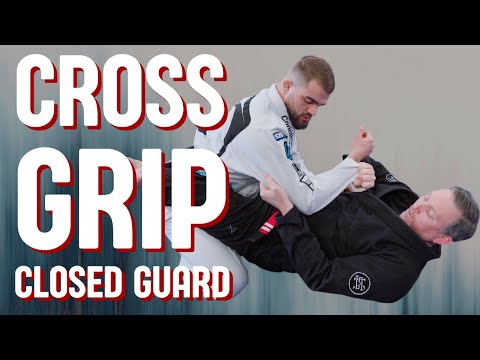
Attacking options from cross grip closed guard. Over the last few weeks we have looked at some of my favourite ways to p…
2 videos
Что говорят инструкторы
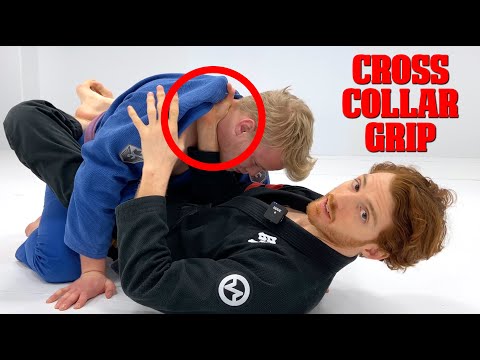
The cross-grip closed guard is a controlling position established by gripping the opponent's arm (typically the tricep) across their body while maintaining leg lock from closed guard. Both Stephan Kesting and The Grapple Lab emphasize securing this grip as a foundation for multiple attack sequences. Kesting focuses on the cross-collar grip variant, where after establishing arm control through pummeling, the practitioner closes the gap between elbow and chest to prevent repummeling, then gradually inches a deep collar grip while maintaining posture-breaking pressure—setting up collar chokes and triangles. The Grapple Lab presents a broader attack framework from the cross-grip position itself, detailing three primary options: a modified scissor sweep (opening the body and placing the foot on the knee rather than using traditional scissor mechanics), a triangle entry from the same hip movement, and an omaplata entry executed by diving underneath the leg with flared hip positioning, with options to either sit up for the finish or roll through for momentum-based submissions. Both instructors agree on the importance of controlling the opponent's base and arm position to prevent escape, though they emphasize different attack progressions—Kesting prioritizes grip depth and collar control, while The Grapple Lab showcases positional versatility through sweep variations and leg-lock entries.
Сформировано на основе 2 инструкторов
Stephan Kesting — Control Your Opponent from Closed Guard with the Cross Collar Grip -- Jon Thomas: Detailed mechanics of securing the cross-collar grip through pummeling, closing the elbow-to-chest gap to defend repummeling, incrementally deepening the collar grip, and building toward collar chokes and triangles from this control position.
The Grapple Lab — Attacking Options From Cross Grip Closed Guard: Comprehensive attack methodology including grip establishment and grip breaks, modified scissor sweep mechanics, triangle entries, and omaplata attacks with multiple finish variations emphasizing hip movement and arm positioning.
Изучить технику
Учебных курсов по этой технике пока нет.
Войдите, чтобы предложить курс.
Оценки
Уровень опасности
Риск травмы для человека, к которому применяется техника
2
Низкий2/10
Guard positions are defensive; injury risk comes from transitions, not the position itself
Сложность
Уровень мастерства, необходимый для надёжного выполнения техники
Средний
Допустимость на соревнованиях
Разрешена ли техника по основным соревновательным правилам
Ограничено
— IJF — Guard pulling penalized as non-combativity — ground...
✓The cross-grip closed guard uses a cross-collar grip (same side as the gripping hand reaches to the far lapel) as the primary control — this grip threatens the cross choke and breaks posture simultaneously (Roger Gracie, interview, 2015)
✓The cross-collar grip is the most dangerous single grip in closed guard — Roger Gracie submitted world champions with just this grip and its follow-ups
✓From the cross grip, the attack sequence is: cross choke → armbar → triangle → back take, all flowing from the initial grip
✓The cross grip breaks posture because the opponent cannot posture up without the grip pulling them back down
✓Establishing the cross grip requires timing: insert the hand when the opponent opens their collar to posture or grip fight
✓The grip depth matters: fingers deep into the collar, past the tag, for maximum choke and control pressure
✓Cross-grip closed guard is primarily a gi technique — in no-gi, the equivalent is the collar tie or head control from closed guard
Типичные ошибки
!Establishing a shallow cross grip — the hand must be deep in the collar for the choke to work
!Not breaking posture after getting the grip — the grip must immediately pull the opponent down
!Holding the cross grip without attacking — the grip is a weapon; use it to attack within seconds
!Allowing the opponent to strip the grip without having a backup plan — chain to the armbar or triangle when the grip is threatened
!Using the cross grip without controlling the opponent's other arm — two-point control is necessary
!Not angling the hips when setting up the cross choke — the angle creates the finishing power
!Relying solely on the cross grip in no-gi — adapt to collar tie or head control without the lapel
1Achieve Guard Contact — establish leg control around or against the opponent
2Control Grips — secure sleeve, collar, or wrist control for manipulation
3Manage Distance — use legs and grips to control the range and prevent passing
4Threaten Submissions/Sweeps — create offensive threats to keep the opponent reactive
Источники и ссылки
Основной источник
Jiu-Jitsu University (Saulo Ribeiro, 2008)
1КнигаThe Guard (Moreira & Beneville, 2008)
Alias sources — [1] Jiu-Jitsu University (Ribeiro, 2008) [2] The Guard (Moreira & Beneville, 2003)
2КнигаJiu-Jitsu University (Ribeiro, 2008)
Effectiveness sources — [1] Jiu-Jitsu University (Ribeiro, 2008)
3ДругоеJapanese Combat Sports Katakana Convention
Standard katakana transliteration of Western martial arts terminology (外来語) — used in Japanese MMA, boxing, and BJJ communities
4ЦитатаThe Guard (Moreira & Beneville, 2008)
Alias sources — [1] Jiu-Jitsu University (Ribeiro, 2008) [2] The Guard (Moreira & Beneville, 2003)
5ЦитатаJiu-Jitsu University (Ribeiro, 2008)
Effectiveness sources — [1] Jiu-Jitsu University (Ribeiro, 2008)
Сообщество
Атлетизм
Requires
hip flexibility, active legs, grip management
Favours
long legs for distance control and guard retention
Key muscles
hip flexors, adductors, quadriceps, core, grip
Часто задаваемые вопросы
How do I establish a cross grip in closed guard if my opponent already has a grip?
According to The Grapple Lab, start by breaking your opponent's grip. Once you have control, reach across their body to create the cross grip, then use a pocket grip and lift your hips to create space. Bring your hand underneath and apply pressure to their wrist, then punch and push away to establish control.
How do I prevent my opponent from repummeling when I have the cross collar grip?
Stephan Kesting emphasizes maintaining the inside position and defending the reppummel by keeping good posture. Push into your opponent as they attempt to reppummel on one side, which makes it very difficult for them to find the reppummel on the other side.
What submissions can I attack from the cross grip in closed guard?
The Grapple Lab outlines several options: you can transition to an armbar, attack an omaplata by keeping the arm on the near side and diving underneath the leg, or set up sweeps that lead to top position control. The cross grip provides control of the arms to set up these various finishing techniques.
When should I use a foot-to-knee scissor instead of a regular scissor from cross grip?
According to The Grapple Lab, when you don't have good posture control, keep the cross grip, open up your body, and place your foot to the knee instead of doing a regular scissor. Pull on the arms while pushing the opponent's base away to set up the sweep.
Как работает Cross-Grip Closed Guard?
The Cross-Grip Closed Guard establishes the closed guard with a cross-body collar grip — the guard player grips the opponent's opposite-side collar, pulling across the centre line to break posture and create sweep and submission angles. The cross-grip is one of the most effective offensive grips from closed guard because it breaks the opponent's posture asymmetrically, creating angles for sweeps, arm drags, and choke attacks.
Откуда происходит Cross-Grip Closed Guard?
The cross-grip closed guard is a classic gi-based attacking configuration used throughout BJJ's competitive history, with the cross-collar grip being one of the most fundamental gi grips in the art. It has been a staple of closed guard offense since the earliest organised BJJ competition.
Разрешён ли Cross-Grip Closed Guard на соревнованиях?
IBJJF: разрешён — Legal — guard is fundamental to BJJ, sweeps from guard score 2 points; IJF: ограничен — Guard pulling penalized as non-combativity — groundwork from guard permitted …; ADCC: разрешён — Legal, guard pull penalized -1 point in points portion; Unified MMA: разрешён — Legal — no penalty for playing guard; FIAS Sport Sambo: разрешён — Legal
Насколько опасен Cross-Grip Closed Guard?
Оценка опасности 2/10. Low — guard positions are defensive; injury risk comes from transitions, not the position itself
Стандартные контрприёмы: Guard Pass — systematically work to clear the legs and establish a dominant position / Leg Pin — control one or both legs to neutralize guard retention / Pressure Passing — use heavy chest pressure to flatten and immobilize the guard player.
Какие есть варианты Cross-Grip Closed Guard?
Распространённые варианты: High closed guard (legs high on the back for tighter control and more submis…); Low closed guard (ankles locked at the waist, controlling posture with grips); Body-lock closed guard (wrapping with both overhooks for tight breaking mechanics).
Насколько эффективен Cross-Grip Closed Guard на соревнованиях?
Cross-grip guard is used in gi BJJ competition at all levels.
Какие типичные ошибки при выполнении Cross-Grip Closed Guard?
Основные ошибки, на которые стоит обратить внимание: Establishing a shallow cross grip — the hand must be deep in the collar for the choke to work / Not breaking posture after getting the grip — the grip must immediately pull the opponent down / Holding the cross grip without attacking — the grip is a weapon; use it to attack within seconds / Allowing the opponent to strip the grip without having a backup plan — chain to the armbar or triangle when the grip ….
Какие ещё названия есть у Cross-Grip Closed Guard?
Cross-Grip Closed Guard также известен как Kurosu Gurippu Kurōzudo Gādo, Cross Sleeve Guard, Cross Collar Guard.