Back Control SEATBELT and Hand Fighting!
0
Seatbelt Back Control·TeachMeGrappling Coach Brian
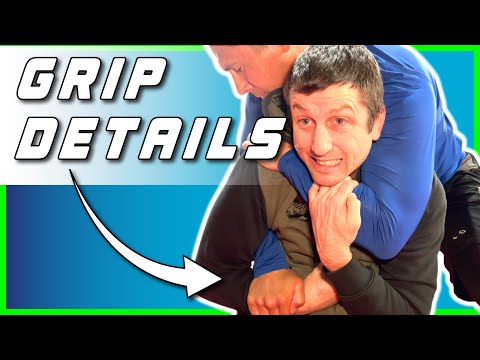
This video I work with my students on my system of gripping for the seatbelt. Check out the details and you are sure to…
Перевод: seatbelt back control
The Seatbelt Back Control subfamily covers back control positions defined by the seatbelt grip — an over-under arm configuration from behind where one arm goes over the shoulder and the other goes under the armpit, clasped together on the chest. [1] The seatbelt is the standard upper body control method for back control, providing a powerful grip that keeps the controlling fighter's chest tight against the opponent's back. [1],[2] The seatbelt has a 'strong side' (choking arm over the shoulder) and 'weak side' (choking arm under the armpit), each with different tactical implications. [2],[3]
The seatbelt grip was systematised in BJJ as the primary upper-body control method for back mount. [1]
The seatbelt is the standard upper body grip for back control in IBJJF and ADCC competition. [1]
Изображений для этой техники пока нет.
Войдите, чтобы предложить изображение.
This video I work with my students on my system of gripping for the seatbelt. Check out the details and you are sure to…
Seatbelt/Kimura attacks and control from the back. Roger Dardis shows a sequence to finish from the back using a kimura…
Учебных курсов по этой технике пока нет.
Войдите, чтобы предложить курс.
Риск травмы для человека, к которому применяется техника
Back control is dominant position; enables rear chokes (Danaher 2021)
Уровень мастерства, необходимый для надёжного выполнения техники
Разрешена ли техника по основным соревновательным правилам
Brazilian Jiu-Jitsu: Theory and Technique (Renzo Gracie & Royler Gracie, 2001)
Alias sources — [1] IBJJF Rules (2024) [2] Jiu-Jitsu University (Ribeiro, 2008) [3] Mastering Jujitsu (Gracie & Danaher, 2003)
Effectiveness sources — [1] Mastering Jujitsu (Gracie & Danaher, 2003) [2] Jiu-Jitsu University (Ribeiro, 2008)
Standard katakana transliteration of Western martial arts terminology (外来語) — used in Japanese MMA, boxing, and BJJ communities
Alias sources — [1] IBJJF Rules (2024) [2] Jiu-Jitsu University (Ribeiro, 2008) [3] Mastering Jujitsu (Gracie & Danaher, 2003)
Effectiveness sources — [1] Mastering Jujitsu (Gracie & Danaher, 2003) [2] Jiu-Jitsu University (Ribeiro, 2008)
hook control, seatbelt grip endurance, hip connection
long legs for deep hooks, strong grip for seatbelt
hip adductors, biceps, forearms, core
Каждое движение в любом боевом искусстве обладает рядом универсальных свойств. Комбинируйте параметры ниже, чтобы найти нужный инструмент или сравнить аналоги из разных стилей.
The Strong Side Seatbelt positions the choking arm (the arm that will apply the rear naked choke) over the opponent's shoulder, which is the preferred configuration for attacking the RNC. [1] The strong side is called 'strong' because the choking arm is already in the over-the-shoulder position needed to slide under the chin for the choke, reducing the number of steps needed to finish. [1,2] From strong side seatbelt, the controlling fighter can attack the RNC more directly while the opponent must defend the over-the-shoulder arm. [2,3]
The Weak Side Seatbelt positions the choking arm under the opponent's armpit rather than over the shoulder, which is further from the direct RNC finishing position. [1] The weak side requires an additional step to attack the choke — the choking arm must be moved from under the armpit to over the shoulder or directly under the chin. [1,2] However, the weak side is not without advantages — it can be better for maintaining control against certain escape attempts and provides different attacking angles. [2,3]
According to Coach Brian at TeachMeGrappling, place one hand around the opponent's neck with palm down and the other hand around the hip with palm down. Keep your hand deep and tight to the chest—the deeper your hand placement, the stronger your control and the harder it is for them to break the grip or escape the choke.
Coach Brian emphasizes that a proper seatbelt lock requires getting your hands deep and locked down tight, not just a surface grip. A weak grip leaves your hands exposed to peeling attacks and allows the opponent to escape, whereas proper depth and lock-down positioning prevents the opponent from breaking free even when they fight your hands.
Coach Brian teaches that you should never put your grip hand on top in a vulnerable position. Instead, keep your hands deep and maintain proper lock-down—the key is that when your opponent tries to peel the grip, you control the threat and can crawl deeper into position, ultimately finishing the choke.
Coach Brian advises against worrying about finger grabs—squeeze their fingers just as you would any other part of grappling, and use your grip to break their hand or wrist control. Avoid palm-to-palm grips that give them easy finger access; instead, use positions that limit their ability to grab your fingers.
The Seatbelt Back Control subfamily covers back control positions defined by the seatbelt grip — an over-under arm configuration from behind where one arm goes over the shoulder and the other goes under the armpit, clasped together on the chest. The seatbelt is the standard upper body control method for back control, providing a powerful grip that keeps the controlling fighter's chest tight against the opponent's back.
The seatbelt grip was developed in BJJ as the standard upper body control for back control, named for its resemblance to a car seatbelt crossing the chest. It has become the universally taught back control grip in both BJJ and MMA.
IBJJF: разрешён — Legal, back control with hooks or body triangle scores 4 points; IJF: разрешён — Legal — back control leads to pin or submission opportunities; ADCC: разрешён — Legal, back mount scores 3 points (4 from sweep); Unified MMA: разрешён — Legal — dominant position for ground-and-pound and rear naked choke; UWW: разрешён — Legal — back exposure is the primary scoring mechanism in wrestling; FIAS Sport Sambo: разрешён — Legal
Оценка опасности 4/10. Moderate — back control is dominant position; enables rear chokes (Danaher 2021)
Стандартная цепочка подготовки: Achieve Position → Stabilize → Maintain → Attack.
Стандартные контрприёмы: Hand Fight — grip-fight the choking hand to prevent the rear naked choke / Shoulder Walk — walk shoulders to the mat to escape back control / Turn into Guard — rotate to face the attacker and recover guard position.
Распространённые варианты: Back control with hooks (both feet hooked inside the opponent's thighs); Body triangle back control (legs locked in a figure-four around the torso); Rear mount (mounted on the back with both hooks, opponent face-down); Chair sit back control (sitting behind the opponent with hooks, upright position).
The seatbelt is the standard upper body grip for back control in IBJJF and ADCC competition.
Основные ошибки, на которые стоит обратить внимание: Clasping hands too far to one side — the clasp should be centred on the opponent's chest for balanced control / Using a seatbelt without hooks — the seatbelt alone doesn't prevent the opponent from sliding down and escaping / Keeping both arms on the same side of the opponent's body — one arm must be over the shoulder, the other under the ar… / Gripping too loosely — the seatbelt must be tight; gaps allow the opponent to peel the arms.
Seatbelt Back Control также известен как Shītoberuto Bakku Kontorōru, Seatbelt Grip, Harness Control, Over-Under Grip Back Control.