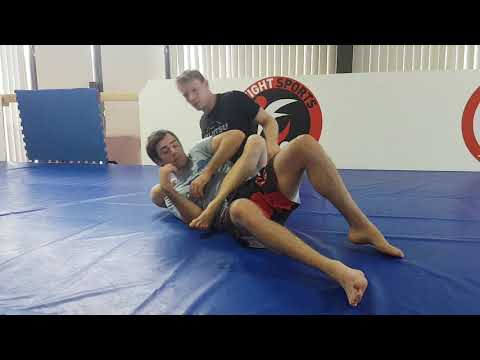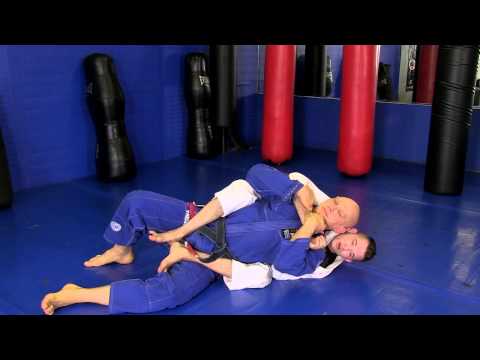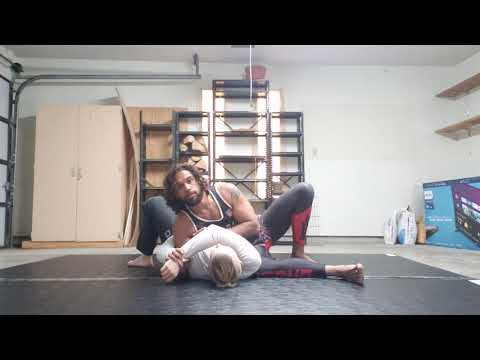
Scarf to Seatbelt Side Control
0
Weak Side Seatbelt·Mood Swing·Added by Admin
Please Like, Share, Comment, and Subscribe for more great content!!! Connect with me: Patreon - https://www.patreon.com…
Перевод: weak side seatbelt
The Weak Side Seatbelt positions the choking arm under the opponent's armpit rather than over the shoulder, which is further from the direct RNC finishing position. [1] The weak side requires an additional step to attack the choke — the choking arm must be moved from under the armpit to over the shoulder or directly under the chin. [1],[2] However, the weak side is not without advantages — it can be better for maintaining control against certain escape attempts and provides different attacking angles. [2],[3]
The weak side seatbelt (choking arm on the opposite side) requires a transition to the strong side for choke finishes but provides a safer retention position against certain escapes. [1]
The weak side seatbelt concept was developed in modern BJJ systematic back control methodology. [1]
The weak side seatbelt is commonly seen as a transitional position in competition. [1]
Изображений для этой техники пока нет.
Войдите, чтобы предложить изображение.
Please Like, Share, Comment, and Subscribe for more great content!!! Connect with me: Patreon - https://www.patreon.com…
Part 7 of a series of videos on attacking from the back position, this time dealing with attacks and ideas from the stro…
Brandon 'Wolverine' Mullins control and submission secrets for rearmount. From Instant BJJ Gamechangers on the Master A…
The weak side seatbelt is a back control position where the attacker secures both of the opponent's arms in a figure-four grip across the chest while positioned on the opponent's weak side (opposite the choking arm). Mood Swing emphasizes transitioning into seatbelt back control from scarf position through a gift wrap setup, detailing the critical mechanics of connecting the opponent's wrist tightly to their neck to prevent escape, then using hip bumps and head control to establish the seatbelt. Stephan Kesting focuses on hand-fighting strategies from back control, explaining how to control the opponent's hands when they resist the neck attack, and stressing the importance of keeping the head under the opponent's to maintain positional control. Tom Halpin provides comprehensive weak side tactics, describing the seatbelt sneak technique to unlock grips, body triangle options to prevent escape, and how to transition from strong side to weak side using a chair system when hand-fighting fails. All three instructors agree on the seatbelt's core principle: the underhook arm traps the opponent's top arm while the overhook secures the bottom arm, creating an inescapable chest-to-back connection. Kesting and Halpin both emphasize controlling the opponent's hands proactively, while Mood Swing stresses precise wrist-to-neck contact and sequential base switching to establish position before applying finishing attacks.
Сформировано на основе 3 инструкторов
Учебных курсов по этой технике пока нет.
Войдите, чтобы предложить курс.
Риск травмы для человека, к которому применяется техника
Back control is dominant position; enables rear chokes (Danaher 2021)
Уровень мастерства, необходимый для надёжного выполнения техники
Разрешена ли техника по основным соревновательным правилам
Brazilian Jiu-Jitsu: Theory and Technique (Renzo Gracie & Royler Gracie, 2001)
Alias sources — [1] Jiu-Jitsu University (Ribeiro, 2008) [2] Mastering Jujitsu (Gracie & Danaher, 2003)
Effectiveness sources — [1] Mastering Jujitsu (Gracie & Danaher, 2003)
Standard katakana transliteration of Western martial arts terminology (外来語) — used in Japanese MMA, boxing, and BJJ communities
Alias sources — [1] Jiu-Jitsu University (Ribeiro, 2008) [2] Mastering Jujitsu (Gracie & Danaher, 2003)
Effectiveness sources — [1] Mastering Jujitsu (Gracie & Danaher, 2003)
hook control, seatbelt grip endurance, hip connection
long legs for deep hooks, strong grip for seatbelt
hip adductors, biceps, forearms, core
Keeping your head underneath blocks your opponent's head and prevents them from sliding out, which is their primary escape route from the back. If you allow their head to reach the mat, you lose back control and end up on their side instead.
While grabbing the wrist is effective, grabbing the hand is actually stronger—you can grab all four fingers and it's totally legal. Stephan Kesting notes this is a useful alternative when standard wrist control is difficult.
Tom Halpin recommends transitioning to the weak side by keeping your seatbelt grip, sliding your elbow back to base, and rolling semicircles while keeping your opponent tight to your body. Once you're back on the weak side, you can lock the body triangle and attack from there.
It's critical that both your wrist and your opponent's wrist are connected tightly to their neck with no space between them. If there's separation, they can push their elbow up and pop their head out. Use your hips to bump and pull their head in a circular motion to maintain the position.
The Weak Side Seatbelt positions the choking arm under the opponent's armpit rather than over the shoulder, which is further from the direct RNC finishing position. The weak side requires an additional step to attack the choke — the choking arm must be moved from under the armpit to over the shoulder or directly under the chin.
The weak side seatbelt is recognised as the secondary back control configuration in systematic back attack systems. Despite its name, skilled grapplers can attack effectively from either side, and understanding both configurations is essential for complete back control methodology.
IBJJF: разрешён — Legal, back control with hooks or body triangle scores 4 points; IJF: разрешён — Legal — back control leads to pin or submission opportunities; ADCC: разрешён — Legal, back mount scores 3 points (4 from sweep); Unified MMA: разрешён — Legal — dominant position for ground-and-pound and rear naked choke; UWW: разрешён — Legal — back exposure is the primary scoring mechanism in wrestling; FIAS Sport Sambo: разрешён — Legal
Оценка опасности 4/10. Moderate — back control is dominant position; enables rear chokes (Danaher 2021)
Стандартная цепочка подготовки: Achieve Position → Stabilize → Maintain → Attack.
Стандартные контрприёмы: Posture Control — maintain strong posture to limit the opponent's offensive options / Escape to Neutral — work back to standing or a neutral position.
Распространённые варианты: Back control with hooks (both feet hooked inside the opponent's thighs); Body triangle back control (legs locked in a figure-four around the torso); Rear mount (mounted on the back with both hooks, opponent face-down); Chair sit back control (sitting behind the opponent with hooks, upright position).
The weak side seatbelt is commonly seen as a transitional position in competition.
Основные ошибки, на которые стоит обратить внимание: Forcing the RNC from the weak side — the geometry doesn't favour it; transition to the strong side or use weak-side a… / Abandoning the position because it's the 'wrong' side — the weak side is still dominant back control / Not developing weak-side attacks — the short choke and arm attacks are effective from the weak side / Allowing the opponent to escape while transitioning from weak to strong — maintain control during the switch.
Weak Side Seatbelt также известен как Wīku Saido Shītoberuto, Non-Choking Side Seatbelt, Weak Side Harness.