Rear Naked Choke, Seat Belt Control
0
Strong Side Seatbelt·Just Train·Added by Admin
Перевод: strong side seatbelt
The Strong Side Seatbelt positions the choking arm (the arm that will apply the rear naked choke) over the opponent's shoulder, which is the preferred configuration for attacking the RNC. [1] The strong side is called 'strong' because the choking arm is already in the over-the-shoulder position needed to slide under the chin for the choke, reducing the number of steps needed to finish. [1],[2] From strong side seatbelt, the controlling fighter can attack the RNC more directly while the opponent must defend the over-the-shoulder arm. [2],[3]
The strong side seatbelt (choking arm over the shoulder on the side the attacker faces) provides direct access to rear choke entries. [1]
The strong/weak side distinction in seatbelt control was codified by John Danaher's back attack system. [1]
Strong side seatbelt is the preferred finishing position for rear chokes in high-level competition. [1]
Изображений для этой техники пока нет.
Войдите, чтобы предложить изображение.
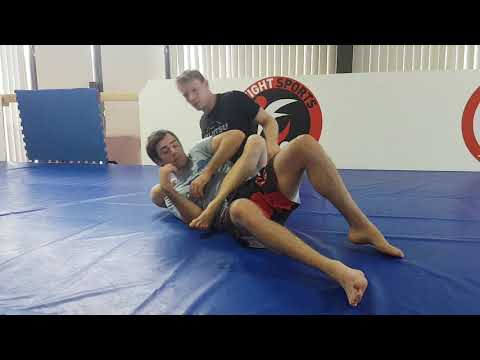
Part 7 of a series of videos on attacking from the back position, this time dealing with attacks and ideas from the stro…
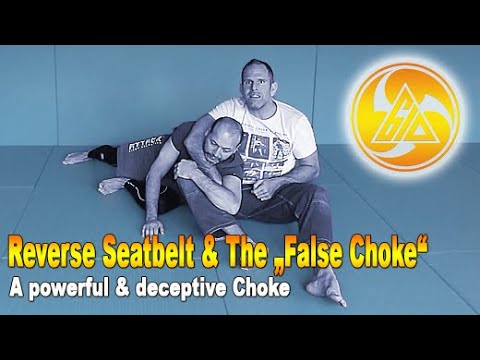
In this video BJJ Blackbelt Björn Friedrich shows you the Reverse Seatbelt and the "False Choke" A powerful control posi…
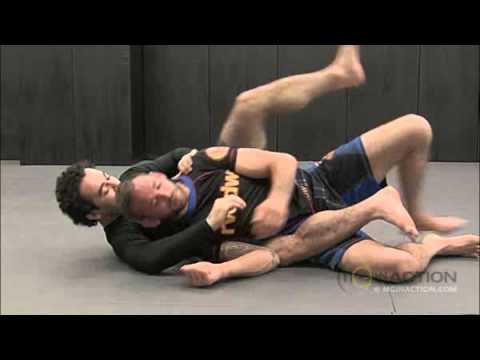
The strong side seatbelt is a back control configuration where the attacker's choking arm is positioned on the same side as the opponent's body orientation, eliminating the arm trap option but potentially creating a more difficult escape. According to Tom Halpin, establishing this position requires immediate body triangle security—stepping the hip and bringing the leg across to create outside, inside, or open variants. The primary challenge is hand fighting to access the choke; Halpin recommends the Camarillo grip (S-grip shoulder blade block) or the seatbelt sneak to break the opponent's grip and progress the attack. When direct choke attempts stall, Halpin advocates transitioning to the weak side using a chair system: the seatbelt arm slides back to base on the elbow while the bottom hook pressurizes the hamstring, allowing a roll to reposition for arm trap sequences. Alternatively, a Kimura grip variant (no-thumb, gooseneck wrist position) can be used from the seatbelt to access arm bar or weak-side Kimura attacks. EffortlessJiuJitsu's Björn Friedrich presents the reverse seatbelt—wrapping the neck and then grabbing one's own leg rather than the opponent's armpit—which he argues provides superior control and prevents arm escape. From either configuration, the false choke (choking with the arm that typically doesn't finish from back control) exploits reduced defensive awareness. All three instructors emphasize that strong side attacks demand superior hand-fighting mechanics and positional flexibility compared to weak side approaches.
Сформировано на основе 3 инструкторов
Учебных курсов по этой технике пока нет.
Войдите, чтобы предложить курс.
Риск травмы для человека, к которому применяется техника
Back control is dominant position; enables rear chokes (Danaher 2021)
Уровень мастерства, необходимый для надёжного выполнения техники
Разрешена ли техника по основным соревновательным правилам
Brazilian Jiu-Jitsu: Theory and Technique (Renzo Gracie & Royler Gracie, 2001)
Alias sources — [1] Jiu-Jitsu University (Ribeiro, 2008) [2] Mastering Jujitsu (Gracie & Danaher, 2003)
Effectiveness sources — [1] Mastering Jujitsu (Gracie & Danaher, 2003)
Standard katakana transliteration of Western martial arts terminology (外来語) — used in Japanese MMA, boxing, and BJJ communities
Alias sources — [1] Jiu-Jitsu University (Ribeiro, 2008) [2] Mastering Jujitsu (Gracie & Danaher, 2003)
Effectiveness sources — [1] Mastering Jujitsu (Gracie & Danaher, 2003)
hook control, seatbelt grip endurance, hip connection
long legs for deep hooks, strong grip for seatbelt
hip adductors, biceps, forearms, core
In the classical seatbelt, you wrap around the neck and under the armpit. With the reverse seatbelt, you put your knee in, go around the neck, and grab your own leg instead—this catches opponents off guard because they defend against the classical setup while you're attacking differently. EffortlessJiuJitsu emphasizes that opponents often defend the expected classical seatbelt, so the reverse catches them unprepared.
After securing the seatbelt, control your opponent's arm to limit their rotation, then attack with a choke by bringing your hand under their chin or across their neck. Tom Halpin advises that if you can't establish a good body triangle or get finishes from the strong side, you can transition to the weak side to continue your attack.
Get your hand under the chin as quickly as possible and hide it between their head and your shoulder to prevent them from using their hand to break the grip. Seat Belt Control instructs that once your hand is inside this protected position, you can squeeze tight from the rear neck shoulder.
The Strong Side Seatbelt positions the choking arm (the arm that will apply the rear naked choke) over the opponent's shoulder, which is the preferred configuration for attacking the RNC. The strong side is called 'strong' because the choking arm is already in the over-the-shoulder position needed to slide under the chin for the choke, reducing the number of steps needed to finish.
The strong side seatbelt concept was codified as part of systematic back attack methodology in BJJ, distinguishing the two seatbelt configurations by their proximity to the rear naked choke finish. The terminology is now standard in competitive grappling instruction.
IBJJF: разрешён — Legal, back control with hooks or body triangle scores 4 points; IJF: разрешён — Legal — back control leads to pin or submission opportunities; ADCC: разрешён — Legal, back mount scores 3 points (4 from sweep); Unified MMA: разрешён — Legal — dominant position for ground-and-pound and rear naked choke; UWW: разрешён — Legal — back exposure is the primary scoring mechanism in wrestling; FIAS Sport Sambo: разрешён — Legal
Оценка опасности 4/10. Moderate — back control is dominant position; enables rear chokes (Danaher 2021)
Стандартная цепочка подготовки: Achieve Position → Stabilize → Maintain → Attack.
Стандартные контрприёмы: Hand Fight — grip-fight the choking hand to prevent the rear naked choke / Shoulder Walk — walk shoulders to the mat to escape back control / Turn into Guard — rotate to face the attacker and recover guard position.
Распространённые варианты: Back control with hooks (both feet hooked inside the opponent's thighs); Body triangle back control (legs locked in a figure-four around the torso); Rear mount (mounted on the back with both hooks, opponent face-down); Chair sit back control (sitting behind the opponent with hooks, upright position).
Strong side seatbelt is the preferred finishing position for rear chokes in high-level competition.
Основные ошибки, на которые стоит обратить внимание: Not recognizing which side is the strong side — the over-shoulder arm determines the strong side / Attacking the choke from the weak side — always work to get to the strong side before committing to the RNC / Allowing the opponent to turn to the weak side without adjustment — follow their turn to maintain the strong-side angle / Keeping the choking arm too high on the shoulder instead of near the neck — the arm should be positioned to slide und….
Strong Side Seatbelt также известен как Sutorongu Saido Shītoberuto, Choking Side Seatbelt, Strong Side Harness.