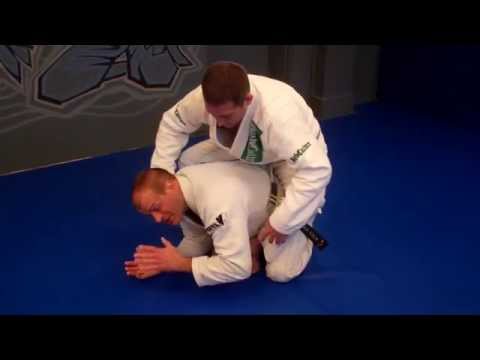
Standard Turtle To Half Guard

Род

Перевод: standard turtle to half guard

Дистанция и классификация

Категория
Удар и защитаЗамкиБлижний бойБой против нескольких
Дистанция
БлижняяСредняяДальняя

Обзор

The Standard Turtle To Half Guard executes the transition by sitting the hips to one side, threading the inside leg between the opponent's legs to hook one leg, and establishing half guard with an immediate underhook on the same side. [1] The turtled fighter drops the hip to the mat, slides the inside leg between the opponent's legs, and locks up a half guard while simultaneously fighting for the underhook. [1],[2] The underhook is critical to making this transition offensive rather than merely defensive — with the underhook secured, the escaping fighter has immediate access to the old school sweep and other half guard attacks. [2],[3]

Также известна как
Basic Turtle To Half Guard[1]Standard Turtle Guard Recovery[2]
Используется в

История и происхождение

The standard turtle to half guard transition is a fundamental BJJ escape taught as part of the comprehensive half guard game. [1] Its integration with the underhook sweep system makes it a seamless transition from defence to offence. [2],[3]

Страна происхождения· показано в случайном порядке

  • БразилияБразильское джиу-джитсу, ММА
  • Японияスタンダード亀からハーフガードへ(Sutandādo Kame kara Hāfu Gādo e)Бразильское джиу-джитсу
  • СШАММА

Эффективность

The standard turtle to half guard is the baseline version of this escape. [1]

Родословная

A fundamental BJJ escape. [1]

Соревновательные результаты

Used in BJJ competition. [1]

Изображения

Изображений для этой техники пока нет.

Войдите, чтобы предложить изображение.

Биомеханический механизм

Primary ActionBreaking the opponent's leg control to advance to a more dominant position
Joints InvolvedHips (posture and pressure), knees (opening the guard with knee-in or standing), hands (grip fighting)
Force VectorForward pressure (stack/smash) or backward posture (stand-up break) to open the closed guard
Passing MechanicOnce the guard is opened, speed passing, pressure passing, or toreando passing advances the position

Позиция и вход

From bottom side controlCreate frames with the forearms against the opponent's neck and hip, hip escape (shrimp) to create space, insert the knee to recover guard
From underhook escapeSwim the near arm to an underhook, bridge into the opponent and come to knees or reverse
From opponent's transitionWhen the opponent moves to mount or north-south, use the movement to create space and escape

Варианты

Standard sweepprimary off-balancing and reversal technique from the guard
Combination sweepchaining two sweep directions to catch the opponent's adjustment
Counter sweepsweeping as the opponent initiates a guard pass attempt
Competition sweepoptimised for point-scoring in tournament settings

Видео

TURTLE TO HALF GUARD TRANSITION

0
Standard Turtle To Half Guard·Alpha BJJ·Added by Admin

This week, we deal with the dreaded back mount. Even worse, we look at it from the position of the turtle. This can be

1 video

Изучить технику

Учебных курсов по этой технике пока нет.

Войдите, чтобы предложить курс.

Оценки

Уровень опасности

Риск травмы для человека, к которому применяется техника

3
Умеренный3/10

Turtle escapes involve rolling and granby movements; neck strain risk

Сложность

Уровень мастерства, необходимый для надёжного выполнения техники

Средний
Допустимость на соревнованиях

Разрешена ли техника по основным соревновательным правилам

Unified MMA — Legal defensive technique
Unified Rules of MMA, August 2025PDF
IBJJF — Legal — escapes and sweeps are fundamental to BJJ...
IBJJF Rules Book v6.0, June 2024PDF
FIAS Sport Sambo — Legal
FIAS International Sambo Competition RulesPDF
FIAS Combat Sambo — Legal
FIAS Combat Sambo RulesPDF

Заметки по тренировке

Standard turtle-to-half-guard execution: from turtle, post the near-side hand, sit through to the far hip, thread the near leg between the opponent's legs, and close half guard (Saulo Ribeiro, Jiu-Jitsu University, 2008)
Step 1: from turtle, identify which direction to sit through — toward the opponent's nearest leg
Step 2: post the near-side hand on the mat for stability
Step 3: sit through by swinging the far hip to the mat and threading the near leg between the opponent's legs
Step 4: catch the opponent's near leg with both of your legs — this establishes half guard
Step 5: immediately establish the underhook on the caught-leg side
Step 6: begin half guard sweeps or recovery
The hand post provides stability during the sit-through — without it, you may collapse to a flat position
The leg thread must catch the opponent's leg before they can retract it
Train against partners who are actively attacking the back for realistic timing

Типичные ошибки

!Not posting the hand — the post prevents you from collapsing during the sit-through
!Threading the leg too shallow — catch the opponent's leg deeply for secure half guard
!Sitting through to a flat back — maintain the seated/hip position for active half guard
!Not catching the leg and ending in side control bottom — the leg catch is the critical element
!Transitioning too slowly — the sit-through must be faster than the opponent's back-take attempt
!Not immediately working from half guard — the transition is complete but the fight continues; get the underhook and attack
!Only drilling against passive partners — the timing only develops against active back attackers

Связанные техники

Контрприёмы

Цепочка подготовки

1Create Spaceuse frames, hip movement, or leverage to generate room to move
2Disrupt Controlbreak or weaken the opponent's grips and weight placement
3Execute Escapeapply the specific escape mechanic with timing and commitment
4Recover Positionestablish a safe position (guard, standing, or top)

Источники и ссылки

Основной источник

Jiu-Jitsu University (Saulo Ribeiro, 2008)

1КнигаThe Half Guard (Bravo, 2006)

Alias sources — [1] Jiu-Jitsu University (Saulo Ribeiro, 2008) [2] Brazilian Jiu-Jitsu: Theory and Technique (Renzo Gracie & Royler Gracie, 2001)

2КнигаJiu-Jitsu University (Ribeiro, 2008)

Effectiveness sources — [1] Jiu-Jitsu University (Ribeiro, 2008)

3ДругоеJapanese Martial Arts Hybrid Terminology

Mixed Japanese-Western terminology — combines traditional Japanese terms with katakana loanwords

4ЦитатаThe Half Guard (Bravo, 2006)

Alias sources — [1] Jiu-Jitsu University (Saulo Ribeiro, 2008) [2] Brazilian Jiu-Jitsu: Theory and Technique (Renzo Gracie & Royler Gracie, 2001)

5ЦитатаJiu-Jitsu University (Ribeiro, 2008)

Effectiveness sources — [1] Jiu-Jitsu University (Ribeiro, 2008)

Сообщество

Атлетизм

Requires

timing, hip power, off-balancing skill

Favours

strong hips and active legs for sweeping leverage

Key muscles

hip flexors, glutes, quadriceps, core rotators

Часто задаваемые вопросы

What's the key defensive structure I should maintain when stuck in turtle position?

Alpha BJJ emphasizes keeping your elbows tight inside your legs, forming an offset prayer position with your hands to create a wall, and tucking your head down to prevent your opponent from getting hooks in easily or securing a seat belt grip.

Why is preventing the seat belt grip so critical from turtle position?

According to Alpha BJJ, if your opponent secures a seat belt grip while you have hooks in, it's a very bad position for you, so maintaining a tucked chin and solid walls is essential to deny this grip.

How should I execute a mule kick to escape when my opponent has hooks?

Alpha BJJ teaches kicking inward at an angle rather than straight back to minimize your opponent's ability to grab your quad with their toes, then using your head as a base to catch their heel and sweep it back to clear into half guard.

Как работает Standard Turtle To Half Guard?

The Standard Turtle To Half Guard executes the transition by sitting the hips to one side, threading the inside leg between the opponent's legs to hook one leg, and establishing half guard with an immediate underhook on the same side. The turtled fighter drops the hip to the mat, slides the inside leg between the opponent's legs, and locks up a half guard while simultaneously fighting for the underhook.

Откуда происходит Standard Turtle To Half Guard?

The standard turtle to half guard transition is a fundamental BJJ escape taught as part of the comprehensive half guard game. Its integration with the underhook sweep system makes it a seamless transition from defence to offence.

Разрешён ли Standard Turtle To Half Guard на соревнованиях?

Unified MMA: разрешён — Legal defensive technique; IBJJF: разрешён — Legal — escapes and sweeps are fundamental to BJJ, sweep from bottom scores 2…; IJF: разрешён — Legal; ADCC: разрешён — Legal, sweep scores 2 points (4 from mount/back); FIAS Sport Sambo: разрешён — Legal; FIAS Combat Sambo: разрешён — Legal

Насколько опасен Standard Turtle To Half Guard?

Оценка опасности 3/10. Moderate — turtle escapes involve rolling and granby movements; neck strain risk

Как подготовить Standard Turtle To Half Guard?

Стандартная цепочка подготовки: Create Space → Disrupt Control → Execute Escape → Recover Position.

Как защититься от Standard Turtle To Half Guard?

Стандартные контрприёмы: Maintain Pressure — keep consistent weight distribution to limit escape space / Anticipate Direction — read escape attempt direction and block early / Transition — flow to a new position when the current one is threatened.

Какие есть варианты Standard Turtle To Half Guard?

Распространённые варианты: Standard sweep (primary off-balancing and reversal technique from the guard); Combination sweep (chaining two sweep directions to catch the opponent's adj…); Counter sweep (sweeping as the opponent initiates a guard pass attempt); Competition sweep (optimised for point-scoring in tournament settings).

Насколько эффективен Standard Turtle To Half Guard на соревнованиях?

Used in BJJ competition.

Какие типичные ошибки при выполнении Standard Turtle To Half Guard?

Основные ошибки, на которые стоит обратить внимание: Not posting the hand — the post prevents you from collapsing during the sit-through / Threading the leg too shallow — catch the opponent's leg deeply for secure half guard / Sitting through to a flat back — maintain the seated/hip position for active half guard / Not catching the leg and ending in side control bottom — the leg catch is the critical element.

Какие ещё названия есть у Standard Turtle To Half Guard?

Standard Turtle To Half Guard также известен как Sutandādo Kame kara Hāfu Gādo e, Basic Turtle To Half Guard, Standard Turtle Guard Recovery.