Grip Fighting Overview: The Key to Controlling Offense
0
Grip Fighting Defence·JonThomasBJJ
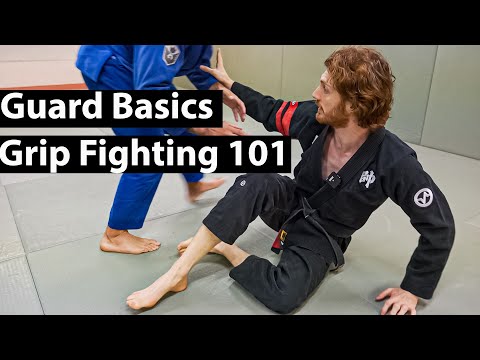
This video I go over critical aspects of winning the grip fight. A lot of people struggle to find establish offense in …
Перевод: grip fighting defence
The Grip Fighting Defence subfamily covers armlock defence techniques where the defender prevents the submission by maintaining grip connections that stop the opponent from isolating and extending the arm. [1] The most common grip defence is clasping the hands together — Gable grip, S-grip, or interlocking fingers — preventing the opponent from straightening the arm for an armbar. [1],[2] Grip fighting defence is the first line of armlock defence, buying time while the defender works for a positional escape. [2],[3]
Grip fighting as armlock defence is one of the most instinctive defensive reactions in grappling and has been taught since the earliest joint lock systems were developed. [1] Modern BJJ has refined grip fighting defence into a systematic approach with specific grip types recommended for each armlock scenario. [2],[3]
Grip fighting defence strips and prevents the opponent from establishing dominant grips for armlocks. [1]
Grip fighting is fundamental in judo and gi BJJ. [1]
Essential in judo and BJJ competition. [1]
Изображений для этой техники пока нет.
Войдите, чтобы предложить изображение.
This video I go over critical aspects of winning the grip fight. A lot of people struggle to find establish offense in …
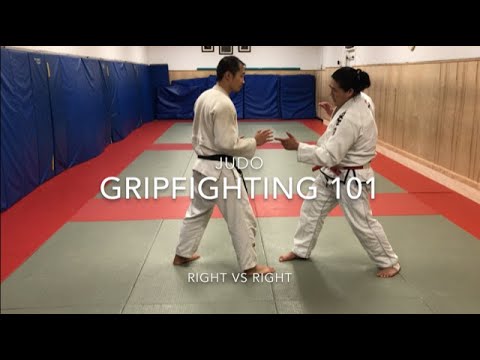
Great for BJJ too. This is the Basic Judo grip fighting 101 for righty vs righty.
Учебных курсов по этой технике пока нет.
Войдите, чтобы предложить курс.
Риск травмы для человека, к которому применяется техника
Submission defence involves resisting joint locks/chokes; risk of injury if defence fails or is delayed
Уровень мастерства, необходимый для надёжного выполнения техники
Разрешена ли техника по основным соревновательным правилам
Boxing (Edwin Haislet, 1940)
Alias sources — [1] Jiu-Jitsu University (Ribeiro, 2008) [2] Fundamentals of Brazilian Jiu-Jitsu (Danaher, 2012) [3] Kodokan Judo (Kano, 1986)
Effectiveness sources — [1] Kodokan Judo (Kano, 1986)
Standard katakana transliteration of Western martial arts terminology (外来語) — used in Japanese MMA, boxing, and BJJ communities
Alias sources — [1] Jiu-Jitsu University (Ribeiro, 2008) [2] Fundamentals of Brazilian Jiu-Jitsu (Danaher, 2012) [3] Kodokan Judo (Kano, 1986)
Effectiveness sources — [1] Kodokan Judo (Kano, 1986)
grip fighting technique, forearm endurance, timing
strong hands and forearms, quick stripping motions
forearm flexors/extensors, wrist rotators, biceps
Каждое движение в любом боевом искусстве обладает рядом универсальных свойств. Комбинируйте параметры ниже, чтобы найти нужный инструмент или сравнить аналоги из разных стилей.
Keep your forward hand active while protecting your lapel by bringing that shoulder back. Shintaro Higashi emphasizes never reaching with your back hand, as this gives your opponent an easy turn-and-throw opportunity.
Turn your shoulders so your sleeve-side hand is slightly further away, then control that side of the body first while protecting your own same-side. This prevents your opponent from easily securing both hands on you.
Rather than staying static trying to get two hands on, Shintaro Higashi recommends executing a couple of attacks and then improving your position over the back. If you go underneath and your opponent comes over the back, you end up even—so maintain the initiative.
The Grip Fighting Defence subfamily covers armlock defence techniques where the defender prevents the submission by maintaining grip connections that stop the opponent from isolating and extending the arm. The most common grip defence is clasping the hands together — Gable grip, S-grip, or interlocking fingers — preventing the opponent from straightening the arm for an armbar.
Grip fighting as armlock defence is one of the most instinctive defensive reactions in grappling and has been taught since the earliest joint lock systems were developed. Modern BJJ has refined grip fighting defence into a systematic approach with specific grip types recommended for each armlock scenario.
Unified MMA: разрешён — Legal defensive technique; IBJJF: разрешён — Legal — defensive techniques are fundamental to grappling; IJF: разрешён — Legal defensive action; ADCC: разрешён — Legal; UWW: разрешён — Legal defensive technique; FIAS Sport Sambo: разрешён — Legal
Оценка опасности 3/10. Moderate — submission defence involves resisting joint locks/chokes; risk of injury if defence fails or is delayed
Стандартная цепочка подготовки: Anticipate the Attack → Execute Defence → Recover Stance → Counter or Disengage.
Стандартные контрприёмы: Timing — attack when the defence is recovering or between movements / Feint — use deception to create openings in the defensive structure / Angle Change — attack from an unexpected angle that the defence does not cover.
Распространённые варианты: Standard defence (primary defensive technique from the most common position); Reactive defence (triggered by the opponent's attack, minimal movement for …); Proactive defence (anticipating the attack and positioning to neutralise it …); Counter defence (using the defensive movement to create an immediate count…).
Essential in judo and BJJ competition.
Основные ошибки, на которые стоит обратить внимание: Trying to break grips by pulling straight away — circular motion toward the thumb is far more effective / Using one hand to fight a two-handed grip — you need two-on-one to break an established grip / Ignoring grip fighting and focusing only on escaping the submission — prevention through grip fighting is easier than… / Breaking one grip but allowing the opponent to immediately re-grip — break and reposition simultaneously.
Grip Fighting Defence также известен как Gurippu Faitingu Difensu, Grip Break, Hand Fighting, Kumi Kata Defence.