Karate For You :: Outside block - Soto uke tutorial
0
Soto Uke·Karate For You
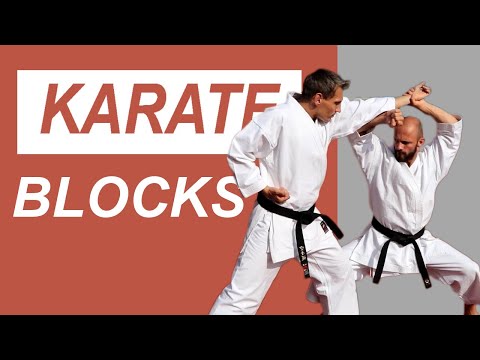
In this video we are showing how to do Outside block , its combinations , applications and training .
Перевод: outside block
Soto Uke (outside-to-inside block) is a traditional karate middle block where the forearm sweeps from outside the body inward, intercepting a straight punch or kick targeting the torso. [1] The block starts with the arm chambered outside the body at shoulder height, then sweeps inward across the centreline, deflecting the attack to the inside. [1],[2] Soto uke is effective against direct attacks to the midsection and creates an opening for counter-attacks on the outside line. [2],[3]
Soto uke (outside forearm block) is effective in traditional karate for deflecting mid-level punches and strikes by sweeping the forearm inward across the body. [1] In sport karate, it is used in combination with counter-attacks to score points. [2] In full-contact fighting, the large arc of the technique limits its speed against fast combinations. [1]
Soto uke (outside block) is a standard karate block. [1]
Изображений для этой техники пока нет.
Войдите, чтобы предложить изображение.
In this video we are showing how to do Outside block , its combinations , applications and training .
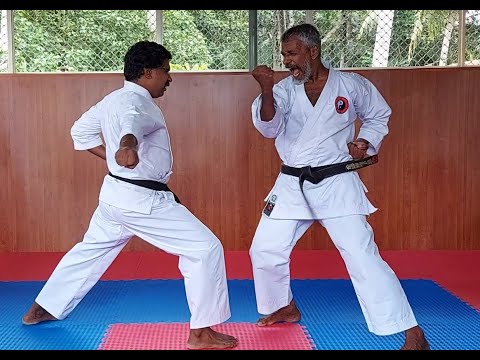
Video describes the basic block - defence techniques occurring in SHOTOKAN KARATE style, some of which are also used in …
Soto Uke is an outside or side pulling block that deflects attacks directed at the body or head using the pinky edge of the forearm. According to Radim Pavelka, the technique begins with the arm positioned next to the body at head level with a bent elbow, then executes a forward arcing motion accompanied by simultaneous forearm rotation. The final forearm position extends behind the body's axis to sufficiently deflect the incoming attack path. Like other uke techniques, Soto Uke functions not only as a defensive block but also as a potential counter-attack when applied with sufficient force. The effectiveness of Soto Uke depends on proper conditioning of the striking surface—the pinky-edged forearm—through specialized partner drills. Pavelka emphasizes the technique's simplicity and high effectiveness as core attributes. The block can be performed with either the pinky edge or as a knife-hand chop variation, with the elbow remaining flexed at approximately 90 degrees throughout execution. Hip movement accompanies the arm motion to generate power and stability.
Сформировано на основе 2 инструкторов
Учебных курсов по этой технике пока нет.
Войдите, чтобы предложить курс.
Риск травмы для человека, к которому применяется техника
Blocking and parrying absorb strike force; hand/forearm injury from repeated blocking
Уровень мастерства, необходимый для надёжного выполнения техники
Разрешена ли техника по основным соревновательным правилам
Karate-Do Kyohan: The Master Text (Gichin Funakoshi, 1935)
Alias sources — [1] Karate-Do Kyohan (Funakoshi, 1935) [2] The Kyokushin Way (Oyama, 1979) [3] Dynamic Karate (Nakayama, 1966)
Effectiveness sources — [1] Karate-Do Kyohan (Funakoshi, 1935) [2] Dynamic Karate (Nakayama, 1966)
Official karate technique names (和語/漢語)
Established Japanese martial arts naming convention — native Japanese term (和語/漢語)
Alias sources — [1] Karate-Do Kyohan (Funakoshi, 1935) [2] The Kyokushin Way (Oyama, 1979) [3] Dynamic Karate (Nakayama, 1966)
Effectiveness sources — [1] Karate-Do Kyohan (Funakoshi, 1935) [2] Dynamic Karate (Nakayama, 1966)
forearm conditioning, reaction speed, structural stability
dense bone structure, strong forearms
forearm flexors/extensors, deltoids, biceps, core (absorbing impact)
Soto Uke is a rising or head block performed by moving the arm upward and forward in a curved path so that the forearm strikes the attacker's arm, with the final arm position within one fist of the body. Unlike Nakashi Uke, which uses the inside of the forearm to deflect attacks, Soto Uke uses an outward striking motion.
Yes, as with all blocking maneuvers, Soto Uke can also function as a covert strike against the attacker's arm while defending.
Soto Uke (outside-to-inside block) is a traditional karate middle block where the forearm sweeps from outside the body inward, intercepting a straight punch or kick targeting the torso. The block starts with the arm chambered outside the body at shoulder height, then sweeps inward across the centreline, deflecting the attack to the inside.
Soto uke is one of karate's fundamental middle blocks, featured in many traditional kata and basic training drills. It has been a core defensive technique in Shotokan, Goju-ryu, and other karate styles since their systematisation in the early 20th century.
Unified MMA: разрешён — Legal defensive technique; WBC/Boxing: разрешён — Legal — blocking and evasion are core boxing skills; WKF: разрешён — Legal — blocking is a fundamental karate skill; Kyokushin: разрешён — Legal; WT: разрешён — Legal; WAKO: разрешён — Legal; K: разрешён — 1/GLORY — Legal; IFMA: разрешён — Legal
Оценка опасности 3/10. Moderate — blocking and parrying absorb strike force; hand/forearm injury from repeated blocking
Стандартная цепочка подготовки: Anticipate the Attack → Execute Defence → Recover Stance → Counter or Disengage.
Стандартные контрприёмы: Timing — attack when the defence is recovering or between movements / Feint — use deception to create openings in the defensive structure / Angle Change — attack from an unexpected angle that the defence does not cover.
Распространённые варианты: High block (forearm raised above the head to protect against overhead…); Low block (forearm driven downward to deflect kicks or body strikes); Cross block (forearm crosses the body to protect the opposite side); Double forearm block (both forearms together for maximum coverage).
Soto uke (outside block) is a standard karate block.
Основные ошибки, на которые стоит обратить внимание: Sweeping too far past the centreline — the block stops at the centre of your body / Starting the sweep from too high (above the head) or too low — start from ear level for the correct arc / Blocking with the inside of the forearm — use the outside (ulna bone) for a harder surface / Over-rotating the body — a slight hip rotation adds power, but too much exposes your back.
Soto Uke также известен как Soto Uke, Outside Block, Outward Block, Outside Forearm Block.