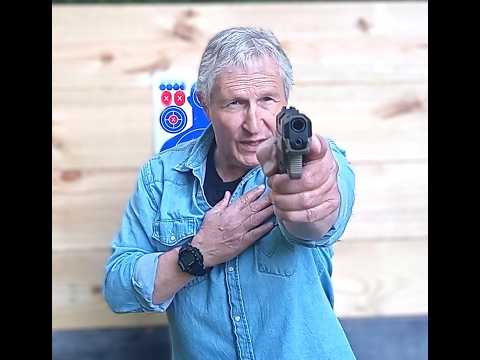
Block, Strike, Draw and Shoot
0
Block·Lionquest Fitness
A look at coordinating blocks and strikes with firearm techniques using the Ruger Security Nine Compact. Also, some olde…
Перевод: block / reception
The Block family covers defensive techniques that physically stop incoming strikes by interposing a rigid body part — typically the forearm, shin, or elbow — in the path of the attack. [1] Blocks are the most direct form of striking defence, using hard surfaces of the body to meet the incoming strike and prevent it from reaching its target. [1],[2] Blocks are classified by the height and direction they defend — high blocks protect the head, middle blocks protect the torso, low blocks protect the legs, and elbow blocks use the elbow's hard surface to damage the attacker's striking limb. [2],[3]
Blocking is the most basic striking defence used in all combat sports competition. [1]
Изображений для этой техники пока нет.
Войдите, чтобы предложить изображение.
A look at coordinating blocks and strikes with firearm techniques using the Ruger Security Nine Compact. Also, some olde…
Учебных курсов по этой технике пока нет.
Войдите, чтобы предложить курс.
Риск травмы для человека, к которому применяется техника
Blocking and parrying absorb strike force; hand/forearm injury from repeated blocking
Уровень мастерства, необходимый для надёжного выполнения техники
Разрешена ли техника по основным соревновательным правилам
Karate-Do Kyohan: The Master Text (Gichin Funakoshi, 1935)
Alias sources — [1] Karate-Do Kyohan (Funakoshi, 1935) [2] Karate-Do Kyohan (Funakoshi, 1935) [3] Karate-Do Kyohan (Funakoshi, 1935)
Effectiveness sources — [1] Boxing: The Complete Guide to Training and Fitness (Hatmaker, 2004) [2] Comprehensive Asian Fighting Arts (Draeger & Smith, 1969)
Official karate technique names (和語/漢語)
Established Japanese martial arts naming convention — native Japanese term (和語/漢語)
Alias sources — [1] Karate-Do Kyohan (Funakoshi, 1935) [2] Karate-Do Kyohan (Funakoshi, 1935) [3] Karate-Do Kyohan (Funakoshi, 1935)
Effectiveness sources — [1] Boxing: The Complete Guide to Training and Fitness (Hatmaker, 2004) [2] Comprehensive Asian Fighting Arts (Draeger & Smith, 1969)
forearm conditioning, reaction speed, structural stability
dense bone structure, strong forearms
forearm flexors/extensors, deltoids, biceps, core (absorbing impact)
Каждое движение в любом боевом искусстве обладает рядом универсальных свойств. Комбинируйте параметры ниже, чтобы найти нужный инструмент или сравнить аналоги из разных стилей.
The Elbow Block subfamily covers blocking techniques where the fighter uses the elbow — one of the hardest and most durable bones in the body — to intercept incoming strikes, both defending the target and potentially damaging the attacker's striking limb. [1] The elbow block is a double-purpose defence: it protects the body behind it while presenting a sharp, hard surface that can cut, bruise, or break the attacker's hand or shin upon contact. [1,2] Elbow blocks are used primarily against body hooks, low kicks, and strikes to the midsection. [2,3]
The High Block subfamily covers blocking techniques that defend the head and upper area by raising the arm or arms above the head to intercept downward or horizontal strikes targeting the head. [1] High blocks are essential for defending against overhead attacks, high kicks, and downward-angled punches. [1,2] This subfamily includes traditional karate-style rising blocks (age uke), cross blocks (both arms crossed overhead), and forearm blocks used in boxing and MMA. [2,3]
The Long Guard subfamily covers the defensive posture where one or both arms are extended forward, creating a barrier at maximum arm's length that disrupts the opponent's attacks before they develop full power. [1] The long guard uses the extended arm to obstruct the opponent's vision, block punches at their origin, and maintain distance through constant hand contact with the opponent's head or shoulders. [1,2] The long guard is distinct from standard blocking because it is proactive — it disrupts attacks before they launch rather than intercepting them in flight. [2,3]
The Low Block subfamily covers blocking techniques that defend the lower body — legs, midsection, and groin — by positioning the arms or legs downward to intercept low-targeting attacks. [1] Low blocks are essential for defending against leg kicks, low punches, and kicks targeting the body below the ribs. [1,2] This subfamily includes traditional karate-style downward sweeping blocks (gedan barai) and the Muay Thai shin check, which uses the shin to block incoming leg kicks. [2,3]
The Middle Block subfamily covers blocking techniques that defend the midsection and torso area by positioning the forearm horizontally or diagonally to intercept strikes targeting the body. [1] Middle blocks protect the vital organs of the torso — ribs, solar plexus, liver — from punches, kicks, and knees. [1,2] This subfamily includes inside-to-outside blocks (soto uke), outside-to-inside blocks (uchi uke), and knife-hand blocks (shuto uke), each sweeping the forearm across the body from different starting positions. [2,3]
Blocking appears in 7,254 passages across our corpus — the most referenced defensive action. In karate, the four fundamental blocks (age-uke, soto-uke, uchi-uke, gedan-barai) are taught before any offensive technique. In boxing, blocks use the gloves and arms to catch punches. (200+ books; Nakayama, Dynamic Karate)
Lionquest Fitness emphasizes keeping your non-blocking arm away from your gun during block, strike, and draw drills to maintain safety while integrating defensive movement.
If an attacker continues advancing despite a warning or begins drawing their own weapon and you have no time to issue a verbal challenge, that is when you would transition to drawing and firing.
The Block family covers defensive techniques that physically stop incoming strikes by interposing a rigid body part — typically the forearm, shin, or elbow — in the path of the attack. Blocks are the most direct form of striking defence, using hard surfaces of the body to meet the incoming strike and prevent it from reaching its target.
Blocking techniques are found in every martial arts tradition worldwide, from karate's formal blocking katas to Muay Thai's shin checks. The systematic classification of blocks by height (jodan, chudan, gedan) was formalised in Japanese karate traditions.
Unified MMA: разрешён — Legal defensive technique; WBC/Boxing: разрешён — Legal — blocking and evasion are core boxing skills; WKF: разрешён — Legal — blocking is a fundamental karate skill; Kyokushin: разрешён — Legal; WT: разрешён — Legal; WAKO: разрешён — Legal; K: разрешён — 1/GLORY — Legal; IFMA: разрешён — Legal
Оценка опасности 3/10. Moderate — blocking and parrying absorb strike force; hand/forearm injury from repeated blocking
Стандартная цепочка подготовки: Read the Attack → Position the Guard → Absorb Impact → Counter or Reset.
Стандартные контрприёмы: Feint — fake an attack to draw out the block then strike the opening / Level Change — switch attack levels to go around the blocking defence / Combination — throw multiple strikes to overwhelm the single defensive response.
Распространённые варианты: High block (forearm raised above the head to protect against overhead…); Low block (forearm driven downward to deflect kicks or body strikes); Cross block (forearm crosses the body to protect the opposite side); Double forearm block (both forearms together for maximum coverage).
Blocking is the most basic striking defence used in all combat sports competition.
Основные ошибки, на которые стоит обратить внимание: Blocking with the hands instead of the forearms — forearms provide a harder, wider blocking surface / Reaching out to block — keep the blocks close to the body; reaching out creates openings / Blocking every strike when evading would be more efficient — blocks absorb impact; evasion avoids it entirely / Tensing the entire body during blocks — tense only the blocking limb; the rest stays relaxed for movement.
Block также известен как Uke, Guard Block, Hard Block.