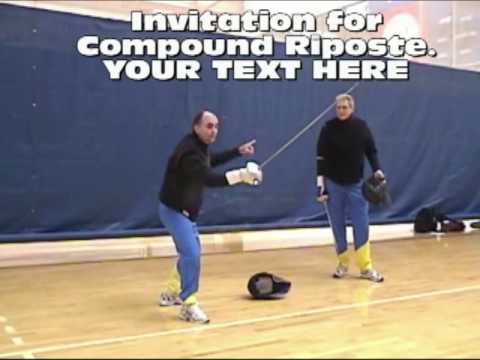
Sabre Lesson, Distance Parry
0
Fencing Distance Control·Coach GerryD·Added by Admin
Alex Beguinet is the Director of the US Fencing Associations coaching education program, Coaches College, a position he …
Перевод: fencing distance control
Fencing Distance Control applies the fencing concept of measure — the precise management of distance using footwork advances, retreats, and checks — to unarmed combat defence. [1] The fencing approach to distance control emphasises maintaining a specific optimal distance where the defender can reach the opponent with a single step but the opponent cannot reach the defender without committing to a full advance. [1],[2] This creates a reactive advantage where the defender can respond to the opponent's advance with either a counter-attack or a retreat before the attack lands. [2],[3]
Fencing distance control theory has been developed over centuries of European sword fighting, with systematic treatises on measure dating back to the Italian and Spanish fencing schools of the 15th-16th centuries. [1] Modern combat sports coaches have increasingly adopted fencing's distance management principles, particularly in MMA where the variety of attacks demands precise range awareness. [2],[3]
Fencing distance control ('measure') is the most precisely developed system of distance management in any combat discipline, with fencers trained to recognise and exploit variations of millimetres in the distance between blade tips. [1] The concept of breaking distance into zones (preparation distance, attack distance, critical distance) has been adopted by boxing and MMA coaches. [2]
Modern fencing distance theory descends from the Italian school of swordsmanship through masters like Ridolfo Capo Ferro (1610) and Salvator Fabris (1606), refined through centuries of competitive fencing evolution. [1] The French school further systematised measure into the modern framework used in Olympic fencing. [2]
Distance control (measure) is the fundamental tactical concept in competitive fencing. [1]
Изображений для этой техники пока нет.
Войдите, чтобы предложить изображение.
Alex Beguinet is the Director of the US Fencing Associations coaching education program, Coaches College, a position he …
Учебных курсов по этой технике пока нет.
Войдите, чтобы предложить курс.
Риск травмы для человека, к которому применяется техника
Evasion techniques avoid contact entirely; lowest injury risk of all techniques
Уровень мастерства, необходимый для надёжного выполнения техники
Разрешена ли техника по основным соревновательным правилам
Muay Thai: The Art of Fighting (Yod Ruerngsa, Khun Kao Charuad & James Cartmell, 2002)
Alias sources — [1] On Fencing (Nadi, 1943) [2] On Fencing (Nadi, 1943) [3] On Fencing (Nadi, 1943)
Effectiveness sources — [1] Fencing: Ancient Art, Modern Sport (Evangelista, 1996) [2] Boxing Mastery (Hatmaker, 2004)
Official karate technique names (和語/漢語)
Established Japanese martial arts naming convention — native Japanese term (和語/漢語)
Alias sources — [1] On Fencing (Nadi, 1943) [2] On Fencing (Nadi, 1943) [3] On Fencing (Nadi, 1943)
Effectiveness sources — [1] Fencing: Ancient Art, Modern Sport (Evangelista, 1996) [2] Boxing Mastery (Hatmaker, 2004)
shin conditioning, hip flexion speed, balance on support leg
conditioned shins, strong hip flexors
hip flexors, quadriceps, tibialis anterior, core
According to the Sabre Lesson transcript, timing your distance barrier relative to your opponent's movement is a key consideration: you should decide whether to set it on the initiation of their advance or their lunge to maximize its effectiveness.
Keep your guard plate down and counter attack to the floor when your opponent commits to the head, creating a simultaneous defensive and offensive response that controls the distance.
Fencing Distance Control applies the fencing concept of measure — the precise management of distance using footwork advances, retreats, and checks — to unarmed combat defence. The fencing approach to distance control emphasises maintaining a specific optimal distance where the defender can reach the opponent with a single step but the opponent cannot reach the defender without committing to a full advance.
Fencing distance control theory has been developed over centuries of European sword fighting, with systematic treatises on measure dating back to the Italian and Spanish fencing schools of the 15th-16th centuries. Modern combat sports coaches have increasingly adopted fencing's distance management principles, particularly in MMA where the variety of attacks demands precise range awareness.
Unified MMA: разрешён — Legal defensive technique; IBJJF: разрешён — Legal; IJF: разрешён — Legal defensive action; WBC/Boxing: разрешён — Legal; WKF: разрешён — Legal; WT: разрешён — Legal
Оценка опасности 1/10. Low — evasion techniques avoid contact entirely; lowest injury risk of all techniques
Стандартная цепочка подготовки: Anticipate the Attack → Execute Defence → Recover Stance → Counter or Disengage.
Стандартные контрприёмы: Timing — attack when the defence is recovering or between movements / Feint — use deception to create openings in the defensive structure / Angle Change — attack from an unexpected angle that the defence does not cover.
Распространённые варианты: Standard check (raising the shin to meet the incoming kick shin-on-shin); Angled check (turning the checking leg slightly to deflect the kick off…); Step check (stepping into the kick to disrupt its arc before it devel…).
Distance control (measure) is the fundamental tactical concept in competitive fencing.
Основные ошибки, на которые стоит обратить внимание: Standing too far away — fencing distance is precise; too far and you can't counter / Not maintaining proper measure — the distance must be actively managed, not set and forgotten / Applying fencing footwork without adapting to the wider stance needs of MMA/boxing / Over-relying on straight-line attacks — fencing distance creates opportunities for angles too.
Fencing Distance Control также известен как Kendō no Ma-ai, Measure Control, Fencing Measure, Misura.