Boxing Fundamentals | Evasion Techniques
0
Evasion-Distance Management·Danny Fung
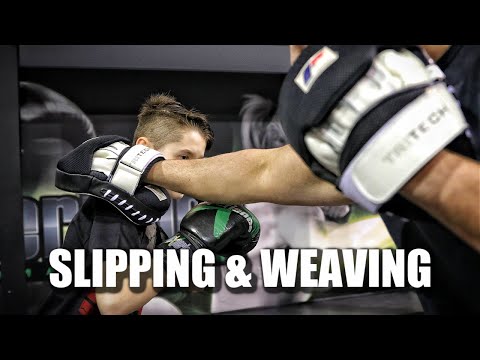
Slipping is an advanced technique in boxing, primarily related to a defense that allows you to avoid an incoming punch b…
Перевод: evasion and distance management
The Evasion-Distance Management group encompasses all defensive techniques that avoid offensive attacks by moving the body or head out of the attack's path, or by controlling the distance between fighters to prevent attacks from reaching their target. [1] Unlike blocking or parrying which intercept attacks, evasion-based defence removes the target entirely, leaving the attacker committed to a strike that hits nothing — a principle that creates superior counter-attacking opportunities. [1],[2] This group includes footwork defence (movement of the entire body), head movement (movement of the head and upper body while the feet remain planted), and stance-distance control (managing the spatial relationship between fighters). [2],[3] Evasion and distance management are considered the highest-level defensive skills in striking arts because they allow the defender to avoid damage entirely while maintaining balance and readiness to counter. [3]
Evasion-based defence has been central to boxing since the bare-knuckle era, with fighters like Daniel Mendoza (1764-1836) pioneering scientific footwork and evasion over the stand-and-trade approach of earlier prizefighting. [1] Head movement became a refined art through 20th-century boxing, with fighters like Willie Pep, Muhammad Ali, and Pernell Whitaker demonstrating that evasion could be the foundation of an entire fighting style. [2],[3] Distance management principles from fencing — the science of measure and timing — heavily influenced modern combat sports defensive theory. [3]
Distance management is a key metric in MMA analytics. [1]
Изображений для этой техники пока нет.
Войдите, чтобы предложить изображение.
Slipping is an advanced technique in boxing, primarily related to a defense that allows you to avoid an incoming punch b…
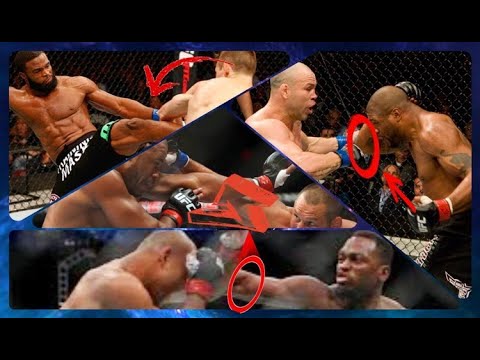
MMA Striking Defense || Evasion & Elbow Blocking Explained No surprise that the better MMA boxers have some of the bett…
Учебных курсов по этой технике пока нет.
Войдите, чтобы предложить курс.
Риск травмы для человека, к которому применяется техника
Evasion techniques avoid contact entirely; lowest injury risk of all techniques
Уровень мастерства, необходимый для надёжного выполнения техники
Разрешена ли техника по основным соревновательным правилам
Karate-Do Kyohan: The Master Text (Gichin Funakoshi, 1935)
Alias sources — [1] Championship Fighting (Dempsey, 1950) [2] Championship Fighting (Dempsey, 1950) [3] Boxing Mastery (Hatmaker, 2004) [4] Championship Fighting (Dempsey, 1950)
Effectiveness sources — [1] Boxing: The Complete Guide to Training and Fitness (Hatmaker, 2004) [2] Mastering Jujitsu (Gracie & Danaher, 2003)
Official karate technique names (和語/漢語)
Established Japanese martial arts naming convention — native Japanese term (和語/漢語)
Alias sources — [1] Championship Fighting (Dempsey, 1950) [2] Championship Fighting (Dempsey, 1950) [3] Boxing Mastery (Hatmaker, 2004) [4] Championship Fighting (Dempsey, 1950)
Effectiveness sources — [1] Boxing: The Complete Guide to Training and Fitness (Hatmaker, 2004) [2] Mastering Jujitsu (Gracie & Danaher, 2003)
forearm conditioning, reaction speed, structural stability
dense bone structure, strong forearms
forearm flexors/extensors, deltoids, biceps, core (absorbing impact)
Каждое движение в любом боевом искусстве обладает рядом универсальных свойств. Комбинируйте параметры ниже, чтобы найти нужный инструмент или сравнить аналоги из разных стилей.
The Footwork Defence family covers all defensive techniques that use foot and body movement to evade attacks, reposition, or create distance from the opponent. [1] Footwork defence is the foundation of all evasion-based defence because it moves the entire body out of danger, not just the head or limbs. [1,2] This family includes angling off (stepping to the side to create a new angle), lateral movement (circling), retreating steps (moving backward), and push-offs (creating distance with an explosive backward step). [2,3] Superior footwork is consistently identified as one of the most important defensive attributes in striking-based combat sports. [3]
The Head Movement family covers defensive techniques where the fighter moves the head and upper body to evade strikes while the feet remain relatively stationary, using trunk flexion, rotation, and lateral bending to remove the head from the path of incoming attacks. [1] Head movement is considered the most refined defensive skill in boxing because it allows the defender to evade strikes at close range while remaining in position to counter immediately — unlike footwork defence which creates distance, head movement maintains range for counter-attacking. [1,2] This family includes slips (lateral head movement), bobs and weaves (ducking under hooks), ducks (dropping the level), pull-backs (leaning backward), and the shoulder roll (using the shoulder as a shield). [2,3]
The Stance-Distance Control family covers defensive techniques that manage the spatial relationship between fighters through stance selection, positional awareness, and range management. [1] Distance control is the most fundamental defensive concept in fighting — if the opponent cannot reach the defender, no attack can land. [1,2] This family includes out-fighting range control (maintaining long range), cage/ring awareness (using the fighting space intelligently), and stance adjustments that optimise defensive positioning. [2,3]
Evasion and distance management — footwork, head movement, and positioning — are the 'invisible' defensive skills that determine whether a fighter gets hit. In boxing, the pivot is the most important defensive movement. (Dempsey, Championship Fighting; boxing and MMA training manuals)
You only need to move a few inches to let the punch slide by your chin—don't move too far out. According to Danny Fung, moving excessively can cause you to walk into counter-strikes like shin bones in MMA or Muay Thai.
No—always keep your eyes up to see what punch is coming next. Danny Fung emphasizes that you need to stay aware of incoming strikes so you can weave again or adjust if necessary, rather than walking into another punch.
Proper footwork and stance are your foundation for head movement. Danny Fung stresses that if your feet are not properly placed, moving your head will cause you to lose balance quickly, making you vulnerable to follow-up strikes.
Practice with a partner throwing at the exact level where your head is, so you learn the correct timing and angle. Danny Fung emphasizes realistic training where you duck under hooks at the proper height, then incorporate counter-punches once you've mastered the movement.
The Evasion-Distance Management group encompasses all defensive techniques that avoid offensive attacks by moving the body or head out of the attack's path, or by controlling the distance between fighters to prevent attacks from reaching their target. Unlike blocking or parrying which intercept attacks, evasion-based defence removes the target entirely, leaving the attacker committed to a strike that hits nothing — a principle that creates superior counter-attacking opportunities.
Evasion-based defence has been central to boxing since the bare-knuckle era, with fighters like Daniel Mendoza (1764-1836) pioneering scientific footwork and evasion over the stand-and-trade approach of earlier prizefighting. Head movement became a refined art through 20th-century boxing, with fighters like Willie Pep, Muhammad Ali, and Pernell Whitaker demonstrating that evasion could be the foundation of an entire fighting style.
Unified MMA: разрешён — Legal defensive technique; IBJJF: разрешён — Legal; IJF: разрешён — Legal defensive action; WBC/Boxing: разрешён — Legal; WKF: разрешён — Legal; WT: разрешён — Legal
Оценка опасности 1/10. Low — evasion techniques avoid contact entirely; lowest injury risk of all techniques
Стандартная цепочка подготовки: Anticipate the Attack → Execute Defence → Recover Stance → Counter or Disengage.
Стандартные контрприёмы: Timing — attack when the defence is recovering or between movements / Feint — use deception to create openings in the defensive structure / Angle Change — attack from an unexpected angle that the defence does not cover.
Распространённые варианты: High block (forearm raised above the head to protect against overhead…); Low block (forearm driven downward to deflect kicks or body strikes); Cross block (forearm crosses the body to protect the opposite side); Double forearm block (both forearms together for maximum coverage).
Distance management is a key metric in MMA analytics.
Основные ошибки, на которые стоит обратить внимание: Retreating straight backward — this keeps you on the centreline and allows the opponent to chase with combinations / Moving only the head without moving the feet — head movement must be paired with footwork for safety / Evading too far — excessive movement wastes energy and takes you out of counter-striking range / Standing flat-footed — evasive movement requires being on the balls of the feet with knees slightly bent.
Evasion-Distance Management также известен как Kaihi / Ma-ai Kanri, Evasion, Avoidance, Distance Control, Movement Defence.