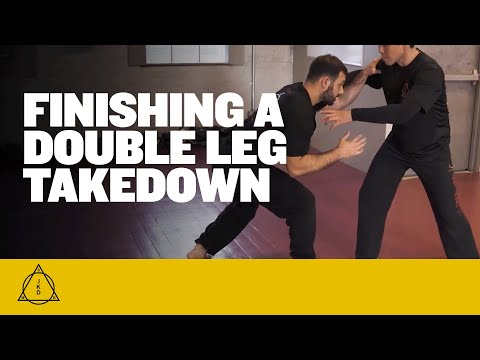
Tips on Finishing a Double Leg Takedown
0
Standard Double Collar Cage·NY Martial Arts Academy·Added by Admin
https://www.nymaa.com/ Adult program https://bit.ly/2G4cMJ2 Kids program https://bit.ly/2X3B64G Private lessons https:/…
Перевод: standard double collar cage
The Standard Double Collar Cage positions both hands behind the opponent's neck with elbows tight against the opponent's collarbones, the opponent's back against the cage, creating a trapped plum clinch where retreat is impossible. [1] The cage contact amplifies the control by preventing the opponent from stepping backward to relieve pressure, and the attacker can use short, explosive pulls on the head to deliver knee strikes or set up transitions. [1],[2] This position represents the fusion of Muay Thai clinch mastery and MMA cage awareness, combining the plum's head control with the cage's positional advantage. [2],[3]
The standard double collar cage clinch is a product of MMA's cross-pollination of striking and grappling traditions, combining the Thai plum with the cage environment that is unique to mixed martial arts competition. [1] It became a recognised tactical position during the sport's evolution in the 2000s. [2],[3]
The standard double collar cage clinch combines Thai plum head control with cage wall trapping, creating an extremely dominant control position for delivering knee strikes. [1] When the opponent's back is against the cage, the normal plum escape routes (circling, backing away) are eliminated, making this one of the most damaging clinch positions in MMA. [1]
A cage-specific clinch position developed in MMA competition. [1]
Anderson Silva used the double collar cage clinch to devastating effect against Rich Franklin at UFC 64 (October 2006), pinning Franklin against the cage in the plum and delivering knees that ended the fight in the first round. [1]
Изображений для этой техники пока нет.
Войдите, чтобы предложить изображение.
https://www.nymaa.com/ Adult program https://bit.ly/2G4cMJ2 Kids program https://bit.ly/2X3B64G Private lessons https:/…
Учебных курсов по этой технике пока нет.
Войдите, чтобы предложить курс.
Риск травмы для человека, к которому применяется техника
Cage clinch work involves grinding pressure; rib/facial abrasion risk
Уровень мастерства, необходимый для надёжного выполнения техники
Разрешена ли техника по основным соревновательным правилам
Muay Thai: The Art of Fighting (Yod Ruerngsa, Khun Kao Charuad & James Cartmell, 2002)
Alias sources — [1] Clinch Fighting for MMA (Couture, 2011) [2] MMA Instruction Manual (UFC, 2008) [3] Anderson Silva: MMA Instruction Manual (Silva, 2008)
Effectiveness sources — [1] Clinch Fighting for MMA (Couture, 2011)
Official Kodokan ground technique classification system
Standard katakana transliteration of Western martial arts terminology (外来語) — used in Japanese MMA, boxing, and BJJ communities
Alias sources — [1] Clinch Fighting for MMA (Couture, 2011) [2] MMA Instruction Manual (UFC, 2008) [3] Anderson Silva: MMA Instruction Manual (Silva, 2008)
Effectiveness sources — [1] Clinch Fighting for MMA (Couture, 2011)
neck and bicep strength for head control, endurance for sustained clinch
longer forearms for deeper collar tie, strong neck
biceps, forearms, neck muscles, core
Lock your hands right underneath your opponent's hips and squeeze—this takes away their ability to sprawl and removes their primary defense. According to NY Martial Arts Academy, keeping your hips glued to their leg while maintaining this grip is essential.
Drive them sideways, not straight back. NY Martial Arts Academy explains that all your offensive tools—your head on their ribs, your hip block, and your posted legs—are naturally aligned to drive sideways, so that's the direction you should take them.
Standing up straight instead of maintaining a low squat position. NY Martial Arts Academy emphasizes that when you step up, your legs should remain bent, your hips should stay in, and your back should stay straight—everything in good position—otherwise you won't generate proper power.
You must set up your shot first—don't just dive in on someone's legs unprepared. NY Martial Arts Academy teaches multiple setups including snapping your opponent's head down to make them pop up, slipping a punch, or using hip torque off combination strikes like a cross and hook.
The Standard Double Collar Cage positions both hands behind the opponent's neck with elbows tight against the opponent's collarbones, the opponent's back against the cage, creating a trapped plum clinch where retreat is impossible. The cage contact amplifies the control by preventing the opponent from stepping backward to relieve pressure, and the attacker can use short, explosive pulls on the head to deliver knee strikes or set up transitions.
The standard double collar cage clinch is a product of MMA's cross-pollination of striking and grappling traditions, combining the Thai plum with the cage environment that is unique to mixed martial arts competition. It became a recognised tactical position during the sport's evolution in the 2000s.
Unified MMA: разрешён — Legal — clinching is integral to MMA; IJF: разрешён — Legal — kumi-kata (grip fighting) is fundamental to judo; IBJJF: разрешён — Legal — standing grip fighting and clinch work permitted; IFMA: разрешён — Legal — the clinch is a core element of Muay Thai, clinch dominance is highly…; WBC/Boxing: ограничен — Holding is technically a foul — referee breaks clinch, excessive holding resu…; K: ограничен — 1/GLORY — One attack from clinch allowed, then referee breaks; WAKO: ограничен — Clinch generally broken by referee — limited or no clinch fighting in most fo…; UWW: разрешён — Legal — clinch is fundamental to wrestling, the primary position in Greco-Roman
Оценка опасности 4/10. Moderate — cage clinch work involves grinding pressure; rib/facial abrasion risk
Стандартная цепочка подготовки: Close Distance → Establish Primary Grip → Position the Hips → Apply Pressure.
Стандартные контрприёмы: Pummeling — fight for inside position by swimming arms under opponent's grips / Frame and Push — create distance using forearm frames against the chest or neck / Grip Break — systematically strip the opponent's controlling grips / Posture Up — straighten the spine and drive the hips forward to break clinch control.
Распространённые варианты: Cage pin with underhooks (pinning the opponent against the fence with inside position); Cage pin with body lock (locking the body against the cage for control); Cage clinch with head control (using the collar tie against the fence).
Anderson Silva used the double collar cage clinch to devastating effect against Rich Franklin at UFC 64 (October 2006), pinning Franklin against the cage in the plum and delivering knees that ended the fight in the first round.
Основные ошибки, на которые стоит обратить внимание: Wide elbows that let the opponent pummel inside — the elbows must stay tight / Not varying the knee angle — alternate left and right, and mix upward knees with curving knees / Holding the position without active striking — the referee will separate you for stalling / Pulling the head down without driving the knee — the pull and the knee must be simultaneous for maximum effect.
Standard Double Collar Cage также известен как Sutandādo Daburu Karā Kēji, Basic Double Collar Cage Clinch, Standard Cage Plum, Fence Neck Tie.