Wall wresting for MMA(basics) and how to get off the cage!
0
Wall-Cage Clinch·Hickman Brothers
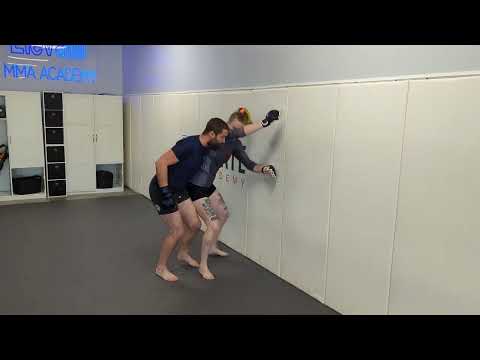
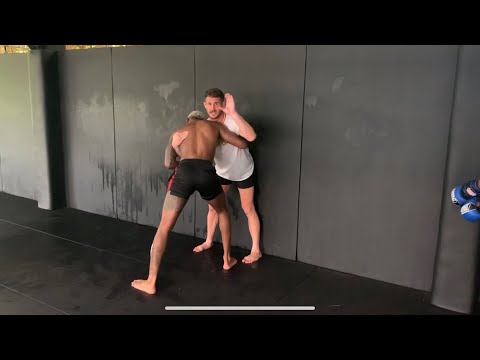
George Hickman shows how to successfully get off of the cage
Перевод: wall/cage clinch
The Wall-Cage Clinch group encompasses all clinch positions that are specifically defined by or dependent on the presence of a wall or cage structure, where the vertical barrier creates unique positional dynamics not found in open-space clinch fighting. [1] The cage or wall eliminates the opponent's ability to retreat, provides a surface for pinning and controlling opponents, and creates friction that can be used to maintain position or set up takedowns. [1],[2] This group includes cage clinch positions (specific to MMA's octagon or ring cage), wall pin clinch positions, and wall walk techniques used to advance position against the fence. [2],[3] Wall-cage clinch work is one of the most MMA-specific tactical domains, having no direct precedent in any traditional martial art. [3]
Wall-cage clinch fighting emerged entirely from MMA competition, beginning with the UFC's introduction of the octagon cage in 1993. [1] Early MMA fighters quickly discovered that the cage created unique grappling opportunities, and wrestlers like Randy Couture, Matt Hughes, and Tito Ortiz pioneered systematic cage clinch strategies. [2] The cage clinch has since become one of the most studied and coached aspects of modern MMA, with dedicated drilling systems developed by coaches like Greg Jackson, Firas Zahabi, and Trevor Wittman. [2],[3]
Wall and cage clinch positions use a vertical surface to trap the opponent, creating advantageous positions for takedowns, strikes, and ground-and-pound in MMA. [1]
Cage clinch fighting developed with the advent of MMA competition in enclosed arenas (starting with UFC 1 in 1993), where the cage wall became a tactical tool. [1]
Cage clinch work accounts for a significant portion of fighting time in UFC bouts, tracked by FightMetric as a key performance metric. [1]
Изображений для этой техники пока нет.
Войдите, чтобы предложить изображение.
George Hickman shows how to successfully get off of the cage
this is a series, our opponent can block one but if we keep cycling through we will have success
Учебных курсов по этой технике пока нет.
Войдите, чтобы предложить курс.
Риск травмы для человека, к которому применяется техника
Cage clinch work involves grinding pressure; rib/facial abrasion risk
Уровень мастерства, необходимый для надёжного выполнения техники
Разрешена ли техника по основным соревновательным правилам
Mastering Jujitsu (Renzo Gracie & John Danaher, 2003)
Alias sources — [1] Wrestling for Fighting (Couture, 2007) [2] MMA Instruction Manual (UFC, 2008) [3] MMA Instruction Manual (UFC, 2008) [4] Wrestling for Fighting (Couture, 2007)
Effectiveness sources — [1] Wrestling for Fighting (Couture, 2007)
Mixed Japanese-Western terminology — combines traditional Japanese terms with katakana loanwords
Alias sources — [1] Wrestling for Fighting (Couture, 2007) [2] MMA Instruction Manual (UFC, 2008) [3] MMA Instruction Manual (UFC, 2008) [4] Wrestling for Fighting (Couture, 2007)
Effectiveness sources — [1] Wrestling for Fighting (Couture, 2007)
sustained grinding pressure, positional endurance, cage awareness
strong legs and hips for sustained cage pressure
quadriceps, glutes, shoulders, core, forearms
Каждое движение в любом боевом искусстве обладает рядом универсальных свойств. Комбинируйте параметры ниже, чтобы найти нужный инструмент или сравнить аналоги из разных стилей.
The Cage Clinch family covers clinch positions specific to the MMA cage environment, where one fighter has the other pressed against the cage fence and uses the structure to maintain control and set up offence. [1] The cage clinch leverages the fence as a 'third arm' — it holds the opponent in place, absorbs backward force, and prevents disengagement, allowing the controlling fighter to work for takedowns, strikes, or positional advancement with less concern about the opponent creating distance. [1,2] Cage clinch positions are defined by the grip configuration (underhooks, body lock, collar tie) combined with the cage contact that modifies the standard clinch dynamics. [2,3]
The Wall Pin Clinch family covers clinch positions where the attacker pins the opponent against a wall or cage using body pressure and positional control, with the primary goal of maintaining the pin to exhaust the opponent, set up strikes, or prepare for takedowns. [1] The wall pin uses the attacker's body weight and positioning to keep the opponent compressed against the vertical surface, restricting their movement and energy expenditure. [1,2] Wall pins are a controversial tactical element in MMA — highly effective for controlling opponents but sometimes criticised for producing periods of inactivity. [2,3]
The Wall Walk Clinch family covers the technique of advancing position along the cage wall by systematically climbing from a lower clinch position to a more dominant one while the opponent is pressed against the fence. [1] The wall walk uses the cage as a support structure, allowing the attacker to incrementally improve their clinch position — moving from a single underhook to double underhooks, from low body lock to high body lock, or from a defensive cage position to an offensive one. [1,2] Wall walking is a critical MMA skill that allows fighters to improve their cage clinch position without separating and re-engaging. [2,3]
Wall and cage clinch work is unique to MMA conducted in a cage — the wall becomes a third controlling surface. Cage appears in 1,215 passages across our corpus. Wall wrestling is a specialized MMA skill that doesn't exist in open-mat grappling. (200+ books; MMA training manuals)
Your job is to get their feet away from the wall. Elevate MMA Academy teaches that you can accomplish this through striking, pummeling around to get their feet moving, or changing your orientation until you get the position you want.
Elevate MMA Academy recommends grabbing the lat or right at the waist, then spinning to put them down. An over-under clinch grip is preferred, though a bicep grip is also acceptable depending on the position.
The Hickman Brothers teach that you should make a C with your hand to frame, lower your level, and pump your opponent off. Once you get an underhook, you can either take them down or create space to escape the cage by pushing, pulling, or fighting your way out while keeping your back off the wall.
The Wall-Cage Clinch group encompasses all clinch positions that are specifically defined by or dependent on the presence of a wall or cage structure, where the vertical barrier creates unique positional dynamics not found in open-space clinch fighting. The cage or wall eliminates the opponent's ability to retreat, provides a surface for pinning and controlling opponents, and creates friction that can be used to maintain position or set up takedowns.
Wall-cage clinch fighting emerged entirely from MMA competition, beginning with the UFC's introduction of the octagon cage in 1993. Early MMA fighters quickly discovered that the cage created unique grappling opportunities, and wrestlers like Randy Couture, Matt Hughes, and Tito Ortiz pioneered systematic cage clinch strategies.
Unified MMA: разрешён — Legal — clinching is integral to MMA; IJF: разрешён — Legal — kumi-kata (grip fighting) is fundamental to judo; IBJJF: разрешён — Legal — standing grip fighting and clinch work permitted; IFMA: разрешён — Legal — the clinch is a core element of Muay Thai, clinch dominance is highly…; WBC/Boxing: ограничен — Holding is technically a foul — referee breaks clinch, excessive holding resu…; K: ограничен — 1/GLORY — One attack from clinch allowed, then referee breaks; WAKO: ограничен — Clinch generally broken by referee — limited or no clinch fighting in most fo…; UWW: разрешён — Legal — clinch is fundamental to wrestling, the primary position in Greco-Roman
Оценка опасности 4/10. Moderate — cage clinch work involves grinding pressure; rib/facial abrasion risk
Стандартная цепочка подготовки: Close Distance → Establish Primary Grip → Position the Hips → Apply Pressure.
Стандартные контрприёмы: Pummeling — fight for inside position by swimming arms under opponent's grips / Frame and Push — create distance using forearm frames against the chest or neck / Grip Break — systematically strip the opponent's controlling grips / Posture Up — straighten the spine and drive the hips forward to break clinch control.
Распространённые варианты: Cage pin with underhooks (pinning the opponent against the fence with inside position); Cage pin with body lock (locking the body against the cage for control); Cage clinch with head control (using the collar tie against the fence).
Cage clinch work accounts for a significant portion of fighting time in UFC bouts, tracked by FightMetric as a key performance metric.
Основные ошибки, на которые стоит обратить внимание: Pinning the opponent against the cage without attacking — cage stalling loses rounds on the scorecards and frustrates… / Pressing your face into the opponent's chest against the cage — this exposes the back of your head and neck / Not using the cage for ground-up transitions — the wall walk is essential for bottom fighters in MMA / Relying entirely on cage clinch for offence — it should complement open-mat fighting, not replace it.
Wall-Cage Clinch также известен как Kabe / Kēji Kurinchi, Cage Clinch, Wall Clinch, Fence Clinch, Cage Work.