Удар и защитаЗамкиБлижний бойБой против нескольких
Дистанция
БлижняяСредняяДальняя
Целевая зона
Верхняя частьСредняя частьНижняя часть
Обзор
The Standard Russian Tie subfamily represents the classical two-on-one grip position where one hand controls the opponent's wrist and the other grips the tricep or upper arm, with the attacker's chest pressed against the controlled arm. [1] This is the foundational Russian tie position from which all two-on-one attacks originate — it provides complete control of one arm, allowing the attacker to steer the opponent, create angles, and launch attacks in multiple directions. [1],[2] The standard Russian tie is characterised by chest-to-arm contact, which adds a third point of control beyond the two hand grips. [2],[3]
Также известна как
Standard Two-On-One[1]Basic Russian Tie[2]2-on-1 Arm Control[3]
The standard Russian tie is the original two-on-one position as developed in Soviet wrestling schools. [1] It was refined through decades of international freestyle competition and has become one of the most recognisable and widely taught clinch positions in modern grappling. [2],[3]
Страна происхождения· показано в случайном порядке
🇬🇷ГрецияБорьба, Греко-римская борьба
🇺🇸СШАБорьба, ММА
🇧🇷БразилияММА
🇷🇺РоссияСамбо
🇫🇷ФранцияГреко-римская борьба
Эффективность
The Russian tie (two-on-one) is one of the most effective clinch control positions in wrestling, providing the controller with dominant angle and the ability to snap down, arm drag, or enter leg attacks. [1],[2]
Родословная
The Russian tie originated in Soviet wrestling programmes and became a staple of international freestyle competition. [1] It has since been adopted across MMA, sambo, and BJJ. [2]
Соревновательные результаты
The Russian tie (two-on-one arm control) is a fundamental wrestling grip used at every level of competition from youth through Olympic freestyle wrestling. [1] It was popularised in international competition by Soviet/Russian wrestlers. [2]
Изображения
Изображений для этой техники пока нет.
Войдите, чтобы предложить изображение.
Биомеханический механизм
Primary Action — Establishing a controlling connection with the opponent at close range
Joints Involved — Upper body contact points — head, arms, and torso used for control and balance disruption
Force Vector — Varies by clinch type — downward (collar tie), lateral (arm drags), or forward (chest pressure)
Control Mechanic — Inside position and head control are the dominant factors in clinch superiority
Позиция и вход
From hand fighting — Secure the opponent's wrist with one hand and their upper arm with the other, creating a two-on-one lever
From collar tie exchange — Transition from collar tie to wrist and bicep control, establishing the Russian tie configuration
grip strength, upper body endurance, balance under pressure
Favours
strong arms and shoulders, stable base
Key muscles
forearms, deltoids, core, hip muscles
Подтехники
Ищите по тому, что делает техника, — а не по её названию
Каждое движение в любом боевом искусстве обладает рядом универсальных свойств. Комбинируйте параметры ниже, чтобы найти нужный инструмент или сравнить аналоги из разных стилей.
The Russian tie (two-on-one arm control) appears in 2 books in our corpus. The attacker controls one of the opponent's arms with both hands — one at the wrist and one at the tricep. Creates a powerful off-balancing lever for snap-downs, arm drags, and level changes. A fundamental wrestling and MMA clinch control. (Wrestling for Fighting, Couture; wrestling manuals)
Часто задаваемые вопросы
What submissions can I attack from the standard Russian tie?
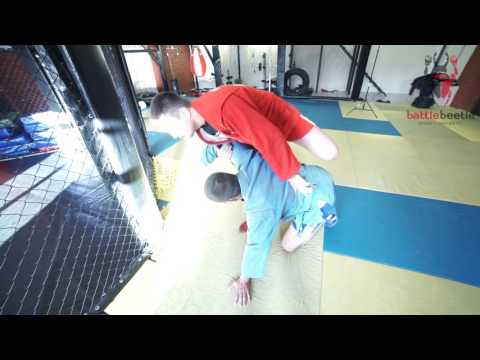
From the Russian tie, you have multiple submission options including armbars and a rolling kneebar. Kirill Sementov demonstrates that after controlling your opponent's posture with the tie, you can transition into these submissions by driving their hips back and controlling their leg positioning.
Как работает Standard Russian Tie?
The Standard Russian Tie subfamily represents the classical two-on-one grip position where one hand controls the opponent's wrist and the other grips the tricep or upper arm, with the attacker's chest pressed against the controlled arm. This is the foundational Russian tie position from which all two-on-one attacks originate — it provides complete control of one arm, allowing the attacker to steer the opponent, create angles, and launch attacks in multiple directions.
Откуда происходит Standard Russian Tie?
The standard Russian tie is the original two-on-one position as developed in Soviet wrestling schools. It was refined through decades of international freestyle competition and has become one of the most recognisable and widely taught clinch positions in modern grappling.
Разрешён ли Standard Russian Tie на соревнованиях?
Unified MMA: разрешён — Legal — clinching is integral to MMA; IJF: разрешён — Legal — kumi-kata (grip fighting) is fundamental to judo; IBJJF: разрешён — Legal — standing grip fighting and clinch work permitted; IFMA: разрешён — Legal — the clinch is a core element of Muay Thai, clinch dominance is highly…; WBC/Boxing: ограничен — Holding is technically a foul — referee breaks clinch, excessive holding resu…; K: ограничен — 1/GLORY — One attack from clinch allowed, then referee breaks; WAKO: ограничен — Clinch generally broken by referee — limited or no clinch fighting in most fo…; UWW: разрешён — Legal — clinch is fundamental to wrestling, the primary position in Greco-Roman
Насколько опасен Standard Russian Tie?
Оценка опасности 3/10. Moderate — arm control positions limit opponent's offense; low direct injury risk
Как подготовить Standard Russian Tie?
Стандартная цепочка подготовки: Close Distance → Establish Primary Grip → Position the Hips → Apply Pressure.
Как защититься от Standard Russian Tie?
Стандартные контрприёмы: Pummeling — fight for inside position by swimming arms under opponent's grips / Frame and Push — create distance using forearm frames against the chest or neck / Grip Break — systematically strip the opponent's controlling grips / Posture Up — straighten the spine and drive the hips forward to break clinch control.
Какие есть варианты Standard Russian Tie?
Распространённые варианты: Standard Russian tie (two hands controlling one arm at the wrist and upper arm); Russian tie to arm drag (transitioning the two-on-one into an arm drag for angle); Russian tie to snap-down (using the two-on-one to snap the opponent's posture down).
Насколько эффективен Standard Russian Tie на соревнованиях?
The Russian tie (two-on-one arm control) is a fundamental wrestling grip used at every level of competition from youth through Olympic freestyle wrestling. It was popularised in international competition by Soviet/Russian wrestlers.
Какие типичные ошибки при выполнении Standard Russian Tie?
Основные ошибки, на которые стоит обратить внимание: Holding the arm away from your body — the arm must be pinned against your chest for control / Gripping both points at the same level (both at the wrist or both high) — stagger the grips: wrist and upper arm / Standing still with the Russian tie — lateral movement is essential for creating openings / Not attacking within 3-4 seconds — the opponent will break free if you just hold.
Какие ещё названия есть у Standard Russian Tie?
Standard Russian Tie также известен как Sutandādo Roshian Tai, Standard Two-On-One, Basic Russian Tie, 2-on-1 Arm Control.