CLINCH from arm drag
0
Arm Control Clinch·Direct Action Combat Performance
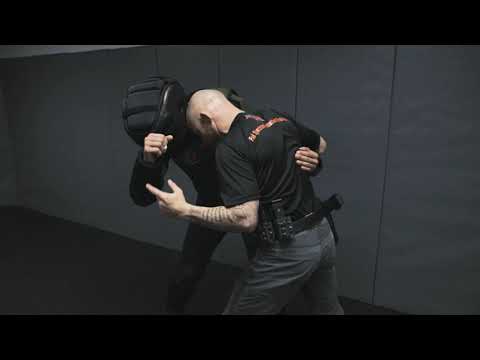
Lot's of options with good head placement and an established undertook. This video is meant to address the head placem…
Перевод: arm control clinch
The Arm Control Clinch group comprises all clinch positions where the primary mechanism of control is gripping, redirecting, or immobilising the opponent's arms or wrists. [1] By controlling the arms, the clinch fighter neutralises the opponent's ability to strike, frame, or establish their own grips, creating a significant tactical advantage. [1],[2] This group includes wrist control, elbow control, arm drags, and two-on-one (Russian tie) positions, each offering different levels of dominance and offensive options. [2] Arm control clinch work is fundamental in wrestling, judo, and MMA, where the battle for inside position often begins with controlling the opponent's hands and arms before progressing to deeper clinch ties. [2],[3]
Arm control techniques in the clinch have been practised since antiquity, with ancient Greek and Roman wrestling manuals describing methods of controlling the opponent's limbs to gain positional advantage. [1] The Russian tie (two-on-one) system was developed and refined in Soviet wrestling programmes during the mid-20th century, becoming one of the most effective arm control frameworks in modern grappling. [2],[3] Judo's sleeve grip fighting (sode-tsukami) further systematised arm control in the standing clinch. [3]
Arm control is a fundamental component of wrestling at all levels, from collegiate NCAA competition to Olympic freestyle and Greco-Roman events. [1]
Изображений для этой техники пока нет.
Войдите, чтобы предложить изображение.
Lot's of options with good head placement and an established undertook. This video is meant to address the head placem…
In this video I analyse what I believe to be the most effective time-reward clinch technique from a muay thai perspectiv…
Учебных курсов по этой технике пока нет.
Войдите, чтобы предложить курс.
Риск травмы для человека, к которому применяется техника
Arm control positions limit opponent's offense; low direct injury risk
Уровень мастерства, необходимый для надёжного выполнения техники
Разрешена ли техника по основным соревновательным правилам
Kodokan Judo (Jigoro Kano, 1986)
Alias sources — [1] Wrestling Physical Conditioning Encyclopedia (Welker, 2010) [2] Wrestling for Fighting (Couture, 2007) [3] MMA Instruction Manual (UFC, 2008)
Effectiveness sources — [1] Mastering Jujitsu (Gracie & Danaher, 2003) [2] Wrestling Physical Conditioning Encyclopedia (Petrov, 1977)
Mixed Japanese-Western terminology — combines traditional Japanese terms with katakana loanwords
Alias sources — [1] Wrestling Physical Conditioning Encyclopedia (Welker, 2010) [2] Wrestling for Fighting (Couture, 2007) [3] MMA Instruction Manual (UFC, 2008)
Effectiveness sources — [1] Mastering Jujitsu (Gracie & Danaher, 2003) [2] Wrestling Physical Conditioning Encyclopedia (Petrov, 1977)
grip strength, upper body endurance, balance under pressure
strong arms and shoulders, stable base
forearms, deltoids, core, hip muscles
Каждое движение в любом боевом искусстве обладает рядом универсальных свойств. Комбинируйте параметры ниже, чтобы найти нужный инструмент или сравнить аналоги из разных стилей.
The Arm Drag family covers clinch techniques where the attacker grips the opponent's arm and pulls it across their body, using the drag motion to clear the arm and access the opponent's side or back. [1] The arm drag is one of the most versatile clinch tools because it simultaneously removes a defensive barrier (the dragged arm) and creates an angular advantage, placing the attacker on the opponent's flank. [1,2] Arm drags can be executed to the inside (pulling the arm across the opponent's centreline) or to the outside (pulling the arm away from the body), each creating different follow-up opportunities. [2,3]
The Elbow Control family encompasses clinch positions where the attacker controls the opponent by gripping or cupping the elbow joint, using this mid-arm control point to steer, block, or redirect the opponent's movements. [1] Elbow control provides a mechanical advantage because the elbow is a rigid hinge joint — gripping it allows the controller to influence the entire arm's range of motion with relatively little force. [1,2] Elbow cups and blocks are used defensively to prevent underhooks and offensively to set up transitions to deeper clinch positions. [2,3]
The Two-On-One Russian Tie family covers clinch positions where the attacker controls one of the opponent's arms with both hands, creating a dominant two-against-one grip configuration. [1] The Russian tie typically involves one hand gripping the opponent's wrist while the other controls the upper arm or tricep, giving the attacker complete dominance over one side of the opponent's body. [1,2] From the two-on-one position, the attacker can execute arm drags, snap downs, single-leg entries, and go-behinds, making it one of the most offensively versatile clinch positions. [2,3] The Russian tie is named for its development and popularisation by Soviet wrestlers. [3]
The Wrist Control family covers clinch positions where the attacker's primary control mechanism is gripping one or both of the opponent's wrists, providing direct control over the hands and their ability to grip, frame, or strike. [1] Wrist control is the most distal arm control — controlling at the wrist allows the attacker to manage the opponent's hand placement and prevent them from establishing offensive grips or defensive frames. [1,2] Single wrist control is commonly used as an initial point of contact in the clinch, while double wrist control creates a more dominant position that limits the opponent's options significantly. [2,3]
Arm control clinch techniques — arm drags, wrist control, elbow control, Russian tie — control the opponent's arms to deny their offensive weapons and create openings. The arm drag alone appears in 106 passages across our corpus and is documented in the 1943 US Navy H2H manual. (106+ passages; 1943 US Navy H2H; wrestling manuals)
Head placement into the neck is critical because it allows you to control your opponent and address threats—if they try to reach for a weapon or tool, you can immediately strike from this position. Direct Action Combat Performance emphasizes that head placement enables you to maintain control while creating opportunities to strike.
Stepping your leg out and behind your opponent is essential because it gives you the leverage to push their shoulder down and break their posture. Ayodub notes that this step and pivot motion is what actually locks the technique and collapses their structure.
After breaking their posture, bring your free arm across to the back of their head to support the lock and keep their head down. Ayodub also recommends maintaining the underhook if possible rather than fully releasing it, as this keeps control and provides follow-up options.
If your leg placement is incorrect or you don't break their posture, you need to transition to a secondary follow-up technique rather than forcing the lock. Ayodub emphasizes that leg placement behind your opponent is critical, and if you miss it, the posture break becomes difficult.
The Arm Control Clinch group comprises all clinch positions where the primary mechanism of control is gripping, redirecting, or immobilising the opponent's arms or wrists. By controlling the arms, the clinch fighter neutralises the opponent's ability to strike, frame, or establish their own grips, creating a significant tactical advantage.
Arm control techniques in the clinch have been practised since antiquity, with ancient Greek and Roman wrestling manuals describing methods of controlling the opponent's limbs to gain positional advantage. The Russian tie (two-on-one) system was developed and refined in Soviet wrestling programmes during the mid-20th century, becoming one of the most effective arm control frameworks in modern grappling.
Unified MMA: разрешён — Legal — clinching is integral to MMA; IJF: разрешён — Legal — kumi-kata (grip fighting) is fundamental to judo; IBJJF: разрешён — Legal — standing grip fighting and clinch work permitted; IFMA: разрешён — Legal — the clinch is a core element of Muay Thai, clinch dominance is highly…; WBC/Boxing: ограничен — Holding is technically a foul — referee breaks clinch, excessive holding resu…; K: ограничен — 1/GLORY — One attack from clinch allowed, then referee breaks; WAKO: ограничен — Clinch generally broken by referee — limited or no clinch fighting in most fo…; UWW: разрешён — Legal — clinch is fundamental to wrestling, the primary position in Greco-Roman
Оценка опасности 3/10. Moderate — arm control positions limit opponent's offense; low direct injury risk
Стандартная цепочка подготовки: Close Distance → Establish Primary Grip → Position the Hips → Apply Pressure.
Стандартные контрприёмы: Pummeling — fight for inside position by swimming arms under opponent's grips / Frame and Push — create distance using forearm frames against the chest or neck / Grip Break — systematically strip the opponent's controlling grips / Posture Up — straighten the spine and drive the hips forward to break clinch control.
Распространённые варианты: Standard Russian tie (two hands controlling one arm at the wrist and upper arm); Russian tie to arm drag (transitioning the two-on-one into an arm drag for angle); Russian tie to snap-down (using the two-on-one to snap the opponent's posture down).
Arm control is a fundamental component of wrestling at all levels, from collegiate NCAA competition to Olympic freestyle and Greco-Roman events.
Основные ошибки, на которые стоит обратить внимание: Holding a single grip without chaining to the next action — arm control must flow into attacks or transitions / Gripping too tightly and fatiguing the forearms — use a firm but relaxed grip and squeeze only at the moment of action / Reaching for the wrist without controlling the elbow — the opponent simply bends the arm and escapes / Staying at arm-length with only wrist control — this is a weak position; either disengage or advance to a tighter clinch.
Arm Control Clinch также известен как Ude Seigyo Kurinchi, Arm Tie, Arm Control Position, Arm Manipulation Clinch.