The First Five Leg Attacks You Need | Jiu-Jitsu Submissions
0
EM Ankle Lock·Knight Jiu-Jitsu
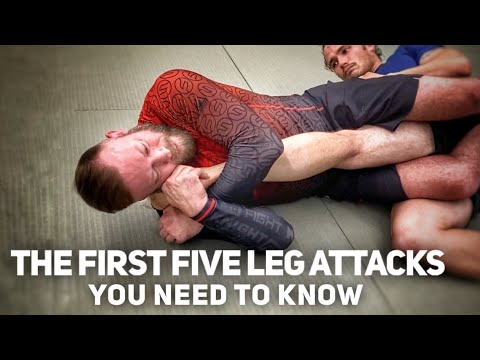
We have learned by now not to ignore 50% of the human body. But where to start with leg attacks? In this video, I show s…
Translation: EM заключване на глезена
EM Ankle Lock е заключване на глезена, влизането в което се извършва чрез серията Electric Chair, атакувайки крака, когато противникът защитава прехвата или финала Electric Chair. [1]
Разработен от Еди Браво като част от системата за финали на 10th Planet. [1]
Доказан в EBI и в професионална MMA надпревара. [1]
10th Planet Jiu-Jitsu; Еди Браво. [1]
Използван в EBI и в UFC надпревари
No images yet for this technique.
Sign in to suggest an image.
Not yet documented
We have learned by now not to ignore 50% of the human body. But where to start with leg attacks? In this video, I show s…
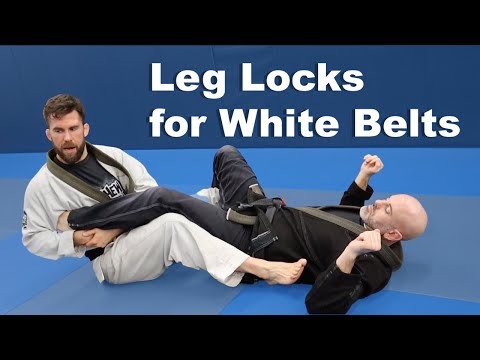
As leg locks become more and more popular in BJJ a common question from newer White Belts is "Should I learn leg locks?"…
The EM Ankle Lock, also referred to as the straight ankle lock, is a foundational leg-lock submission that attacks the ankle joint by applying perpendicular pressure to the Achilles tendon with the forearm. Both Knight Jiu-Jitsu and Chewjitsu emphasize similar mechanical principles: the attacker must position the foot low, with the opponent's toes tucked into the armpit rather than high on the calf, to ensure force targets the joint rather than muscle tissue. Knight Jiu-Jitsu describes the grip as "guillotine style," achieved by wrapping the hands in a rear-naked-choke configuration, while Chewjitsu details both guillotine and figure-four grip options and notes that a gi collar can be used to control an opponent who sits up. Both instructors advocate finishing with lateral shoulder movement to the floor and hip extension, with Knight Jiu-Jitsu emphasizing leading with the head while Chewjitsu stresses pinching the knees tight and turning face-down for full extension. Entry points differ slightly: Knight Jiu-Jitsu shows setup from open guard with foot positioning, while Chewjitsu presents entries from passing positions and sweep variations. Chewjitsu uniquely addresses competition legality for white belts and warns against the "reap" penalty by controlling hip placement with the non-attacking leg. Both acknowledge the technique's accessibility and effectiveness as a competition submission across belt levels.
Synthesized from 2 instructors
No instructional courses yet for this technique.
Sign in to suggest a course.
Risk of injury to the person this technique is applied to
Финал с потенциал за приключване на мача
Skill level needed to execute this technique reliably
Whether this technique is allowed under major competition rule sets
Mastering the Rubber Guard (Bravo, 2006)
[1] Bravo, Mastering the Rubber Guard (2006) — technique description and application
Гъвкавост в бедрата
Издръжливост на хвата
Контрол над тялото
EM Ankle Lock е техника за заключване на крака от системата 10th Planet, документирана в Mastering the Rubber Guard. Тя е част от системата за атаки с крак на Браво, интегрирана с позициите half guard и rubber guard. (Bravo, Mastering the Rubber Guard, 2006)
Chewjitsu emphasizes keeping your body low and positioned directly on the ankle joint, not high up on the calf. If you can see the opponent's toes when looking over your shoulder, you're positioned too high, which can lead to nasty calf snaps rather than controlled ankle submissions.
Tuck the opponent's toes into your armpit and use a bicep flex position to control the leg. When finishing, pinch your knees tight, turn face-down, and get full extension to maximize the break potential, as Knight Jiu-Jitsu also recommends using a guillotine-style grip on the foot.
Chewjitsu stresses that you should cup your non-attacking foot around the opponent's hip like a hand for control, and avoid casually placing it in the center of their body, as this creates vulnerability to heel hook counters and reduces control of the opponent's leg.
Chewjitsu recommends white belts learn ankle locks early for both safety and competitive preparation, as learning leg locks for the first time at higher belt levels is ineffective. If you commit to mastering leg locks, dive in fully rather than dabbling casually.
EM Ankle Lock е заключване на глезена, влизането в което се извършва чрез серията Electric Chair, атакувайки крака, когато противникът защитава прехвата или финала Electric Chair.
Разработен от Еди Браво като част от системата за финали на 10th Planet.
IBJJF: легална — Разрешено на всички нива на колани (право заключване на глезена); IJF: забранена — В джудо са разрешени само заключвания на лакътната става (канsetsu-waza) — вс…; ADCC: легална — Разрешено — всички финали са позволени в ADCC; Unified MMA: легална — Разрешена техника за финал; FIAS Sport Sambo: легална — Разрешено; FIAS Combat Sambo: легална — Разрешено
Оценка на опасност 8/10. Финал с потенциал за приключване на мача
Стандартната верига за подготовка: Rubber guard → Верига от позиции → EM Ankle Lock.
Стандартните контри включват: Изправяне на стойка / Стек / Преминаване на гарда.
Използван в EBI и в UFC надпревари
Основни грешки, за които да внимавате: Бързане без правилна позиция / Загуба на контрол върху крака преди финала.
EM Ankle Lock е известна също като EM Ankuru Rokku, Electric Move Ankle Lock, EM Lock.