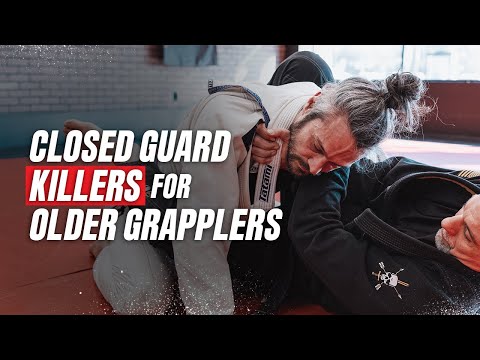
Smart Strategy for Older BJJ Grapplers - Brabo Choke from Closed Guard
Is the Brabo choke from closed guard the perfect submission for older BJJ players? In this video, we break down the pros…
Translation: Браво удушване (заимствана термин)
Браво удушването от затворен гард се прилага от долния играч, който осигурява овърхук върху ръката на противника, докато прехвърля ревера около врата му, създавайки удушване с ръка вътре от позицията на гарда. [1],[2] Овърхукът притиска ръката на противника към собствения му врат, а прехвърленият ревер действа като удушаваща повърхност, компресираща каротидата от противоположната страна. [1] Затвореният гард осигурява контрол на таза, за да попречи на противника да се изправи, докато атакуващият работи за затягане на примката от ревера около врата. [1],[2]
Браво удушването е разработено от Роберто „Гордо
) Корея в бразилското джиу-джицу и споделя механична родство с удушването D'Arce, въпреки че използва яката на ги като повърхност на компресия, вместо голото предмишница. [1],[2] Приложението от затворен гард представлява адаптация от долна позиция на техника, по-често свързвана с контрол отгоре, отразявайки принципа на BJJ, че повечето техники могат да се прилагат от множество позиции в системата на гарда. [1] Думата „браво
Developed within the Brazilian competition BJJ scene, building on Leo Vieira's Brabo choke concept and adapted to closed guard by gi competitors in the 2000s-2010s [1]
Multiple IBJJF world championship finishes; a staple technique for gi competitors who specialize in lapel guard systems [1]
No images yet for this technique.
Sign in to suggest an image.
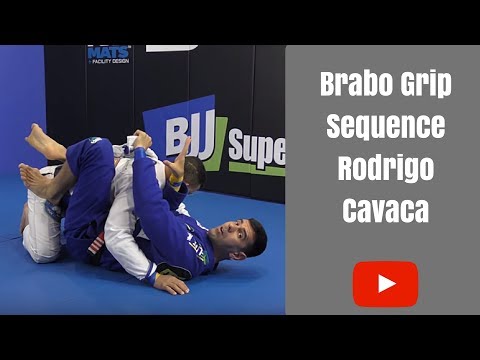
The Brabo choke from closed guard is a leverage-based submission that prioritizes grip strength and postural control over athleticism, making it particularly valuable for older grapplers or those managing injuries. Coach Chuck (Integrated Martial Athletics) emphasizes the technique's mechanical efficiency: by controlling the opponent's posture with the legs (knees pressed behind the elbows) and establishing a solid lapel grip, the top player creates a stable platform that forces the opponent to work harder. Chuck describes the initial grip transition—bringing the lapel across the body and extending it—as creating a "safety roll bar" effect that maintains control when the opponent postures up. Rodrigo Cavaca (BJJ Fanatics) provides a more detailed sequence of grip variations, demonstrating how the same lapel control can feed between hands and transition into cross-collar chokes from multiple angles. Both instructors agree on the fundamental principle: breaking posture with leg pressure, controlling the lapel, and using the cross-collar grip to finish. Cavaca additionally shows how elbow pressure from the top player's arm drives the choke and how blocking defenses (such as hand placement on the elbow) can be countered by repositioning the opponent's arm across the body. Both stress that maintaining the lapel grip and postural control prevents escape, allowing the submission to work regardless of the opponent's strength or experience level.
Synthesized from 2 instructors
No instructional courses yet for this technique.
Sign in to suggest a course.
Risk of injury to the person this technique is applied to
Lapel overhook chokes from guard use the gi collar combined with overhook control
Skill level needed to execute this technique reliably
Whether this technique is allowed under major competition rule sets
Shrapnel BJJ Academy (shrapnel-bjj.com); Let'sBJJ (letsbjj.site)
Japanese BJJ academy — technique terminology
Japanese BJJ technique resource
Standard katakana transliteration of Western martial arts terminology (外来語) — used in Japanese MMA, boxing, and BJJ communities
Japanese terminology sourced from Shrapnel BJJ Academy (shrapnel-bjj.com); Let'sBJJ (letsbjj.site)
grip or squeeze strength, positional control
strong upper body for sustained compression
forearms, biceps, pectorals, core stabilisers
Rodrigo Cavaca emphasizes that controlling posture is critical because if your opponent maintains good posture, they can escape; breaking their posture down prevents escape options and allows you to set up the choke effectively.
Coach Chuck suggests thinking of your grip placement as a 'safety roll bar,' similar to on a roller coaster, which helps you maintain structural control when your opponent tries to create distance.
Rodrigo Cavaca teaches using your foot and hips together to open space, which allows you to secure the grip and set up the choke effectively from closed guard.
Браво удушването от затворен гард се прилага от долния играч, който осигурява овърхук върху ръката на противника, докато прехвърля ревера около врата му, създавайки удушване с ръка вътре от позицията на гарда. Овърхукът притиска ръката на противника към собствения му врат, а прехвърленият ревер действа като удушаваща повърхност, компресираща каротидата от противоположната страна.
Браво удушването е разработено от Роберто „Гордо
IBJJF: легална — Legal at all belt levels, gi and no-gi — chokes are the safest submission cat…; IJF: легална — Legal (shime-waza) — strangulation techniques are one of three permitted subm…; ADCC: легална — Legal; Unified MMA: легална — Legal — choke submissions are among the most common finishes in MMA; FIAS Sport Sambo: забранена — All chokes prohibited in Sport Sambo; FIAS Combat Sambo: легална — Legal
Оценка на опасност 8/10. Lapel overhook chokes from guard use the gi collar combined with overhook control
Стандартната верига за подготовка: на португалски. [1,2].
Стандартните контри включват: или „ яростен.
Чести варианти: Стандартна хватка (основна конфигурация на ръцете за максимален удушаващ натиск); Вариант с ги (използва ревера или яката като опора за допълнително трие…); Вариант без ги (адаптирана хватка и позициониране за борба за принуждаван…); Завършване при преход (прилага се по време на позиционна смяна, за да се хване п…).
Multiple IBJJF world championship finishes; a staple technique for gi competitors who specialize in lapel guard systems
Основни грешки, за които да внимавате: Отваряне на гарда преди ревера да е напълно прехвърлен — дръж гарда затворен по цялото времетраене на прехвърлянето; … / Прехвърляне на ревера без контрол над стойката на противника — първо счупи стойката, за да може ревера да достигне до… / Без резервно преобръщане — ако Браво не завърши, премини към преобръщания с хватката за ревера; освобождаването на вс… / Опит без разбиране на принципа на триъгълника с ръка — рамото на хванатата ръка е повърхност за компресия; без ръка в….
Браво удушване от затворен гард е известна също като Burabō Chōku, Браво удушване от гард, Удушване с ревера и овърхук от гард.