How To Execute The Front Kick
0
Преден ритник с режещ ръб на стъпалото·Sports and Fitness
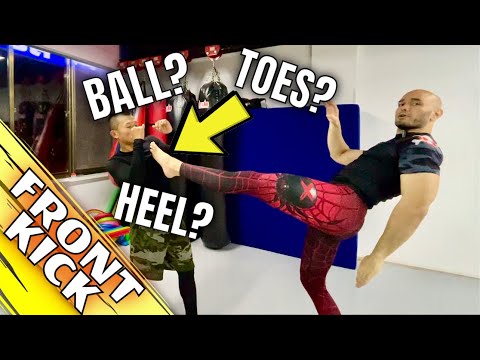
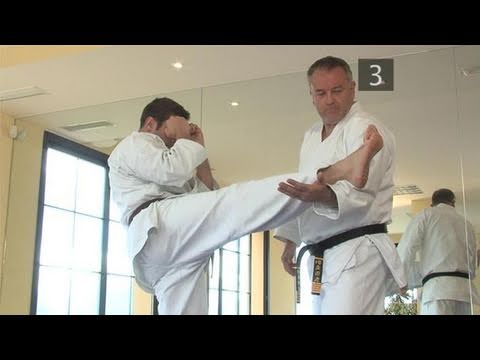
Watch How To Execute The Front Kick from the pioneers of how to videos. This guide will give you step-by-step instructio…
Translation: Сокуто (足刀) = меч-стъпало / режещ ръб на стъпалото — външният ръб на ходилото, използван като режеща повърхност; Мае Гери (前蹴り) = преден ритник. Преден ритник, при който се удря с острия ръб на стъпалото, а не с юмрука на ходилото.
Предният ритник с режещ ръб на стъпалото удря с външния ръб на ходилото (сокуто — буквално „меч-стъпало"), а не с юмрука или петата, концентрирайки силата върху тясна, подобна на острие повърхност за проникващ удар срещу меки тъкани — ребра, корем и вътрешна страна на бедрото. [1] Сокуто е една от класическите ударни повърхности, документирани в традиционното карате: това е страничният ръб на ходилото, минаващ от основата на малкия пръст по външния край до петата — същата повърхност, използвана при стандартния ёко гери (страничен ритник), но приложена по траектория на преден ритник. [1],[2] Практикуващият прибира коляното по същия начин, както при стандартен преден ритник, след което завърта глезена, за да изправи външния ръб на стъпалото преди да го изпрати напред към целта, създавайки ритник, съчетаващ директната траектория на предния ритник с концентрирания удар на ударната повърхност на страничния ритник. [1] Тази хибридна характеристика прави предния ритник с режещ ръб ефективен в ситуации, когато стандартният преден ритник с юмрука на ходилото би бил погълнат от защита или брони: тесният профил на сокуто може да се промъкне между защитните рамки, прониквайки в пролуките между лактите на противника, които по-широка ударна повърхност би докоснала. [1] Де Бремакер и Фейдж документират предния ритник с режещ ръб като един от 89-те основни ритника в бойните изкуства, отбелязвайки неговата изтъкнатост във Вадо-рю и Шотокан карате, където точното позициониране на ходилото (аши-сабаки) е подчертано като основен компонент на тренировките по кихон. [1] Ритникът се среща в няколко традиционни карате ката, включително Басай Дай и Канку Дай, където повърхността сокуто се използва както при траектория на преден ритник, така и при страничен. [2] В практическо приложение предният ритник с режещ ръб е особено полезен срещу противник в странична или наклонена стойка (характерна за карате, фехтовка и някои стилове кикбокс), при която ребрата са изложени на атака по права линия, но са твърде тясна цел за стандартен преден ритник с юмрука на ходилото. [1]
The sokuto (足刀, sword foot) is one of the traditional striking surfaces documented in classical Okinawan karate, with roots in the Chinese martial arts systems that influenced Okinawan te through centuries of trade between Fujian province and the Ryukyu Islands. [2] The sokuto surface appears in karate's oldest documented kata (including Passai/Bassai, which predates modern karate styles) and was codified as a formal striking surface by Gichin Funakoshi in Karate-Do Kyohan (1935). [2] The application of the sokuto to a front kick trajectory (rather than the more common side kick) represents a lesser-known but historically documented technique preserved in specific Wado-ryu and Shotokan kata sequences. [1],[2] De Bremaeker and Faige catalogued the Foot Blade Front Kick as one of 89 fundamental kicks in their cross-style compilation (2010), noting its appearance across multiple martial arts traditions. [1]
The Foot Blade Front Kick is a specialist technique whose value lies in its ability to penetrate defensive frames that would block a standard front kick: the narrow sokuto profile threads between the opponent's elbows or slips past the forearm guard. [1] Its concentrated surface area produces deeper soft tissue penetration than a ball-of-foot kick at the same force level. [1] The technique is most effective against opponents in bladed or sideways stances where the ribs are the primary exposed target — a common situation in karate, fencing-influenced kickboxing, and traditional martial arts sparring. [1],[2] In Kyokushin full-contact competition, the Foot Blade variant is sometimes used to attack the floating ribs from an angle that standard round kicks or front kicks cannot access. [2]
Used in WKF karate competition as a scoring technique to the body. In Kyokushin full-contact competition, the sokuto front kick variant is used against the floating ribs. The technique's narrow profile makes it effective in point karate where controlled contact to specific targets is rewarded.
No images yet for this technique.
Sign in to suggest an image.
Watch How To Execute The Front Kick from the pioneers of how to videos. This guide will give you step-by-step instructio…
What part of the foot should you use for a front kick, a push kick, or a teep? The ball of the foot? The heel? The flat …
The foot blade front kick, also called a teep or push kick, primarily employs the ball of the foot as the striking surface, according to both Ramsey Dewey and Sports And Outdoors instructors. Both emphasize that the ball of the foot provides optimal reach, power, and extension while concentrating force into a small, effective contact point. Dewey stresses skeletal alignment—the metatarsals, heel bones, and shin bones stack vertically when striking with the ball of the foot, maximizing force transfer. Sports And Outdoors reinforces this, noting that striking with the ball of the foot focuses body power into a smaller area. Both instructors discuss technique variations: Dewey explains that the heel can be used for face-level kicks but requires greater flexibility and delivers less reach, while the flat of the foot suits only extreme close-range situations. Dewey adds that the lead leg is preferable for push kicks approximately 80–85% of the time due to proximity, requiring greater stability from the standing leg but providing superior range and tactical positioning. He notes that lifting the kick angle slightly produces greater knockback than a horizontal trajectory. Both instructors stress maintaining guard and posture during execution, with Dewey highlighting the importance of hip extension and Sports And Outdoors emphasizing forward hip rotation and strong abdominal exhalation (Ki-I) for maximum power generation.
Synthesized from 2 instructors
No instructional courses yet for this technique.
Sign in to suggest a course.
Risk of injury to the person this technique is applied to
The concentrated sokuto surface can cause rib fractures when delivered to the floating ribs with full force, and can wind (diaphragm spasm) when targeting the solar plexus. The narrow profile means the kick penetrates deeper into soft tissue than a standard front kick. Against the inner thigh, it can cause deep bruising and temporary leg dysfunction.
Skill level needed to execute this technique reliably
Whether this technique is allowed under major competition rule sets
Essential Book of Martial Arts Kicks (De Bremaeker & Faige, 2010)
description: [1] De Bremaeker 2010 pp.37-38, [2] Funakoshi 1973
Official karate technique names (和語/漢語)
Established Japanese martial arts naming convention — native Japanese term (和語/漢語)
description: [1] De Bremaeker 2010 pp.37-38, [2] Funakoshi 1973
Requires good ankle mobility for eversion (presenting the outer edge of the foot)
Strong peroneal muscles (lateral calf) for maintaining the eversion under impact
Standard front kick flexibility and hip strength
Accessible to most body types once the ankle eversion is mastered
Practitioners with naturally flexible ankles find the technique easier to execute
Documented in De Bremaeker & Faige, Section 1.11. A front kick using the blade (edge) of the foot as the striking surface rather than the ball. Penetrates between the ribs and targets narrow areas. (De Bremaeker & Faige, Essential Book of Martial Arts Kicks, 2010)
You should strike with the ball of the foot, not the sole or heel. The ball of the foot focuses the body's power into a smaller, more effective striking area. Ramsey Dewey notes that the ball of the foot is faster than heel strikes, which take fractions of a second longer to deliver.
Thrust your hips forward with the kick, similar to the motion of pulling on a boot, as this increases both thrust and power. Additionally, use measured breathing by exhaling throughout the entire execution of the kick with strong, powerful exhalation from your abdomen.
Keep your back straight without leaning too far forward or backward, tilt your head slightly down with your chin tucked in, and don't throw your arms backward as this opens you up for counter-attacks. Remember to return your leg to the ground quickly to prevent your opponent from sweeping it.
According to Ramsey Dewey, you should elevate the kick slightly upward rather than going straight out. Aiming straight pushes the hips down, but lifting the kick upward knocks the torso back more effectively.
Предният ритник с режещ ръб на стъпалото удря с външния ръб на ходилото (сокуто — буквално „меч-стъпало"), а не с юмрука или петата, концентрирайки силата върху тясна, подобна на острие повърхност за проникващ удар срещу меки тъкани — ребра, корем и вътрешна страна на бедрото. Сокуто е една от класическите ударни повърхности, документирани в традиционното карате: това е страничният ръб на ходилото, минаващ от основата на малкия пръст по външния край до петата — същата повърхност, използвана при стандартния ёко гери (страничен ритник), но приложена по траектория на преден ритник.
The sokuto (足刀, sword foot) is one of the traditional striking surfaces documented in classical Okinawan karate, with roots in the Chinese martial arts systems that influenced Okinawan te through centuries of trade between Fujian province and the Ryukyu Islands. The sokuto surface appears in karate's oldest documented kata (including Passai/Bassai, which predates modern karate styles) and was codified as a formal striking surface by Gichin Funakoshi in Karate-Do Kyohan (1935).
Unified MMA: легална — Legal striking technique; WBC/Boxing: забранена — All kicks prohibited in boxing; WKF: легална — Legal, chudan (body) kick scores 2 points, jodan (head) kick scores 3 points; Kyokushin: легална — Legal at full power to body and head; WT: легална — Legal, body kick 2 points, head kick 3 points, spinning body 4 points, spinni…; WAKO: легална — Legal in Full Contact and Low Kick formats; K: легална — 1/GLORY — Legal; IFMA: легална — Legal — kicks are a core Muay Thai technique
Оценка на опасност 6/10. The concentrated sokuto surface can cause rib fractures when delivered to the floating ribs with full force, and can wind (diaphragm spasm) when targeting the solar plexus. The narrow profile means the kick penetrates deeper into soft tissue than a standard front kick. Against the inner thigh, it can cause deep bruising and temporary leg dysfunction.
Стандартната верига за подготовка: Establish the jab rhythm → Opponent raises guard to protect the face → Chamber the rear knee (identical to a standard front kick.
Стандартните контри включват: Soto Uke (outside block) — deflecting the incoming kick outward with the forearm / Step back — retreating out of range as the kick is thrown / Angle off to the outside — stepping laterally takes the ribs out of the kick's linear path / Catch the foot — if the kick is slow or telegraphed, catching the foot and controlling the ankle.
Чести варианти: Penetrating Foot Blade (full hip thrust for deep impact, targeting the solar plex…); Snapping Foot Blade (whipping extension for speed, targeting the ribs as a sco…); Low Foot Blade (targeting the inner knee or thigh, often used as a stop-k…); Stepping Foot Blade (Oi-Sokuto) (delivered while stepping forward for added range and body…); Reverse Foot Blade (Gyaku-Sokuto) (delivered with the rear leg and full hip rotation for max…).
Used in WKF karate competition as a scoring technique to the body. In Kyokushin full-contact competition, the sokuto front kick variant is used against the floating ribs.
Основни грешки, за които да внимавате: Failing to rotate the ankle sufficiently — the most common error: if the ankle doesn't achieve full eversion, the kic… / Over-rotating to the top of the foot — rotating too far presents the dorsum (instep) rather than the lateral edge, wh… / Kicking hard targets with the sokuto — the lateral edge of the foot has less bone mass supporting it than the heel or… / Telegraphing the ankle rotation — rotating the ankle during the chamber (visible to the opponent) rather than during ….
Преден ритник с режещ ръб на стъпалото е известна също като Sokuto Mae Geri, Сокуто Мае Гери, Преден ритник с външен ръб, Преден ритник с режещ ръб на стъпалото, Преден ритник с ножовиден ръб.