Front Head Position Setup
The technique begins from a front head control position achieved via snap down to the mat. The practitioner drives their shoulder between the opponent's shoulder blades, pinning them back into their hips where mobility is limited. One arm controls the opponent's arm while the other secures a chin strap grip.
Anaconda Choke Hand Placement
The instructor pulls the controlled arm tight while bringing the opposite hand across to establish a gable grip with the thumb on top. This hand positioning provides superior control compared to hooking the arm deeper, as it prevents the opponent from extending their arm to create escape leverage.
Pre-Roll Positioning and Extension
Before executing the roll, the practitioner pulls the opponent's arm back and extends it outward to create mechanical advantage. The head is tucked underneath to prepare for the rolling motion while maintaining tight elbow positioning throughout.
The Gator Roll Execution
The practitioner rolls underneath the opponent's body by tucking their head under and keeping elbows pinched together. Once the roll is complete and the positions are reversed, the choke becomes locked in with the opponent now facing downward.
Anaconda Choke Finish Mechanics
The finish is achieved by sliding the grip to secure the bicep while scooping the torso underneath the opponent's head rather than relying solely on arm strength. The practitioner walks their feet to position the body for maximum pressure, driving the head upward to complete the submission.
Defense and Leg Hook Counter
If the opponent manages to walk their legs and create space during the submission, the practitioner can hook a leg to prevent escape. The primary focus remains on achieving a tight lock and proper body positioning to finish the choke effectively.
Momentum Defense and Re-Rolling
A skilled opponent may use momentum to roll back through the initial gator roll, returning to the starting position. This creates a brief window of vulnerability where the opponent believes they've escaped the choke but hasn't yet regained positional control.
Arm Drag to Seatbelt Transition
Immediately after the opponent rolls back through, the practitioner cups the far arm and circles to take the back using an arm-drag motion. Once back control is achieved, a seatbelt grip with one hook enables transitions to other submissions such as slicers or twisters.
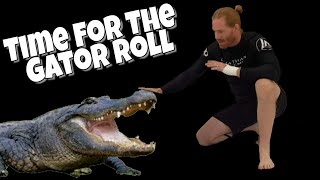
Gator Roll to Anaconda Choke
Key Takeaways
- •Front Head Position Setup
- •Anaconda Choke Hand Placement
- •Pre-Roll Positioning and Extension
- •The Gator Roll Execution
Attacking from the front head position with the Gator Roll then transitioning to the Anaconda Choke. Also transitioning to the back
Frequently Asked Questions
What does this video teach about anaconda choke from turtle gator roll?
This video covers front head position setup, anaconda choke hand placement, pre-roll positioning and extension. It provides detailed instruction from Still Rolling.
How long does it take to learn anaconda choke from turtle gator roll?
The basic mechanics can be understood in a single session, but developing reliable execution requires consistent drilling over weeks of practice. This 8-part breakdown helps structure your training by isolating each phase of the technique.
What are the key details for finishing anaconda choke from turtle gator roll?
A skilled opponent may use momentum to roll back through the initial gator roll, returning to the starting position. This creates a brief window of vulnerability where the opponent believes they've escaped the choke but hasn't yet regained positional control.
Related videos
Gator Roll to Anaconda Choke
Still Rolling
M.G.C. #415: Anaconda Choke/Darce Choke from Sprawl Control
Modesto Judo Club
John Danaher's Devastating Anaconda
Bernardo Faria BJJ Fanatics
John Danaher's Devastating Anaconda
Bernardo Faria BJJ Fanatics
M.G.C. #415: Anaconda Choke/Darce Choke from Sprawl Control
Modesto Judo Club