Cross-Arm Guard in MMA Context
The cross-arm guard, also called the skull and crossbones or mummy guard, is a legitimate defensive tool in MMA, though elite fighters like Dustin Poirier do not rely on it exclusively. Successful practitioners such as George Foreman employed this guard situationally rather than as a primary defense, adapting their arm positioning based on opponent pressure and tactical objectives.
Guards as Adaptive Shields
Effective defense requires fighters to view their guards as dynamic shields rather than static positions. Rather than committing to a single guard type, skilled practitioners move their arms fluidly in response to opponent actions and their own strategic goals.
Floyd Mayweather's Guard Versatility
Floyd Mayweather demonstrated guard versatility by switching between the philly shell for defensive pressure situations and a higher guard when pursuing opponents. This positional flexibility enabled him to create counter-striking opportunities while managing incoming attacks.
Defense Hierarchy: Eyes and Feet First
Effective defense begins with visual awareness and footwork rather than arm guards alone. Only when an opponent closes within one to two steps does hand positioning become critical for deflecting strikes.
Vertical Guard Fundamentals
Maintaining a vertical body alignment supports traditional guard positioning with arms held in a vertical plane. This foundational stance creates efficient angles for both deflection and counter-offensive opportunities.
Skull & Crossbones/Cross-Arm Guard #boxing for #MMA ☠️
Key Takeaways
- •Cross-Arm Guard in MMA Context
- •Guards as Adaptive Shields
- •Floyd Mayweather's Guard Versatility
- •Defense Hierarchy: Eyes and Feet First
Related Techniques
Frequently Asked Questions
What does this video teach about cross-arm block?
This video covers cross-arm guard in mma context, guards as adaptive shields, floyd mayweather's guard versatility. It provides detailed instruction from fightTIPS.
How long does it take to learn cross-arm block?
The basic mechanics can be understood in a single session, but developing reliable execution requires consistent drilling over weeks of practice. This 5-part breakdown helps structure your training by isolating each phase of the technique.
What are the key details for finishing cross-arm block?
Effective defense begins with visual awareness and footwork rather than arm guards alone. Only when an opponent closes within one to two steps does hand positioning become critical for deflecting strikes.
Related videos
Cross Block Like George Foreman
Jab Force Fitness
Arm breaking technique and using a cross arm block to catch by Grand Master Pat Munk Georgia Kenpo
Taekwondo Lifestyle
🥊 Perfect Your Defense: The Cross Block Technique 🥊
Ring Kinetix
Cross blocking is one of the best defensive position you can use in a fight. #jujiclub #mma #fight
Tristar Gym
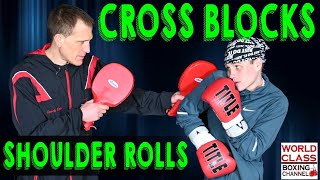
How To Cross Block and Roll with Punches
World Class Boxing Channel