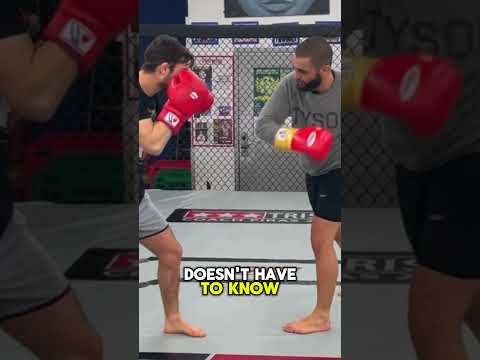
Self Defense - Cross Block and Elbow Strike - Special Agent Combative System
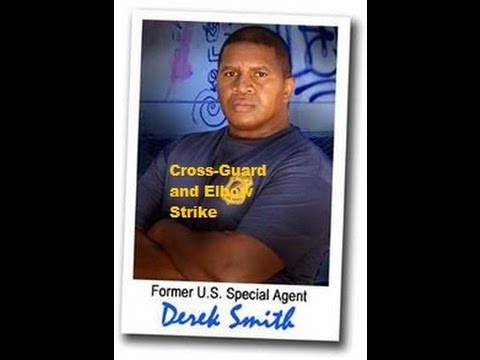
The Cross-guard and elbow Strike is highly effective against hooked punches as the opponent tends to strike your elbows…
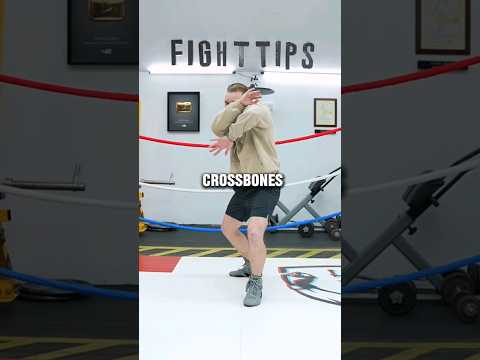
クロスアームブロック(Kurosu Āmu Burokku)
Translation: Cross-arm block
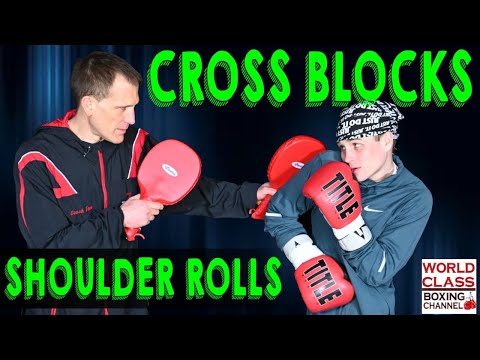
The Cross-Arm Block crosses both forearms in front of the face to absorb incoming punches, used as a last-resort defence when proper evasion or parrying is not possible. [1]
Jack Dempsey used these techniques to become one of the most devastating punchers in boxing history. [1]
Jack Dempsey → modern boxing methodology. [1]
Dempsey's techniques produced one of boxing's most feared knockout artists
No images yet for this technique.
Sign in to suggest an image.
Not yet documented
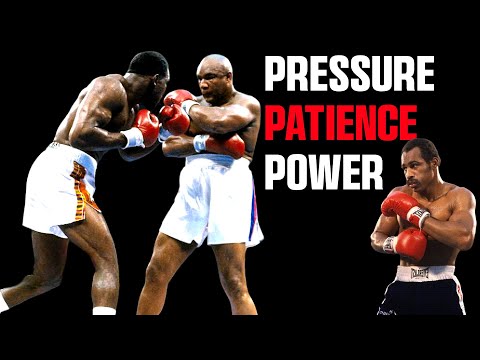
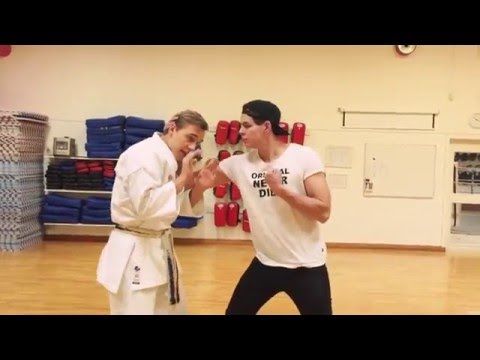
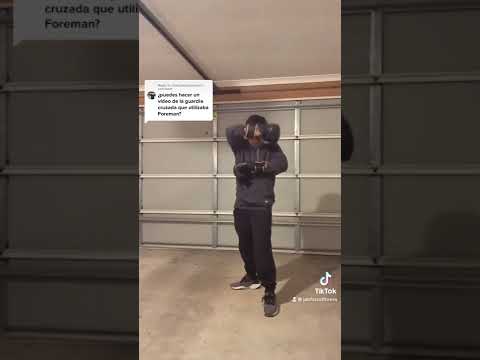
The cross-arm block, also called the cross guard or skull-and-crossbones guard, is a defensive system with deep historical roots in boxing, Muay Thai, and mixed martial arts. According to The Modern Martial Artist, the technique dates back to at least the 1800s and has been employed by legendary fighters including Archie Moore, Joe Frazier, George Foreman, and in modern MMA by Daniel Cormier. The block works by crossing the arms to protect both sides of the body simultaneously—one arm shields the head while the opposite shoulder and glove protect the other side, creating a vertical shield. The Modern Martial Artist emphasizes that this configuration completely protects one section on both sides, making it particularly effective against jab specialists and outboxers like Muhammad Ali, whose jab-centric game was neutralized by Frazier and Norton's cross guards. FightTIPS stresses that the cross-arm block functions within a broader defensive framework prioritizing foot movement and head position before relying on arm shields. Derek Special Agent Combative System demonstrates the block's application against hook punches, positioning raised elbows to absorb strikes while closing distance for counterattacking elbows. Jesse Enkamp presents a grappling application where the cross block transitions from a grab-and-wrist-control setup into throws or takedowns. All instructors agree the block requires reactive, dynamic adjustment rather than static positioning, and acknowledge vulnerabilities to high-volume multi-level offense and uppercuts.
Synthesized from 4 instructors
No instructional courses yet for this technique.
Sign in to suggest a course.
Risk of injury to the person this technique is applied to
Defensive technique
Skill level needed to execute this technique reliably
Whether this technique is allowed under major competition rule sets
Championship Fighting (Dempsey, 1950)
description, historyOrigin: sourced from Dempsey, J
Explosive leg drive
Good balance
Strong core rotation
The cross-arm block uses both forearms crossed in front of the face or body to absorb heavy attacks — a last-resort block when single-arm blocks are insufficient. Used in karate and kickboxing against powerful kicks and combinations. (Nakayama, Dynamic Karate; striking manuals)
You don't need to retract to a normal guard to punch—your lead arm can block while your power side remains free to throw explosive shots. The Modern Martial Artist notes that Archie Moore used this to his advantage, keeping his right hand available for powerful punches even while blocking with his lead arm.
Since both arms are crossed, they cannot cover every opening at once, making you vulnerable to high-volume, multi-level attacks. The Modern Martial Artist explains that opponents who throw repeated punches from different levels can find defensive gaps and beat you to the punch before you've fully set up your own shots.
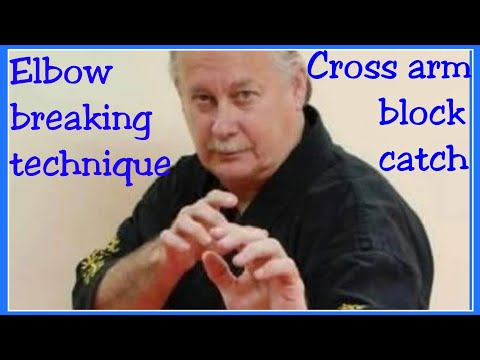
Yes. Grand Master Pat Munk (Georgia Kenpo) teaches that you can block with one arm while the other acts as a catch hand, allowing you to control and keep your opponent's limb in place rather than just slapping it away, giving you control for follow-up techniques.
Jesse Enkamp demonstrates the cross block as a practical defense against a neck grab and punch—you can reach over to grab the attacker's wrist, turn away, and execute the cross block to either throw them or control their positioning.
The Cross-Arm Block crosses both forearms in front of the face to absorb incoming punches, used as a last-resort defence when proper evasion or parrying is not possible.
Documented by Jack Dempsey, heavyweight champion of the world (1919-1926), in his 1950 instructional book. Dempsey's techniques were battle-tested in the era of bare-knuckle and early gloved boxing.
Unified MMA: legal — Legal defensive technique; WBC/Boxing: legal — Legal — blocking and evasion are core boxing skills; WKF: legal — Legal — blocking is a fundamental karate skill; Kyokushin: legal — Legal; WT: legal — Legal; WAKO: legal — Legal; K: legal — 1/GLORY — Legal; IFMA: legal — Legal
Danger rating 2/10. Defensive technique
The standard setup chain: Stance → Falling step → Cross-Arm Block → Follow-up.
Standard counters include: Clinch / Distance / Counter-punch.
Dempsey's techniques produced one of boxing's most feared knockout artists
Top errors to watch for: Not committing body weight / Arm-punching / Breaking the power line.
The Cross-Arm Block is also known as Kurosu Āmu Burokku, Cross Block, Double Arm Cover.