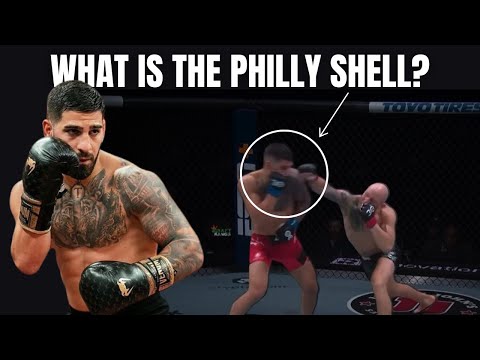
How To Use The PHILLY SHELL and The SHOULDER ROLL Explained (Pro Striking Breakdown)
0
Shoulder Roll Defence·Pro Striking
You can access Extra Breakdowns and Tutorials on the Pro Striking Patreon: www.patreon.com/prostriking Getting down beh…
Translation: Shoulder roll defence — the lead shoulder is raised to protect the chin while incoming punches are deflected by rolling off the shoulder surface
The Shoulder Roll Defence is a boxing defensive posture where the lead shoulder is raised high to protect the chin, the lead arm hangs low across the body, and the rear hand is held tight against the rear cheek — creating a shell-like defensive structure that deflects incoming punches by letting them slide off the rounded surface of the shoulder. [1] When a straight punch arrives, the fighter rolls the lead shoulder upward and forward, causing the punch to glance off the shoulder rather than landing flush on the chin. [1] The posture simultaneously loads the rear hand for an explosive counter-punch: because the rear hand is already cocked against the cheek and the body is turned sideways, the counter-straight or counter-right hook can fire instantly after the shoulder deflection, exploiting the attacker's moment of commitment. [1],[2] The Shoulder Roll is most famously associated with Floyd Mayweather Jr., who used it as the foundation of his 50-0 undefeated career, but its origins trace to the Philadelphia boxing tradition of the 1940s-1960s (hence 'Philly Shell'), where trainers like George Benton developed the style. [2],[3] Jack Dempsey documented the shoulder's role in defence in Championship Fighting (1950), noting that the shoulder must always protect the chin during offensive and defensive movements. [1] James Toney, Pernell Whitaker, and Mayweather all demonstrated the technique at the highest levels of professional boxing, using it to frustrate aggressive opponents while countering with precision. [2],[3] The Shoulder Roll requires exceptional timing, reflexes, and ring IQ — it is a defensive style for experienced fighters, not beginners, because miscalculating the roll exposes the chin to the exact punch it was meant to deflect. [1],[2]
The Shoulder Roll defence originates from the Philadelphia boxing tradition of the mid-20th century, where trainers developed a defensive style emphasising deflection and counter-punching over blocking and evasion. [2],[3] George Benton (1933-2011), a Philadelphia middleweight contender turned legendary trainer, is widely credited with systematising the Philly Shell defence and teaching it to fighters including Evander Holyfield and Pernell Whitaker. [3] Jack Dempsey wrote in Championship Fighting (1950) that the lead shoulder must always be positioned to protect the chin, and that the natural rotation of the body during punching creates a defensive shell as a byproduct of good offensive mechanics. [1] The technique reached its highest expression through Floyd Mayweather Jr. (50-0, retired 2017), who made the Shoulder Roll the centrepiece of his defensive system, using it to neutralise power punchers like Manny Pacquiao, Canelo Alvarez, and Miguel Cotto. [3] James Toney used a similar style to dominate the middleweight and super middleweight divisions in the 1990s. [3] The technique has also been called the 'Crab Defence' (from the crab-like posture), the 'Detroit Defence' (from James Toney's Detroit roots), and the 'L-Guard' (from the L-shaped arm position). [2]
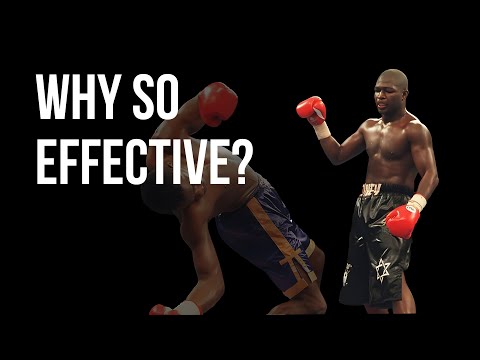
The Shoulder Roll is one of the most effective defensive techniques in boxing history, as demonstrated by Floyd Mayweather Jr.'s perfect 50-0 record — the most successful career in modern boxing, built primarily on this defensive foundation. [3] Its effectiveness comes from the counter-punching opportunity it creates: by deflecting punches with minimal effort, the defender preserves energy while loading devastating counters. [2] The technique is most effective against aggressive, straight-punching opponents whose forward movement provides momentum for the counter. [2] Its limitations include vulnerability to body attacks, hooks that go around the shoulder, and (in MMA) kicks and takedowns. [2] The technique requires years of practice to execute reliably under pressure — Mayweather trained the shoulder roll from childhood under his father Floyd Sr. and uncle Roger, both experienced fighters and trainers. [3]
Floyd Mayweather Jr.: 50-0 record (2017 retirement), built primarily on the Shoulder Roll — defeated Manny Pacquiao, Canelo Alvarez, Miguel Cotto, Shane Mosley, Oscar De La Hoya || Pernell Whitaker: Olympic gold 1984, unified lightweight champion, considered one of the greatest defensive fighters in history || James Toney: middleweight and super middleweight champion, nicknamed 'Lights Out' for his counter-punching from the shell || The Philly Shell lineage has produced multiple world champions across multiple weight classes.
No images yet for this technique.
Sign in to suggest an image.
You can access Extra Breakdowns and Tutorials on the Pro Striking Patreon: www.patreon.com/prostriking Getting down beh…
🔬Is it really BETTER than Floyds Philly Shell? Learn every detail about James Toney style. 💸 Want to run the official…
If you’re serious about leveling up your boxing, I’ve dropped all the best resources below to guide you. Start with the …
This document contains all playlists at each level of the membership: https://docs.google.com/document/d/1-IiC9KYudG6Tmy…
Check out the site and don't wait any longer to get started. https://www.coachanthonyboxing.com/ Below are links to s…
The shoulder roll defence is a positioning technique wherein a fighter uses their lead shoulder as the primary barrier against incoming strikes when the hands cannot cover the head, typically employed when hands are committed to offense, pinned to the ropes, or caught during head movement. Pro Striking emphasizes that the shoulder roll serves as a last line of defence and is frequently integrated with the Philly Shell guard—a stance popularizing the lead arm across the body with a 90-degree elbow bend protecting the ribs, while the rear hand and lead shoulder defend the chin. Coach Anthony and Precision Striking both stress proper hand positioning: the rear hand sits under the chin to defend multiple angles (jab, cross, hook) and the lead hand protects the body. The mechanics involve subtle shoulder movement and chin positioning centered on the chest; Precision Striking cautions against overrotation that blocks vision, while Pro Striking and Coach Anthony highlight that rolling with incoming shots dissipates impact. Pro Striking details directional variations—moving left (toward danger, setting up backhands) versus moving right (requiring a tighter shell)—and notes the importance of pivoting to evade power shots. Precision Striking and Pro Striking both stress that shoulder rolling must combine with other defences (countering, framing, jamming) during sustained pressure rather than serving as sole protection. Coach Anthony warns this is an advanced technique unsuitable for beginners, and Precision Striking recommends drilling and sparring to develop comfort with the fixed position before attempting counters.
Synthesized from 4 instructors
No instructional courses yet for this technique.
Sign in to suggest a course.
Risk of injury to the person this technique is applied to
This is a purely defensive technique — it causes no injury to the opponent. However, the counter-punches fired after the shoulder roll can be devastating due to the stored rotational energy.
Skill level needed to execute this technique reliably
Whether this technique is allowed under major competition rule sets
Championship Fighting (Dempsey, 1950)
description: [1] Dempsey 1950, [2] Atlas 2006, [3] Mayweather/Benton documentation
Standard katakana transliteration of Western martial arts terminology (外来語) — used in Japanese MMA, boxing, and BJJ communities
description: [1] Dempsey 1950, [2] Atlas 2006, [3] Mayweather/Benton documentation
Requires exceptional reflexes and timing — the margin between a successful roll and a flush punch is measured in inches and milliseconds
Good shoulder mobility and endurance (the shoulder must be held elevated for extended periods)
Strong rear hand for powerful counter-punches
Above-average ring IQ and fight awareness
Does NOT require exceptional physical size or strength — the technique is about timing, not power
Practitioners with naturally high, square shoulders find the posture more comfortable
The shoulder roll (Philly Shell) appears in 47 passages across 9 books. A defensive stance where the lead shoulder shields the chin — punches roll off the shoulder. Floyd Mayweather Jr.'s signature defense. Requires exceptional reflexes and timing. (9 books; boxing history and technique texts)
The shoulder roll is useful when you're pinned to the cage wall or pressed to the ropes where you can no longer retreat backward. It's also valuable when your hands are committed to offense—for example, after throwing a punch and a counter is coming before you can get your hands back to defend your head. However, the shoulder roll should be used as a temporary measure to ride a short sequence of punches and shouldn't be solely relied on.
Don't pivot if you're already on the right side of your opponent's lead foot, as you'll be running across their center line directly into their power. If your lead foot is in the centre of your opponent's stance, more towards their back foot, then it makes sense to pivot with the shoulder roll.
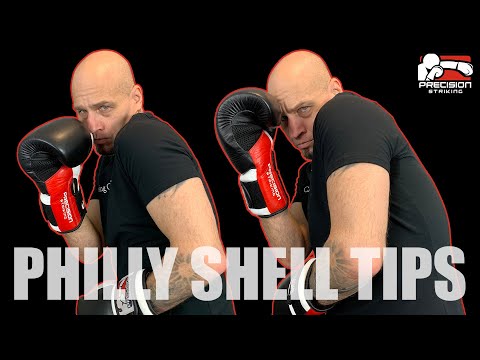
Shell up tight and avoid over-rotating when defending incoming punches. Your back hand works as a catcher's mitt to defend left-side attacks, with your lead hand across the body in the shell position. This allows for greater field of vision with the lead arm protecting the torso.
Using the pushback from the shoulder roll can help mitigate the impact of a punch while simultaneously opening counter-punching opportunities. From the shell position, you can intercept with a counter right hand after defending, or transition into combinations.
The Shoulder Roll Defence is a boxing defensive posture where the lead shoulder is raised high to protect the chin, the lead arm hangs low across the body, and the rear hand is held tight against the rear cheek — creating a shell-like defensive structure that deflects incoming punches by letting them slide off the rounded surface of the shoulder. When a straight punch arrives, the fighter rolls the lead shoulder upward and forward, causing the punch to glance off the shoulder rather than landing flush on the chin.
The Shoulder Roll defence originates from the Philadelphia boxing tradition of the mid-20th century, where trainers developed a defensive style emphasising deflection and counter-punching over blocking and evasion. George Benton (1933-2011), a Philadelphia middleweight contender turned legendary trainer, is widely credited with systematising the Philly Shell defence and teaching it to fighters including Evander Holyfield and Pernell Whitaker.
Unified MMA: legal — Legal defensive technique; WBC/Boxing: legal — Legal — blocking and evasion are core boxing skills; WKF: legal — Legal — blocking is a fundamental karate skill; Kyokushin: legal — Legal; WT: legal — Legal; WAKO: legal — Legal; K: legal — 1/GLORY — Legal; IFMA: legal — Legal
Danger rating 1/10. This is a purely defensive technique — it causes no injury to the opponent. However, the counter-punches fired after the shoulder roll can be devastating due to the stored rotational energy.
The standard setup chain: Adopt Philly Shell stance → Lead shoulder high, chin tucked behind it → Rear hand pressed against rear cheek → Opponent throws jab/cross → Roll the lead shoulder upward to deflect → Punch slides off the convex shoulder surface → Body rotation loads the rear hand → IMMEDIATELY fire rear straight or rear hook counter → Return to shell posture → Repeat.
Standard counters include: Body hooks and uppercuts — the low lead hand in the Philly Shell exposes the body; targeting the liver with hooks is … / Feints to draw the roll, then strike to the body — make the fighter roll the shoulder for a head feint, then attack t… / Hooks around the shoulder — looping hooks that arc past the shoulder and catch the back of the head / Jab to the body — a simple jab to the solar plexus bypasses the shoulder roll entirely.
Common variants: Classic Philly Shell (lead hand at waist level, maximum body turn, chin tucked …); High-hand Philly Shell (lead hand positioned higher (solar plexus level) for addi…); Mayweather pull-counter variation (adding a pull-back (leaning away) simultaneously with the…); Offensive shell (using the shoulder roll as a feint to draw the opponent's…); Modified MMA shell (adjusting the stance width and hand positioning to defend…).
Floyd Mayweather Jr. : 50-0 record (2017 retirement), built primarily on the Shoulder Roll — defeated Manny Pacquiao, Canelo Alvarez, Miguel Cotto, Shane Mosley, Oscar De La Hoya || Pernell Whitaker: Olympic gold 1984, unified lightweight champion, considered one of the greatest defensive fighters in history || James Toney: middleweight and super middleweight champion, nicknamed 'Lights Out' for his counter-punching from the shell || The Philly Shell lineage has produced multiple world champions across multiple weight classes.
Top errors to watch for: Dropping the rear hand from the cheek — the rear hand MUST stay pressed against the rear cheek at all times; dropping… / Rolling too early — rolling before the punch arrives telegraphs the defence and allows the opponent to redirect the p… / Rolling too late — rolling after the punch has already passed the shoulder means taking the punch flush on the chin / Staying in the shell against body punches — the low lead hand creates body vulnerability; body hooks and uppercuts mu….
The Shoulder Roll Defence is also known as Shorudā Rōru Difensu, Philly Shell, Crab Defence, Shoulder Block, Mayweather Defence.

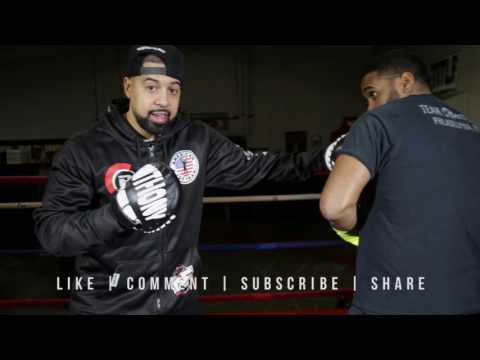
![How To Do The Shoulder Roll | Philly Shell Secrets. [Boxing Minute]](https://img.youtube.com/vi/Y2nojP2ZDRE/hqdefault.jpg)