O Soto Gari: Foundational Concepts
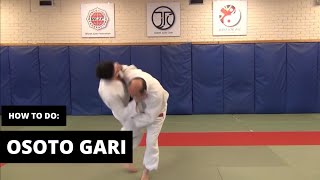
O Soto Gari is one of judo's most fundamental and important throwing techniques. The three critical elements are executing a large step, raising the throwing leg to maximum height, and using momentum to cut powerfully through the opponent. Maintaining balance throughout the technique is essential for consistent execution.
Breaking Balance with Hand Placement
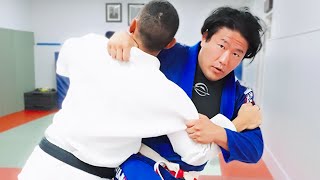
Effective balance-breaking requires coordinated use of both hands. The opponent's weight must be concentrated on a single leg before the throw is initiated. The lapel grip must be executed with the wrist held upright to ensure the fingers catch firmly on the collar without slipping.
Chest-to-Chest Connection and Hip Positioning
Maintaining firm chest-to-chest contact with the opponent prevents them from escaping to a single-leg stance. The practitioner should pull diagonally downward toward their right hip, positioning their center of gravity directly over the opponent's supporting leg. This positioning maximizes power transfer through the technique.
Foot Positioning and Sweep Mechanics
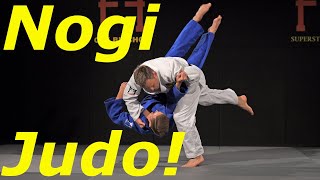
The throwing leg must have toes pointed downward to effectively transmit power to the opponent. The sweep should be a continuous motion through the opponent's leg rather than stopping mid-execution. Follow-through momentum is critical for successful completion of the throw.
Timing in Randori: Backward and Forward Steps
In free practice, O Soto Gari is most effective when the opponent steps backward, creating an optimal window to establish the throw. When the opponent steps forward, the practitioner should target the moment when the opponent's opposite foot lands on the mat. Recognizing these timing windows is essential for successful randori application.
Circular Movement Setup
An advanced entry involves rotating the opponent in a circular motion by pulling with both hands. After establishing the opponent's weight on one leg, a large step outward with the opposite foot continues the circular momentum. The opponent's balance is progressively broken as they are pulled around, creating the ideal moment to execute O Soto Gari.
Countering Defensive Arm Frame
When the opponent assumes a defensive posture with an extended arm creating a frame, a direct O Soto Gari entry becomes impossible. The solution is to lock the opponent's wrist on their defensive side, immobilizing their arm. With the arm secured, the practitioner can then lift the opponent's chin and execute the throw with a shortened stepping distance.
Advanced Hand Control and Chin Elevation
Proper wrist positioning creates leverage to raise the opponent's chin, opening their posture for attack. When the opponent pins their chin against the practitioner's wrist to defend against forward techniques, securing their hand on the same side provides the necessary control. This hand control combined with chin elevation creates the ideal conditions for O Soto Gari execution in randori situations.
Learn how to do osoto gari effectively
Key Takeaways
- •O Soto Gari: Foundational Concepts
- •Breaking Balance with Hand Placement
- •Chest-to-Chest Connection and Hip Positioning
- •Foot Positioning and Sweep Mechanics
Learn the fundamentals of osoto and apply it do your randori #judo #sports #osotogari #дзюдо
Related Techniques
Frequently Asked Questions
What does this video teach about standard o soto gari?
This video covers o soto gari: foundational concepts, breaking balance with hand placement, chest-to-chest connection and hip positioning. It provides detailed instruction from FLUID JUDO JAPAN.
How long does it take to learn standard o soto gari?
The basic mechanics can be understood in a single session, but developing reliable execution requires consistent drilling over weeks of practice. This 8-part breakdown helps structure your training by isolating each phase of the technique.
What are the key details for finishing standard o soto gari?
When the opponent assumes a defensive posture with an extended arm creating a frame, a direct O Soto Gari entry becomes impossible. The solution is to lock the opponent's wrist on their defensive side, immobilizing their arm. With the arm secured, the practitioner can then lift the opponent's chin and execute the throw with a shortened stepping distance.