Introduction to O Soto Gari
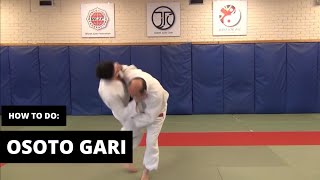
O Soto Gari, or big outside reap, is a foundational judo throwing technique. The instructor demonstrates the basic mechanics: step, pull, and lean. This technique exemplifies the three essential components of all judo throws.
The Three Phases of Judo Throws
Every judo technique comprises three distinct phases: kazushi (off-balancing), tsukuri (setup/shape), and kake (execution). Kazushi breaks the opponent's stable stance by shifting their center of gravity. Tsukuri positions the thrower's body correctly, while kake applies the final driving force.
Technique Variations and Adaptations
O Soto Gari has multiple variations depending on opponent response and positioning. If the opponent withdraws their leg, the thrower must adapt to a hop finish. Cross-body variations and combinations with O Uchi Gari provide strategic alternatives when direct attacks are defended.
Uchikomi: Repetitive Practice Training
Uchikomi refers to repetitive, cooperative practice of throw mechanics without completion. The thrower executes the off-balance and setup phases while moving from point A to point B. This drilling method builds muscle memory and technical precision in a controlled environment.
O Uchi Gari: Inside Reap Technique
O Uchi Gari, or big inside reap, mirrors O Soto Gari but targets the opponent's inside leg. The basic entry involves stepping and hooking the leg with the same driving mechanics. Like all leg techniques, uchikomi can be performed stationary, moving in one direction, or moving bidirectionally.
Multi-Person Uchikomi Drill
Three-person uchikomi uses a third participant as a support wall behind the falling partner. The thrower practices driving the complete technique while the uke remains stable due to the support structure. This drill builds power and body mechanics without requiring the partner to take repeated falls.
Cooperation in Technical Training
During uchikomi practice, the uke (receiving partner) maintains a cooperative posture by keeping arms relaxed and moving with the thrower's force. This allows the tori (executing partner) to experience proper off-balancing and develop correct technique. Cooperation during practice contrasts with resistance during sparring and randori.
Japanese Terminology in Leg Attacks
Judo terminology is descriptive of technique mechanics: O means big, Ko means small, and gari means reap. O Soto Gari and O Uchi Gari utilize large muscle groups like the glutes for powerful sweeps. Ko Uchi Gari employs smaller muscles, specifically the adductors, requiring precise timing.
Ko Uchi Gari: Small Inside Reap
Ko Uchi Gari is a timing-dependent technique that catches the opponent's forward-moving leg. The thrower times the technique to intercept the foot as it advances. This technique requires precise positioning and reactive execution rather than the driving power of larger sweeps.
Ko Osoto Gari: Small Outside Reap
Ko Osoto Gari targets the back of the opponent's foot in a small, controlled sweep. The thrower drives the opponent over their trapped leg. Progressive training fills technical gaps through consistent practice and live application beyond basic instruction.
Judo Basics - Your First Lesson To Start #judo
Key Takeaways
- •Introduction to O Soto Gari
- •The Three Phases of Judo Throws
- •Technique Variations and Adaptations
- •Uchikomi: Repetitive Practice Training
Fundamental judo ideas to get you off the ground and flying into your first Judo class. Check out our in-depth technique videos for more concise breakdowns of each move. The full version of the Ashi Waza Instructional: https://kokushi-budo.myshopify.com/products/ashi-waza-instructional Ashi Waza - or "Foot Techniques" are fundamental to building a comprehensive JUDO game. The moves are applicable across grappling disciplines and fun to hit during randori. Take these foot sweeps to the next level with this comprehensive instructional
Related Techniques
Frequently Asked Questions
What does this video teach about running o soto gari?
This video covers introduction to o soto gari, the three phases of judo throws, technique variations and adaptations. It provides detailed instruction from Shintaro Higashi.
How long does it take to learn running o soto gari?
The basic mechanics can be understood in a single session, but developing reliable execution requires consistent drilling over weeks of practice. This 10-part breakdown helps structure your training by isolating each phase of the technique.
What are the key details for finishing running o soto gari?
Ko Uchi Gari is a timing-dependent technique that catches the opponent's forward-moving leg. The thrower times the technique to intercept the foot as it advances. This technique requires precise positioning and reactive execution rather than the driving power of larger sweeps.