Scenario Setup: Mount Position Control
The officer has successfully taken the suspect to the ground and established mount position following an initial clinch. This foundational position provides the officer with mechanical advantage for safe and effective handcuffing.
Controlling the Weapon-Side Arm
The officer must prioritize controlling the suspect's arm on the same side as their duty weapon to prevent access to lethal force. This defensive positioning is critical before initiating any offensive handcuffing technique.
Open-Hand Striking Methodology
Open-hand slaps are employed rather than closed-fist strikes to minimize injury risk, protect officer hand integrity, and reduce perception of excessive force in video-recorded encounters. This technique effectively elevates the suspect's hands for arm access while preserving officer capability for weapon deployment or subject control.
Two-on-One Grip and Arm Draping
The officer secures the suspect's weapon-side wrist with both hands, steps up with the opposite-side leg, and drapes the suspect's arm over their thigh. Consolidating grip on the tricep provides mechanical leverage and prevents arm withdrawal during the transition to prone positioning.
Transitioning to Prone Positioning
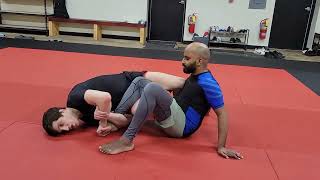
The officer applies shoulder pressure by drawing the suspect's wrist toward their own hips while giving clear verbal commands to roll face-down. Maintaining the leg position near the suspect's hips prevents premature arm escape during this critical repositioning phase.
Blocking and Securing the First Arm
Once prone, the officer switches leg position so the knee blocks the suspect's tricep, eliminating the possibility of arm withdrawal regardless of suspect strength. A light wrist lock is applied for refined control while accessing and deploying handcuffs on the first wrist.
Securing the Second Arm Through Verbal Command
Rather than reaching for the second arm, the officer issues clear verbal commands directing the suspect to extend their arm to the side with palm open. This positioning allows the officer to visually confirm the suspect holds no concealed weapon or contraband before redirecting the arm for the second handcuff.
Body Weight Application for Size Disadvantage
When facing a stronger suspect, the officer applies chest pressure over the suspect's elbow in addition to hand grip to prevent arm escape. This technique combines anatomical control with body weight distribution, compensating for significant strength or size differentials.
Palm Inspection and Weapon Detection
Before drawing the suspect's second arm back toward the officer, commanding the suspect to open their palm serves a dual purpose: visual inspection for concealed weapons or contraband and assessment of suspect compliance. This detail-oriented approach enhances officer safety during the final stages of restraint.
BJJ for Law Enforcement - Handcuffing From The Mount
Key Takeaways
- •Scenario Setup: Mount Position Control
- •Controlling the Weapon-Side Arm
- •Open-Hand Striking Methodology
- •Two-on-One Grip and Arm Draping
During an arrest, there is no referee to start or to stop the fight, there are no weight classes, no time limits, and no rules in place to protect you should things go bad. Only the bad guy knows if, when and how he will attack. Any time you are close enough to conduct a suspect interview, a pat-down, or document exchange you are close enough to be ambushed and assaulted. This ambush often times will start with the SUCKER PUNCH. Master this simple and effective defensive tactic to neutralize the threat ,achieve the advantage, and apprehend the assailant all while minimizing injury to yourself and the perpetrator! -------------------------------------------------------------------------------------------------------- Gracie NEPA was first established in 2005. Since then, Jeff Reese and his talented assistants have been relentlessly working to educate students in the art of Gracie Brazilian Jiu-Jitsu. Gracie NEPA headquarters is located in Scranton but it’s influence has spread across Pennsylvania as assistants and students have opened schools of their own. For more information call: 570-963-9739 or visit us on the web at http://www.gracienepa.com To enjoy more video be sure to visit and subscribe to us at: youtube.com/channel/UCj9-QA8g9Xj_iIEojgC0gAQ https://youtu.be/EmDVsX8uUtQ
Related Techniques
Frequently Asked Questions
What does this video teach about from prone control?
This video covers scenario setup: mount position control, controlling the weapon-side arm, open-hand striking methodology. It provides detailed instruction from Gracie NEPA.
How long does it take to learn from prone control?
The basic mechanics can be understood in a single session, but developing reliable execution requires consistent drilling over weeks of practice. This 9-part breakdown helps structure your training by isolating each phase of the technique.
What are the key details for finishing from prone control?
When facing a stronger suspect, the officer applies chest pressure over the suspect's elbow in addition to hand grip to prevent arm escape. This technique combines anatomical control with body weight distribution, compensating for significant strength or size differentials.
Related videos
BJJ Black Belt and former UFC fighter show law enforcement control techniques.
Gard Defense Solutions
Women's Self-defense Technique - Man Pinning Both Wrists in Mount Position
GracieBreakdown
The Secret to Locking Up Submissions: Position First!
fightTIPS
Toe hold from 50 50
Ethan Pino
Toe Hold Leg Lock Submission: Ashi, Single Leg X, 50/50 & More!
Pica Pau Jiu Jitsu & Grappling