Introduction to Limb Control Techniques
Kevin introduces an advanced limb control system designed for law enforcement and trained practitioners. These techniques build on fundamental defensive blocks but require additional experience in jiu-jitsu or wrestling for proper execution.
Establishing the Skeletal Framework
The instructor demonstrates a basic blocking position using bone structure rather than muscular strength. By positioning the elbows to create a rigid framework, the defender stops incoming attacks—whether charges or punches—while maintaining control through skeletal alignment.
The Under-Slip Transition
From the blocking position, the defender slips their gripping hand underneath the opponent's arm and shoots through while cutting the angle. The free hand simultaneously slides to the opponent's head, establishing dual control points.
Wrist Control and Head Positioning
The defender secures a firm wrist grip while controlling the opponent's head, creating distance management that prevents counter-strikes and pushes. This locked position provides multiple options for continued control or escalation.
Arm Extension and Neutralization
By driving the elbow across the opponent's arm, the instructor creates hyperextension that keeps the opponent's arm stretched and weak. Extended opponents cannot generate power or return to offensive positions—maintaining distance ensures the defender's advantage.
Takedown Options: Snap Down
The simplest takedown from this position involves a sharp downward jerk that drops the opponent to the ground face-first. This direct option provides immediate ground control without complex footwork.
Advanced Takedown: Head-Driven Spiral
The more sophisticated option involves driving the opponent's head toward their right foot while opening the door and swimming them down. This technique uses guided head movement and body rotation to position the defender on top in knee-on-belly position.
Ground Position Control and Options
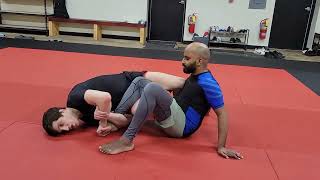
Once the opponent is driven to the ground, the defender maintains arm extension control throughout the transition. From the mounted position, multiple restraint options become available, including handcuffing and Kimura variations.
Full-Speed Integration and Transitions
The instructor demonstrates the complete technique at speed, emphasizing continuous arm extension, head control, and directional pressure. From this locked-out position, the defender maintains multiple options for strikes, positional adjustments, or restraint application.
BJJ Black Belt and former UFC fighter show law enforcement control techniques.
Key Takeaways
- •Introduction to Limb Control Techniques
- •Establishing the Skeletal Framework
- •The Under-Slip Transition
- •Wrist Control and Head Positioning
Kevin and Justin show a limb control option to defend, takedown, and handcuff. Using a simple block and drag, controlling the subject from start until handcuffed.
Related Techniques
Frequently Asked Questions
What does this video teach about from prone control?
This video covers introduction to limb control techniques, establishing the skeletal framework, the under-slip transition. It provides detailed instruction from Gard Defense Solutions.
How long does it take to learn from prone control?
The basic mechanics can be understood in a single session, but developing reliable execution requires consistent drilling over weeks of practice. This 9-part breakdown helps structure your training by isolating each phase of the technique.
What are the key details for finishing from prone control?
Once the opponent is driven to the ground, the defender maintains arm extension control throughout the transition. From the mounted position, multiple restraint options become available, including handcuffing and Kimura variations.
Related videos
BJJ for Law Enforcement - Handcuffing From The Mount
Gracie NEPA
Women's Self-defense Technique - Man Pinning Both Wrists in Mount Position
GracieBreakdown
The Secret to Locking Up Submissions: Position First!
fightTIPS
Toe hold from 50 50
Ethan Pino
Toe Hold Leg Lock Submission: Ashi, Single Leg X, 50/50 & More!
Pica Pau Jiu Jitsu & Grappling