Foundational Stance and Setup
Begin with the standing position near a wall for balance and support. If executing with the right leg, position the left leg forward. This stance provides stability during the initial learning phase and helps establish proper weight distribution.
Four-Count Drill with Wall Support
Execute a structured four-count progression while maintaining wall contact. Count one involves turning the shoulders, count two involves looking over the shoulder, count three includes bending the knee, and count four completes the preparation. This drill builds muscle memory for the rotation sequence.
Adding Forward Movement
Progress beyond rotational-only movement by incorporating forward stepping. Execute one step forward, then two counts of rotation and execution. This prevents excessive spinning and develops proper body mechanics for functional application.
Chamber and Extension Technique
Lift the foot to chamber position with the knee bent, then extend the leg with the heel pointing downward. Maintain a 45-degree maximum angle and focus on proper foot alignment to ensure the heel connects with the target upon impact.
Target Distance and Heel Connection
Practice the kick with a target positioned at appropriate distance to facilitate clean heel contact. Execute the three-count sequence: step forward, rotate, and strike. This trains accuracy and proper distance management.
Balance and Upper Body Positioning
Remove wall support once proper mechanics are established, ensuring adequate balance throughout execution. Lean the torso forward with bent knees rather than maintaining an upright posture to generate superior striking angles and power. This forward-leaning position is essential for optimal kick efficiency.
Front Foot Alignment and Back Leg Extension
Position the front foot slightly outward to allow the back leg to extend fully toward the rear. This foot placement prevents the back leg from being trapped and ensures complete hip extension during the kick. Proper alignment prevents common mechanical errors that limit power.
Guard Defense and Deception
Integrate hand positioning to defend the guard before executing the kick, which masks the technique and positions the back leg simultaneously. Alternatively, check the opponent's foot to the same direction as your own foot before executing the kick. These strategies prevent telegraphing and create tactical openings in combat situations.
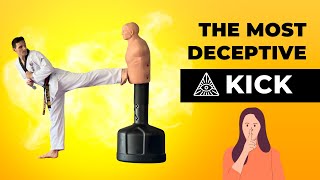
Master the Spinning Back Kick
Key Takeaways
- •Foundational Stance and Setup
- •Four-Count Drill with Wall Support
- •Adding Forward Movement
- •Chamber and Extension Technique
In this video We demonstrate basic to advanced drills to help you practice and master your spinning back kick. To learn more, visit: www.machidavirtualdojo.com
Frequently Asked Questions
What does this video teach about standard spinning back kick?
This video covers foundational stance and setup, four-count drill with wall support, adding forward movement. It provides detailed instruction from Machida Karate .
How long does it take to learn standard spinning back kick?
The basic mechanics can be understood in a single session, but developing reliable execution requires consistent drilling over weeks of practice. This 8-part breakdown helps structure your training by isolating each phase of the technique.
What are the key details for finishing standard spinning back kick?
Position the front foot slightly outward to allow the back leg to extend fully toward the rear. This foot placement prevents the back leg from being trapped and ensures complete hip extension during the kick. Proper alignment prevents common mechanical errors that limit power.
Related videos
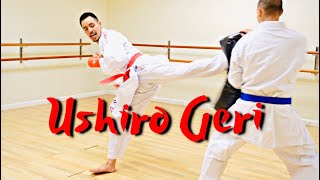
USHIRO GERI TUTORIAL (Spinning Back Kick)
ULTIMATE KARATE
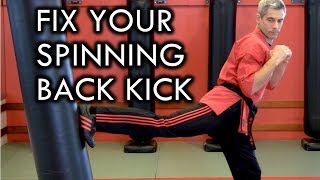
How to Fix Your Spinning Back Kick / Turning Side Kick
Ando Mierzwa
Be More CONFIDENT With Your SPINNING Back Kick Set Up
MMA COACH
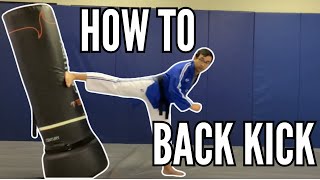
How To Back Kick Tutorial | Catholic Karate Lesson
ᴶᴹᴶ Dojo Go ! | Online Kids Martial Arts & Karate
How to Do a Taekwondo Back Kick
Taekwondo Guide