Triangle Escape Progression Framework
Triangle choke escapes must be categorized by the opponent's progression through the technique. The instructor presents six distinct escapes organized along a timeline from early prevention through late-stage defense, each requiring different mechanical approaches and timing considerations.
Early Escape: Posture Triangle Prevention
When the opponent attempts to lock the triangle from the necklace or crooked guard position, immediately drive the elbow to the floor on one side to prevent proper leg angle closure. Switch the knee position by bringing the upper knee down and looking behind the opponent's ear while extracting the trapped arm, maintaining space throughout the movement.
Middle Escape: Gable Grip Hip Displacement
Once the opponent achieves a more threatening position with the arm elevated, use a gable grip with both hands to pull the hips at an angle, creating space to drive the knee and elbow together. Rise to standing and drive forward into the hip angle to break the hold before the opponent can transition to an omoplata position.
Mid-Range Escape: Stack and Shoulder Shake
If the opponent maintains pressure while keeping you standing, stack forward by placing both knees under their back and pulling them onto your lap. Place one hand inside the thigh with the other hand covering it, then shake the shoulders laterally to create separation and extract both arms into a double underhook position.
Mid-Stage Escape: Pressure Commitment and Bulldog Exit
When caught in a tug-of-war for arm position from the necklace guard, allow the opponent to commit fully to pulling the arm across center. Punch the hand to the ground and bulldog explosively to the side, disrupting the necessary hip angle while immediately securing the arm to prevent an omoplata transition.
Late Escape: Hip Drive and Leg Flattening
As the opponent advances to a fully crossed-arm position, drive the elbow into the hip while pushing the hips laterally to flatten the opponent's leg against the ground. Execute a Hindu pushup movement, driving the chest through while stapling the ankle to prevent leg collapse and secondary attacks.
Advanced Late Defense: Covered Hand and Oblique Pressure
When the opponent has the elbow fully crossed and the position is extremely dangerous, place the opposite hand over the trapped arm to prevent peeling. Push the elbow into the hip, drop the knee to ground, then hop around the corner while applying oblique knee pressure rather than direct hamstring pressure to force the legs open.
Six Triangle Choke Escapes | From Early to Very Late
Key Takeaways
- •Triangle Escape Progression Framework
- •Early Escape: Posture Triangle Prevention
- •Middle Escape: Gable Grip Hip Displacement
- •Mid-Range Escape: Stack and Shoulder Shake
Most everyone’s favorite guard submission to catch is also most everyone’s least favorite to get caught with. The triangle is a powerful and versatile technique and can be very difficult to defend or even prevent. This video will hopefully help with that. These are some of the best counters and preventative measures I’ve come across over the years from different teachers and from getting caught in plenty of triangles myself. Here’s what’s included: • Early Escape • Step Through Triangle Counter • Stack to Posture Triangle Counter • Bulldog Escape • Late Escape The Hail Mary Escape I hope you like the video, and please remember to like, share and subscribe. Turn on notifications to know as soon as I put up a new video. If you like the gear I’m wearing in the video, check out @supernaturalsurvivalgear on Instagram. I’m not sponsored by them or anything - I just like their stuff. Follow me on Instagram @knight_jiu_jitsu_ And of course, more detailed instruction from my classes and seminars is available at Patreon.com/KnightJiuJitsu Thank you, everyone!
Related Techniques
Frequently Asked Questions
What does this video teach about posture triangle escape?
This video covers triangle escape progression framework, early escape: posture triangle prevention, middle escape: gable grip hip displacement. It provides detailed instruction from Knight Jiu-Jitsu.
How long does it take to learn posture triangle escape?
The basic mechanics can be understood in a single session, but developing reliable execution requires consistent drilling over weeks of practice. This 7-part breakdown helps structure your training by isolating each phase of the technique.
What are the key details for finishing posture triangle escape?
As the opponent advances to a fully crossed-arm position, drive the elbow into the hip while pushing the hips laterally to flatten the opponent's leg against the ground. Execute a Hindu pushup movement, driving the chest through while stapling the ankle to prevent leg collapse and secondary attacks.
Related videos
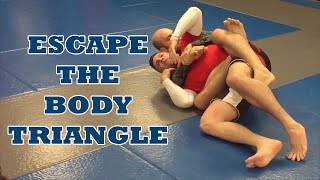
How to Escape the Body Triangle
Shawn Williams BJJ
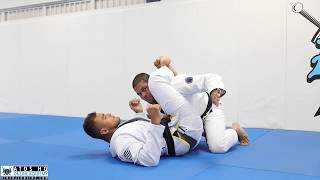
How to escape escape from a triangle choke effectively by Jiu-Jitsu Legend Andre Galvao
Atos Jiu-Jitsu HQ | World's Best BJJ Academy - Home Page
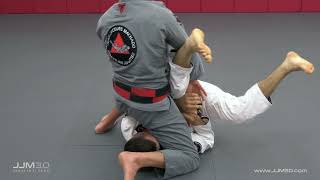
Defending Against The Triangle Choke (2 Options)
JeanJacquesMachado
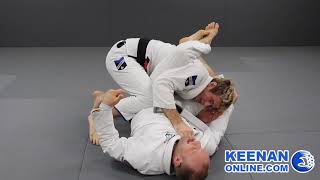
The absolute best way to escape a jiujitsu triangle choke - Keenan Cornelius
Keenan Cornelius
How to escape escape from a triangle choke effectively by Jiu-Jitsu Legend Andre Galvao
Atos Jiu-Jitsu HQ | World's Best BJJ Academy - Home Page