Introduction to Pure vs. Impure Punching
Jack Dempsey's seminal work, Championship Fighting: Explosive Punching and Aggressive Defense, outlines fundamental principles of efficient striking. The distinction between pure and impure punching mechanics forms the foundation of injury-free, long-term boxing development. Understanding these concepts prevents cumulative elbow damage and tendonitis common in strikers who rely solely on traditional power generation.
The Power Line Exercise
Dempsey's power line exercise involves establishing a vertical alignment through the striking arm while maintaining three-knuckle contact with a surface. The practitioner stands in a parallel stance and leans onto the bag, reinforcing the importance of structural integrity in punch delivery. This exercise trains the body to maintain a straight line of force transmission rather than relying on elbow elevation.
Impure Punching: The Flared Elbow Method
Impure punching involves elevating the elbow before extending the fist, analogous to a baseball fastball. While this method generates power quickly and naturally, it creates repetitive stress on the elbow joint, leading to tendonitis and premature joint deterioration. Professional baseball pitchers and fighters who rely exclusively on this technique often require surgical intervention or develop chronic inflammatory conditions.
Pure Punching with Shoulder Whirl
Pure punching initiates with the arm extending along the centerline, followed by a corkscrew rotation of the shoulder at punch completion, similar to a baseball curveball trajectory. This method distributes force throughout the kinetic chain rather than concentrating stress at the elbow joint. The shoulder whirl—achieved by rotating the shoulders and pulling the opposite shoulder back—creates explosive power without structural compromise.
Structural Integrity and Weight Distribution
The power line's straight-arm alignment creates a rigid structural frame capable of supporting body weight and transmitting force efficiently. A bent or flared elbow creates a weak frame that concentrates all stress at the elbow joint, preventing effective weight distribution. Whether executing a vertical punch or a corkscrewing strike, maintaining a straight power line preserves joint integrity and extends athletic career longevity.
Russian Boxing Correction: Elbow Position
Proper elbow positioning keeps the elbow pointing downward with the thumb facing upward, allowing the hand to extend along the centerline. This contrasts sharply with traditional approaches where the elbow elevates before the fist extends. By maintaining this lower elbow position, strikers eliminate stress on the elbow joint while enhancing punch efficiency and reach.
The Trigger Step for Extended Range
A small step synchronized with the punch—called the trigger step—advances the shoulder and fist toward the target without significantly bringing the head into dangerous proximity. This technique extends effective striking range beyond what full hip rotation and pivoting alone can achieve. While controversial in some American boxing circles, elite coaches recognize this as essential for maintaining distance management while preventing elbow compromise.
Pulling Strength vs. Pressing Strength
Pulling exercises provide superior athletic carryover to punching compared to traditional bench-pressing movements. The posterior chain engagement required in pulling directly correlates to proper shoulder rotation and punch execution. When throwing a left hand or left hook, the emphasis rests on pulling the right shoulder back rather than pressing forward, making back and shoulder pulls more effective conditioning tools.
Pure Punching vs Impure Punching. Jack Dempsey’s “Power Line” explained
Key Takeaways
- •Introduction to Pure vs. Impure Punching
- •The Power Line Exercise
- •Impure Punching: The Flared Elbow Method
- •Pure Punching with Shoulder Whirl
Remember those illustrations from Jack Dempsey’s book “Championship Fighting: Explosive Punching and Aggressive Defense” showing the man holding one arm out in a straight line pressed against a wall? Have you also noticed how certain wing chun nerds who don’t know how to box like to claim this as validation for poor punching techniques that don’t resemble Jack Dempsey at all? So why did Jack Dempsey include these pictures of a man extending his arm with a vertical fist with three knuckle contact against a wall? Well, didn’t you read the book? It’s an illustrative exercise to teach bone alignment preparatory to throwing punches. Let’s dig into the power line in this video and discuss so called “pure punches” and “impure punches”, and how fixing your punching form will not only make you a better fighter, it can fix a bad case of tennis elbow and otherwise prolong your combat sports career. Ramsey Dewey is an MMA coach and fight commentator based in Shanghai, China. Thanks to my channel sponsor: Xmartial: catering to all kinds of combat sports athletes from BJJ, MMA, Muay Thai and more. Use my code RAMSEY10 for a 10% discount on everything at https://www.xmartial.com/?ref=AyJ_EjPCOXox This video features original music by Ramsey Dewey Follow me on Instagram at: https://www.instagram.com/ramseydewey/
Related Techniques
Frequently Asked Questions
What does this video teach about dempsey roll?
This video covers introduction to pure vs. impure punching, the power line exercise, impure punching: the flared elbow method. It provides detailed instruction from Ramsey Dewey.
How long does it take to learn dempsey roll?
The basic mechanics can be understood in a single session, but developing reliable execution requires consistent drilling over weeks of practice. This 8-part breakdown helps structure your training by isolating each phase of the technique.
What are the key details for finishing dempsey roll?
A small step synchronized with the punch—called the trigger step—advances the shoulder and fist toward the target without significantly bringing the head into dangerous proximity. This technique extends effective striking range beyond what full hip rotation and pivoting alone can achieve. While controversial in some American boxing circles, elite coaches recognize this as essential for maintaining distance management while preventing elbow compromise.
Related videos
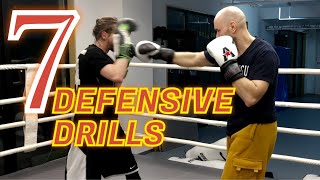
Basic defensive boxing drills
Ramsey Dewey

The Real Boxing Techniques of Hajime No Ippo Explained - Review/Breakdown
The Modern Martial Artist

How to Bob & Weave- Step by Step Tutorial
Maximum Martial Arts University

How To Punch Someone Using The Shoulder Roll Defense (The Philly Shell)
World Class Boxing Channel

Boxing Breakdowns: The Philly Shell | The Shoulder Roll
BoxRope