The Clinch as Mutual Agreement
A clinch is not an inevitable outcome of close-range fighting—it is a bilateral agreement between two fighters. One fighter must initiate the clinch while the opponent must remain stationary and accept it. If the defending fighter moves, the clinch cannot be established, regardless of the aggressor's intentions.
Avoiding the Inside Position Trap
While fighters will occasionally find themselves at close range, they are never forced to remain there. The key principle is that staying on the inside requires the defending fighter's cooperation. By understanding this, practitioners can eliminate the sense of helplessness that often accompanies close-range exchanges.
Breaking Square Shoulders to Restore Advantage
When caught at close range, the opponent's squared shoulders indicate a neutral stance that negates the defender's angular advantage. The solution is to reestablish proper hip positioning through lateral movement. This simple adjustment restores the defender's positional superiority and creates exit opportunities.
The Exit Strategy
Once positional advantage is reestablished, the defender has multiple options: adjust and move laterally, step back to create distance, or circle to the outside. The critical element is initiating movement the moment the opponent commits to the clinch, ensuring the defender is never stationary when the grab is attempted.
Never Reciprocate Pressure
When an opponent presses inward, the instinctive response to push back only solidifies the clinch. Instead, the defender should move laterally or backward into open space. This non-resistance denies the opponent the stable base required for effective clinch control.
Exploiting the Clinch Commitment
An opponent focused on achieving a clinch is necessarily distracted from hand striking and defensive coverage. By refusing to engage in the clinch and maintaining space, the defender opens scoring opportunities. The opponent's commitment to close range becomes a vulnerability rather than a dominant position.
Redefining Effective Aggression
True aggression in combat sports is not reckless forward pressure but rather intelligent positioning combined with offense execution. Effective fighters punish opponent mistakes through superior positioning and timing, not by rushing blindly into exchanges. This methodical approach eliminates unnecessary risk while maintaining tactical control.
The Elimination of Shootouts
By fighting with positional awareness and refusing to engage in clinches, practitioners avoid the exhausting mutual exchanges that favor neither fighter. Smart fighting—based on angles, timing, and clean offense—replaces the draining back-and-forth battles. This approach reduces damage taken while increasing scoring efficiency.
Why you don't have to CLINCH
Key Takeaways
- •The Clinch as Mutual Agreement
- •Avoiding the Inside Position Trap
- •Breaking Square Shoulders to Restore Advantage
- •The Exit Strategy
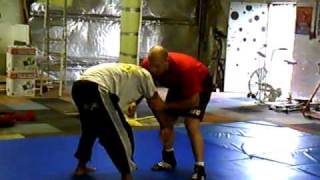
You will, at some point, find yourself inside or dealing with a clinch. It takes two to tango when being in a phonebooth with an opponent, especially when a clinch is started. A few unnecessary problems occur when you're inside; in the dangerzone of your opponents weapons, energy expenditure, opponents recovery, etc. In this video, you'll see how to deny the clinch's invitation by using your hips and footwork to keep your opponent from getting their much needed breather! Now on Patreon! FOLLOW: Instagram | @MarvinCookTBS Facebook | @MarvinCookTBS Twitter | @MarvinCookTBS Patreon | @MarvinCook
Frequently Asked Questions
What does this video teach about standard framing clinch position?
This video covers the clinch as mutual agreement, avoiding the inside position trap, breaking square shoulders to restore advantage. It provides detailed instruction from Marvin Cook.
How long does it take to learn standard framing clinch position?
The basic mechanics can be understood in a single session, but developing reliable execution requires consistent drilling over weeks of practice. This 8-part breakdown helps structure your training by isolating each phase of the technique.
What are the key details for finishing standard framing clinch position?
True aggression in combat sports is not reckless forward pressure but rather intelligent positioning combined with offense execution. Effective fighters punish opponent mistakes through superior positioning and timing, not by rushing blindly into exchanges. This methodical approach eliminates unnecessary risk while maintaining tactical control.
Related videos
Wallwork: Fighting Off of the Cage & MMA Clinch
fightTIPS
Dominate the Muay Thai Clinch with Petchboonchu
fightTIPS
Hand & Arm Manipulations: Framing, Posts, Measure, Etc.
fightTIPS
Head Bounced Off the Wall in Sparring | Clinch and Wrist Control Details for Dirty Boxing
hard2hurt
Underhook to Front Headlock Attacks
RuizCombatGrappling