The Post: Creating Distance
The post is a forearm push used to create distance and knock an opponent off balance. Executed similarly to a jab, the technique involves striking with the palm of the hand to the shoulder, chest, neck, or face. The movement should integrate hip movement and arm extension in a single coordinated action rather than draining energy through excessive muscle engagement.
The Measure: Range Assessment
The measure is a light contact technique used to gauge fighting distance and determine if the opponent is close enough for the next attack. Practitioners can use knuckles or an open hand to maintain light contact while monitoring range. The technique is commonly used in boxing combinations, though it leaves the body exposed and must be combined with quick movement to avoid counterattacks.
The Frame: Structural Control with the Elbow
The frame uses the elbow to maintain distance and control an advancing opponent while keeping the arm structurally sound. The defending arm should remain at or beyond 90 degrees to prevent the opponent from collapsing it inward. From the frame position, the practitioner can execute uppercuts, crosses, or head control techniques depending on the ruleset.
Traps: Opening the Guard
Traps involve pulling down on an opponent's hands to create openings for strikes. Striking above the guard and then pulling downward is more effective than pulling on the wrists against larger opposing muscles. The hands should remain close together during execution, with the rhythm of pull-and-punch delivered as a tight combination rather than separated movements.
Hand Manipulation Applications
Hand and arm manipulations such as posts, measures, frames, and traps allow fighters to control distance, dictate range, and create offensive opportunities without relying solely on striking. These techniques function as defensive tools that simultaneously set up follow-up attacks. Proper execution requires coordination between hip movement, arm positioning, and timing to maintain momentum and avoid vulnerability.
Hand & Arm Manipulations: Framing, Posts, Measure, Etc.
Key Takeaways
- •The Post: Creating Distance
- •The Measure: Range Assessment
- •The Frame: Structural Control with the Elbow
- •Traps: Opening the Guard
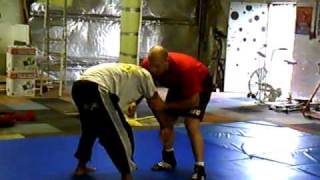
Train with me in Singapore this August: http://bit.ly/FightTIPSinSingapore Your hands and arms don't only have to be used for strikes. Whether it's Boxing or MMA, you can use hand-fighting and the rest of your limbs to keep your opponent at bay, knock them off balance, control the distance, and set up your next attack. In this video, we take a look at posting out, how to measure, framing with your forearm, and hand-trapping to create openings. Any questions about the Singapore trip? Shoot my wife Marie an email: Marie(at)fighttips(dot)com Subscribe to fightTIPS►http://bit.ly/1APnzvw Vince's IG►https://www.instagram.com/vincetheanomaly/ Hand Traps►https://www.youtube.com/watch?v=xnaBMtw-vvw FOLLOW: Facebook | http://bit.ly/fightTIPSFacebook Twitter | http://bit.ly/fightTIPSTwitter Instagram | http://bit.ly/fightTIPSInstagram
Frequently Asked Questions
What does this video teach about standard framing?
This video covers the post: creating distance, the measure: range assessment, the frame: structural control with the elbow. It provides detailed instruction from fightTIPS.
How long does it take to learn standard framing?
The basic mechanics can be understood in a single session, but developing reliable execution requires consistent drilling over weeks of practice. This 5-part breakdown helps structure your training by isolating each phase of the technique.
What are the key details for finishing standard framing?
Traps involve pulling down on an opponent's hands to create openings for strikes. Striking above the guard and then pulling downward is more effective than pulling on the wrists against larger opposing muscles. The hands should remain close together during execution, with the rhythm of pull-and-punch delivered as a tight combination rather than separated movements.
Related videos
Why you don't have to CLINCH
Marvin Cook
Wallwork: Fighting Off of the Cage & MMA Clinch
fightTIPS
Dominate the Muay Thai Clinch with Petchboonchu
fightTIPS
Head Bounced Off the Wall in Sparring | Clinch and Wrist Control Details for Dirty Boxing
hard2hurt
Underhook to Front Headlock Attacks
RuizCombatGrappling