Introduction to the Technique
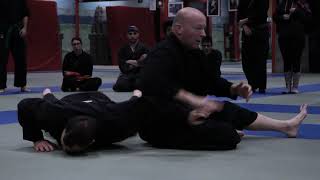
The instructor demonstrates a sophisticated application of tomoe nage rollover from bottom position that transitions directly into juji gatame. This is not merely a simple turnover, but rather a skillful manipulation that positions the opponent for arm lock submission. The technique emphasizes control and precision in the transition.
Grip and Arm Control Setup
Proper hand placement on the opponent's forearm sleeves is essential for successful execution. The grip allows the practitioner to pin the opponent's arm while preparing for the juji gatame transition. Hands positioned inside the sleeves enable easier arm collection into the torso rather than requiring awkward repositioning.
The Initial Roll and Weight Distribution
As the opponent pressures upward, the practitioner maintains control while shifting weight and initiating the rollover. Proper foot placement and knee positioning are critical—the practitioner must roll toward the opponent's feet and belt line rather than relying on the knee post. This weight distribution prevents the opponent from escaping and allows proper leg positioning for the arm lock.
Transitioning to the Opposite Side
The technique is equally effective when executed in the opposite direction. The practitioner establishes the elbow and chest connection characteristic of juji gatame, then rolls toward the opponent's belt line to free the posting knee. The head capture and finishing position remains consistent regardless of direction.
Defending Against Hand Clasping
When the opponent clasps both hands together, the initial grip on both sleeves already negates this defense. The practitioner can execute a double arm bar or transition to uchi gatame, which typically comes before juji gatame completion. Maintaining the initial sleeve control prevents the opponent from finding defensive solutions.
The Uchi Gatame Position
As the practitioner rolls to create the pin, uchi gatame (floating hold or straddling hold) becomes the dominant position. This intermediate pin controls the opponent effectively and sets up the arm extension necessary for juji gatame. The arm stretch in uchi gatame often forces submission before progressing to the arm lock.
Grip Utilization in the Roll
The tight arm positioning against the chest serves dual purpose: it controls the opponent and provides leverage for executing the roll. By keeping the arms hugged in rather than extended overhead, the practitioner can pull through the grips to rotate efficiently over the shoulder. This grip-driven approach is fundamental to the technique's success.
Foot Positioning and Arm Lock Setup
The bottom foot must slide underneath the opponent's armpit as the top side develops. Proper foot placement is non-negotiable for establishing the arm lock, though the opponent's defensive positioning may complicate initial placement. Once the top position is secured, foot adjustments become secondary to arm control.
Variations from the Floating Pin
From uchi gatama, the practitioner has multiple options including maintaining the pin for positional points, transitioning to full juji gatame, or switching to belly-down control. The position allows flexibility to respond to opponent resistance or rule scoring systems. Consistent practice riding the opponent from this position develops the fine motor control necessary for all variations.
Complete Sequence Summary
The double-foot tomoe nage from bottom position flows seamlessly through uchi gatame into juji gatame submission. This sequence exemplifies technical progression from initial turnover to positional dominance to submission finish. Mastery of this technique provides the practitioner with substantial scoring opportunities and submission threats from an initially disadvantageous position.
NEWAZA BOTTOM BASICS BOTH FEET TOMOE NAGE ROLLOVER TO JUJI GATAME
Key Takeaways
- •Introduction to the Technique
- •Grip and Arm Control Setup
- •The Initial Roll and Weight Distribution
- •Transitioning to the Opposite Side
In this episode, we look at using the both feet Tomoe Nage rollover into Juji Gatame. View hundreds of videos of judo, freestyle judo, Shingitai Jujitsu, sambo, submission grappling and sport jujitsu on our Youtube channel at http://youtube.com/user/welcomematstevescott. Music for the Freestyle Judo show provided by YouTube Copyright Free Audio featuring "Fiend" by Sting and performed by the Jingle Punks and "All This Down Time" by Sting and performed by the Jingle Punks. The Welcome Mat Judo-Jujitsu Club was founded in 1969. Please subscribe to our Youtube channel if you have not done so already. Visit our web sites at http://www.WelcomeMatJudoClub, http://www.judoblackbelt.com and visit our online store at http://www.WelcomeMatStore.com. Thank you for watching our video.
Related Techniques
Frequently Asked Questions
What does this video teach about hara-gatame?
This video covers introduction to the technique, grip and arm control setup, the initial roll and weight distribution. It provides detailed instruction from welcomematstevescott.
How long does it take to learn hara-gatame?
The basic mechanics can be understood in a single session, but developing reliable execution requires consistent drilling over weeks of practice. This 10-part breakdown helps structure your training by isolating each phase of the technique.
What are the key details for finishing hara-gatame?
From uchi gatama, the practitioner has multiple options including maintaining the pin for positional points, transitioning to full juji gatame, or switching to belly-down control. The position allows flexibility to respond to opponent resistance or rule scoring systems. Consistent practice riding the opponent from this position develops the fine motor control necessary for all variations.
Related videos
Juji gatame, hara gatame, hiza gatame
NKcel
KOSHI GATAME BASICS
welcomematstevescott
Katame Waza || Grappling Techniques - 32 Holds, Strangles/Chokes and Armlocks
The Judo Way of Life
Waki Gatame - when and how to use it.
Robert Silas (Aiki_and_Jiu)
Waki Gatame into Ura Oni Kudaki - Yossi Sheriff in Madrid
AKBAN Ninjutsu – Yossi Sheriff