Introduction to Side Control Variations
The instructor introduces a systematic overview of five fundamental side control positions used in Brazilian Jiu-Jitsu. Each position is explained through personal application and competitive experience, offering practitioners multiple frameworks to develop their own technical approach.
Head and Hip Position
The head and hip position features an underhook grip beneath the opponent's head with the middle finger anchored in the armpit, creating shoulder pressure into the face. The opposite hand controls the hip, with a grip on the hip in gi and hand placement in no-gi; settling low and heavy prevents the opponent from recovering their leg.
Head and Arm Control
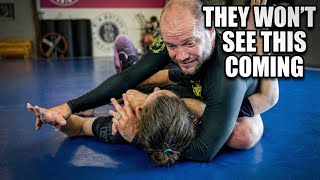
Head and arm control combines shoulder pressure against the opponent's head with a knee connection to the hip. This position offers greater versatility than head and hip, serving as a platform for submissions including keylocks, neck attacks such as paper cutters, and advancement to mount position.
Kesa Gatame Variation
The kesa gatame position, adapted from judo for jiu-jitsu applications, transitions from a headlock position to an underarm control where the practitioner pulls the tricep upward and connects hip-to-hip. The torso must face downward toward the intended pressure direction to prevent the opponent from framing and escaping; this position enables step-over armbars and straight armlock submissions.
Reverse Side Control without Arm
Reverse side control positions the practitioner high on the opponent's chest with the elbow in the armpit, maintaining knee connection to the hip. This variation provides easy transitions to mount position and keeps the practitioner away from the opponent's hip power, though it offers fewer direct arm and neck submission opportunities.
Reverse Side Control Applications
From reverse side control, the practitioner can advance position to mount or transition to north-south to attack arm submissions. The instructor identifies this as a foundational control position that creates multiple avenues for positional advancement rather than immediate submissions.
5 Fundamental Side Control Positions in BJJ You Should Know
Key Takeaways
- •Introduction to Side Control Variations
- •Head and Hip Position
- •Head and Arm Control
- •Kesa Gatame Variation
In today's video I'll show you 5 BJJ side control positions and how I hold them and use them to setup other techniques. I think this will be helpful to anyone from White Belt to the advanced ranks. You'll see that I prefer some positions for pinning while others work better for setting up submissions or transitioning to other positions. In the video I show. . . - Head and hip - Head and arm control - Kesa Gatame - Reverse side control (without arm) - Reverse side control (with arm) These are certainly not all of the side control positions you can use in Brazilian Jiu-jitsu but they do make of several of the most fundamental you'll need. And in all honesty. These make up about 90% of the side control style positions I use as a Black Belt in both competitions and hard rolling. So if you're looking for some help with your side control then I hope the positions in this video are helpful to you. Hope this video is helpful to you. -Chewy ----------------- Free Ebook: http://www.chewjitsu.net/focused-jiu-jitsu-13-page-ebook/ Video Courses and Products: http://www.chewjitsu.net/products T shirts: http://www.chewjitsu.net/shop/ http://www.Facebook.com/Chewjitsu http://www.instagram.com/Chewjitsu http://www.twitter.com/Chewjitsu Charlotte's Web CBD. Head over to https://www.charlottesweb.com/chewjitsu and use the promo code Chewjitsu to get 15% off of your total purchase. Intro/Outtro Music : https://bknapp.bandcamp.com If you’d ever like to train with the team and I. Check out my gym Derby City MMA in Louisville,KY.
Frequently Asked Questions
What does this video teach about fundamental side control?
This video covers introduction to side control variations, head and hip position, head and arm control. It provides detailed instruction from Chewjitsu.
How long does it take to learn fundamental side control?
The basic mechanics can be understood in a single session, but developing reliable execution requires consistent drilling over weeks of practice. This 6-part breakdown helps structure your training by isolating each phase of the technique.
What are the key details for finishing fundamental side control?
Reverse side control positions the practitioner high on the opponent's chest with the elbow in the armpit, maintaining knee connection to the hip. This variation provides easy transitions to mount position and keeps the practitioner away from the opponent's hip power, though it offers fewer direct arm and neck submission opportunities.
Related videos
CONCEPTS in escaping side control
JeanJacquesMachado
3 No-Gi Takedowns for Beginner BJJ
Teaching you BJJ, MMA & Self-Defense
Learn to Underhook Like a Wrestler | Wrestling for BJJ
Wrestling University - Takedowns for Jiu Jitsu
Starting From the Knees - Do's and Don'ts - Leviathan Brazilian Jiu-Jitsu Chattanooga
Still Rolling
Mounted Rubber Guard - 10th Planet Jiu Jitsu
Brandon Mccaghren